EN
EN


The replacement modules have arrived, the immediate display problem has been handled, and procurement is already discussing the next order. At this point, the most important question is no longer whether the original complaint received a response. It is whether anything has actually changed enough to stop the same failure from returning.
That is where a nonconformance report (NCR) and an evidence-based Eight Disciplines (8D) corrective-action process become useful. For teams managing recurring LED display purchases, an LED display screen supplier should not be evaluated only by the speed of replacement. The stronger test is whether the supplier can connect the reported nonconformity to containment, supported root cause, permanent corrective action, verification and a visible change before the next relevant order is released.
This distinction matters because commercial resolution and technical closure are not always the same event. Replacement can restore the current project while the underlying NCR remains technically open. If the failure mechanism has not been demonstrated and the next-order process remains unchanged, the project may have solved the immediate inconvenience without reducing recurrence risk.
A useful closure question: if the same order were released again tomorrow, what would be different in the relevant production, control, documentation or communication process because this incident happened?
Project Context: Define the Incident Before the Supplier Starts Explaining It
A corrective-action review becomes difficult when several different questions are mixed together from the beginning. One person is discussing replacement quantity, another is asking whether the rest of the batch is affected, and someone else is already debating the probable technical cause. Before those discussions expand, the project needs one stable description of the incident.
The first task is not to decide who is at fault. It is to establish what is known.
For example, suppose several units in an installed project show the same abnormal behavior. The useful starting record is not “the entire batch is defective.” It is something closer to: a defined number of units have shown a specific symptom, a certain number have been checked, they belong to a known order or batch reference, and the project team has identified an immediate operational consequence.
This distinction between confirmed affected quantity and potentially affected scope is important. If three units fail among forty inspected, the project has three confirmed failures and a larger population that may require review. It does not yet have evidence that every unit in the entire order has the same condition.
Do not let the first complaint define the final scope. The affected population should expand or narrow as evidence develops. Treating an early estimate as a confirmed batch conclusion can distort containment, replacement quantities and root-cause analysis.
Product identification also needs to remain consistent. If the issue involves material from a broader product group, the confirmed LED display wholesale / Products range or LED screen panels page can provide a shared commercial reference. The NCR itself should still use the most specific order, batch and affected-item information available.
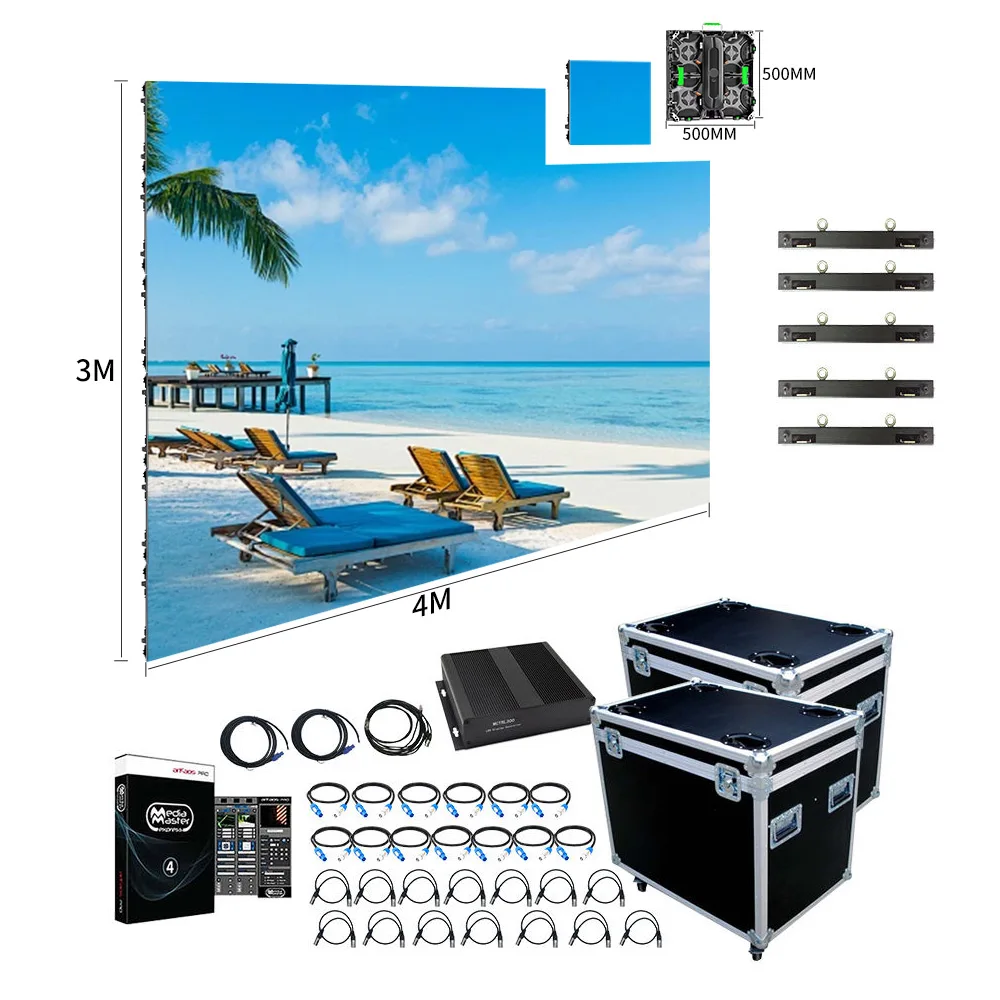
Keep the NCR attached to the actual product scope
Cabinet format, order reference and affected quantity should remain connected throughout the corrective-action discussion. A category name alone is too broad for batch-level investigation.
View LED Screen Panels
Repeat orders need traceability beyond a product name
When several cabinet or panel forms exist in the purchasing history, the corrective-action record should make it clear which material was involved and which future orders the prevention measure should apply to.
Browse ProductsOne communication owner should also keep the record together. Photos held by the service team, order references held by procurement and operating details held by the site team are much less useful when they reach the supplier in separate, disconnected messages. A single corrective-action thread gives both sides a better chance of working from the same incident definition.
An NCR Should Record What Happened, Not What Someone Thinks Happened
An NCR is useful when it creates a traceable factual starting point. It becomes less useful when suspected causes are written as if they have already been proven.
Statements such as “poor quality,” “component problem” or “production defect” may eventually prove correct, but none of them describes the incident well enough to support a technical investigation on its own. They are conclusions.
A better record starts with observable information: where the problem appeared, what the display did, when it occurred, how often it occurred, which items are confirmed affected and what evidence is available.
For example, “one display section remained dark after restart” is a usable observation. Naming an internal component as the cause without supporting evidence changes an observation into an assumption.
Symptom and root cause are different records
Symptom: what the project team can observe or reproduce.
Suspected cause: an investigation direction that still needs evidence.
Confirmed root cause: a mechanism supported strongly enough that the corrective action can be linked directly to it.
The affected quantity also needs context. “Five units affected” means something different if five units were found among five checked, five among one hundred checked, or five within a larger population that has not yet been inspected. Recording the inspected quantity prevents an early finding from being mistaken for a final failure rate or complete batch assessment.
Depending on the buyer's quality system, the NCR may or may not contain the final explanation. Its first job is to make sure the supplier is investigating the same problem that the project team actually experienced.
Containment Comes First, but Replacement Does Not Automatically Close the NCR
There is often pressure to move immediately from complaint to replacement. That is understandable when installation, handover or operation is being disrupted. The current project needs protection even if the technical investigation will take longer.
This is the purpose of containment.
Containment
Control the current exposure while the cause remains under investigation. Depending on the incident and agreed project response, this may involve identifying suspect material, separating affected items, reviewing associated units or coordinating a temporary replacement action.
Corrective Action
Change the demonstrated condition that created the problem, then verify that the change works. Permanent action should follow evidence rather than simply repeating the temporary measure.
The distinction becomes particularly important when replacement material arrives quickly. Procurement may consider the commercial problem solved because the project can continue. From a supplier-quality perspective, however, the NCR may still be open.
Replacement can close the commercial issue before the technical issue is closed
This is one of the most useful distinctions in repeat-order supplier management.
A commercial resolution answers questions such as: has replacement material been arranged, has the project recovered and has the immediate quantity dispute been resolved?
Technical closure answers different questions: what failure mechanism explains the incident, what permanent action addresses that mechanism, how was the action verified, and what will stop the next relevant order from repeating the same condition?
These two tracks can move at different speeds. Treating them as the same thing creates a common repeat-order problem: the complaint disappears because replacement has been completed, but the corrective action never reaches the next production cycle.
When replacement has already been agreed, ask what still remains open in the NCR. If the answer is “nothing” even though no supported root cause or permanent action exists, the complaint may have been commercially resolved rather than technically closed.
Root Cause and 8D Logic: Judge the Connection Between Cause, Action and Verification
Most procurement teams do not need an academic explanation of every 8D discipline. What they need is a way to judge whether the supplier's corrective-action response makes sense.
The practical sequence is simpler:
Define the problem → contain the current exposure → establish supported root cause → choose permanent corrective action → implement and verify the action → carry prevention into future relevant orders → decide whether the incident can be closed.
The most important part is the connection between each stage.
Does the proposed root cause actually explain the failure pattern?
A cause statement should make sense in relation to the evidence already collected. If the proposed mechanism cannot explain where the problem appeared, when it appeared or why only certain material was affected, the explanation may still be incomplete.
This does not mean every investigation needs a large volume of data. It means the conclusion should be stronger than a generic phrase such as “operator error,” “component quality issue” or “inspection problem.” The response should show why that explanation fits this particular incident.
Does the response distinguish occurrence cause from escape or detection cause?
A strong supplier response should answer two different questions: what condition allowed the nonconformity to occur, and what allowed it to pass through the supplier's existing controls without being detected or prevented.
For an LED display cabinet or module issue, the corrective-action record should keep the affected material tied to the relevant order or batch, show how the observed symptom was evaluated, identify the condition supported by the evidence and explain why the existing process or inspection controls did not stop the issue before shipment. This does not require the buyer to assume a component failure in advance; it requires the supplier to connect evidence to both occurrence and escape.
Does the permanent action change the condition identified as the cause?
This is where weak corrective-action reports often become obvious.
If the stated root cause concerns one production condition but the corrective action is simply “increase final inspection,” the action may detect more failures without changing the condition that creates them. Detection and prevention are not automatically the same thing.
The same concern applies to statements such as “strengthen QC,” “improve worker training” or “pay more attention.” Those phrases may describe a general intention, but a repeat-order team still needs to know what changed in practice.
A useful follow-up is: Which process changed? Who owns the change? What record will show it happened? What will be checked on the next relevant order?
Was the action verified, or merely completed?
“Corrective action completed” confirms that someone performed an activity. It does not automatically show that the activity solved the demonstrated problem.
Verification should answer whether the selected action achieved the intended control. The exact evidence depends on the incident and the type of change, so one verification method should not be imposed on every LED display quality issue.
The management question remains the same: what evidence allows the project team to move from “the supplier changed something” to “the change addresses the identified failure mechanism”?
A short 8D with evidence can be stronger than a long 8D full of generic text
Document length is not supplier quality.
A concise corrective-action response can be convincing when the problem definition is precise, containment scope is clear, the cause is supported, the permanent action matches that cause and verification is understandable.
By contrast, a long report can still be weak if every section contains polished wording but no clear causal connection. Procurement and project-quality teams should therefore review the logic of the response rather than treating form completion as proof of closure.
Repeat-Order Prevention: Look for a Visible Change, Not a Promise to “Be More Careful”
This question forces the corrective action out of the complaint email and into the future production process.
A supplier may respond professionally, replace affected material quickly and communicate well throughout the incident. Those are useful qualities, but they do not by themselves show that the same failure mechanism has been prevented.
For repeat-order prevention, there should be some identifiable change tied to the supported root cause. Depending on the incident, that change could appear in a production control, process instruction, internal record, traceability requirement, technical review point or communication path.
The important word is identifiable.
“We will pay more attention next time” cannot be verified. “Quality will be strengthened” does not tell the next production team what they are expected to do differently. A prevention measure should leave enough evidence that someone who was not involved in the original complaint can still understand the relevant control.
Do not allow the corrective action to stay trapped in the original service conversation
This is a common organizational risk in recurring B2B purchases.
The people handling the original complaint may not be the people managing the next order. Months later, another procurement contact, project manager or production team may receive the repeat purchase. If the corrective action exists only inside an old email thread, the next order can start with no practical connection to the previous failure.
A stronger closure therefore creates continuity between the incident and the repeat order.
This is the point where an NCR stops being only a complaint-handling document and becomes useful supplier-management information.
Buyer Inputs: Give the Supplier Enough Context to Investigate the Right Problem
A project team does not need to diagnose the root cause before contacting the supplier. In fact, trying to do so too early can make the investigation harder if assumptions become embedded in the complaint.
The more useful approach is to provide a compact evidence package that defines the event and its project impact.
A clear incident package also reduces time lost to basic reconstruction. Instead of several exchanges trying to identify which order, which quantity and which symptom are being discussed, both sides can begin from the same factual record.
This is particularly useful when the corrective-action timeline affects a repeat purchase. Procurement can separate information still needed for immediate containment from evidence required before the next order is approved.
Factory Support: Ask for a Traceable Response Without Assuming a Conclusion
Corrective-action support should be agreed for the specific project and incident. The useful supplier-side contribution is not simply to produce a document with an NCR or 8D title. It is to review the reported issue, keep the affected scope traceable, separate confirmed findings from open questions and coordinate the agreed response.
Where containment or replacement action is applicable and agreed, it should remain visible as the immediate project response rather than being presented as proof that the root cause has already been removed.
Likewise, if the available evidence does not yet support a final root cause, the better response is to keep that point open rather than close the report with an unsupported explanation.
A credible response can contain uncertainty. “Investigation remains open because the current evidence does not yet distinguish between two possible mechanisms” is more useful than a confident root-cause statement with no supporting connection to the observed failure.
If a formal NCR or 8D response is required by the project, that requirement should be stated when the issue is submitted so that the expected format, information and response scope can be confirmed rather than assumed.
Corrective-Action Review Table: What to Look for Before Calling the Issue Closed
This is where a table is genuinely useful. Instead of turning every section into a checklist, the six review points below give procurement and project-quality teams one compact way to test whether the response forms a complete corrective-action chain.
| Review Point | What to Look For | Warning Sign |
|---|---|---|
| Issue definition | Traceable order or batch reference, observable symptom, confirmed affected quantity and supporting evidence. | Broad complaint language or a suspected cause presented as established fact. |
| Containment | A defined temporary action protecting the current project or potentially affected material while investigation continues. | Replacement is treated as evidence that permanent corrective action is already complete. |
| Cause evidence | A proposed mechanism that fits the observed failure pattern and is supported by relevant evidence, including the occurrence cause and, where relevant, why existing controls did not detect or prevent the issue. | The cause simply repeats the symptom or relies on a generic statement such as “quality issue.” |
| Corrective action | A specific change that addresses the supported failure mechanism. | General promises to strengthen inspection, training or attention without defining what actually changes. |
| Verification | Evidence showing whether the selected corrective action produced the intended control. | The action is marked complete because it was performed, with no explanation of effectiveness. |
| Next-order prevention | A visible change in the relevant production, control, documentation or communication process that carries the lesson into future orders. | The incident is closed but the next production cycle would proceed exactly as it did before. |
The complete logic should be easy to follow: this is what happened → this is what was protected → this evidence explains why → this action changes the cause → this is how effectiveness was checked → this is what changes before the next relevant order.
FAQ
What information should an NCR contain for an LED display issue?
An NCR should identify the relevant order or batch, affected item or location, observable failure, confirmed affected quantity, quantity reviewed where relevant, available photos or video, operating context, discovery timeline and immediate project impact. Suspected causes should remain clearly identified as assumptions until evidence supports them.
What is the difference between containment and corrective action?
Containment protects the current project or potentially affected material while investigation continues. Corrective action changes the supported cause of the problem. Replacement may be part of containment without proving that recurrence has been prevented.
How should a buyer judge whether root cause evidence is sufficient?
Check whether the proposed cause explains the actual failure pattern, whether the available evidence supports that mechanism and whether the permanent corrective action directly addresses it. If those elements do not connect, the cause should remain open for further review.
What should change before a repeat order is released?
A defined change linked to the supported root cause should be visible in the relevant process, control record, instruction, verification step, documentation or communication path. The repeat-order team should be able to confirm that the change has been implemented rather than rely on a general promise that the issue will not happen again.
Do Not Submit Only “We Have a Problem”
If an LED display issue needs supplier review, send enough information for the affected material and failure pattern to be understood from the beginning. This gives the supplier a clearer basis for containment, technical investigation and any corrective-action response required by the project.
If the project requires a specific NCR or 8D response format, include that requirement with the initial issue information so the expected review scope can be confirmed at the start.
Submit Your Project Issue to OUBO LED