
An LED module is the foundation of every modern LED screen. Whether used in advertising billboards, retail displays, conference rooms, stadiums, or transportation systems, the quality of the LED module directly affects brightness, image clarity, stability, and overall display performance.
As demand for digital signage and large-format visual systems continues to grow, businesses are paying closer attention to the reliability and performance of the LED module itself rather than only focusing on the finished display. A high-quality LED module provides better color consistency, smoother visuals, lower failure rates, and longer operating lifespan.
This guide explains the structure, applications, advantages, and selection process for professional LED module solutions used in both indoor and outdoor environments.
An LED module is a display unit made up of LED lamps, driver ICs, PCB boards, and signal connectors. Multiple LED modules are assembled together inside cabinets to create complete LED screens of different sizes and resolutions.
The modular structure allows screens to be repaired, upgraded, and customized more efficiently. Instead of replacing an entire display, users can replace individual LED modules, reducing maintenance costs and downtime.
Modern LED module designs support seamless assembly, enabling displays to scale from small indoor screens to giant outdoor advertising walls.
| Component | Function | Quality Impact | Selection Priority |
|---|---|---|---|
| LED Lamps | Emit light and form pixels | Determines brightness, color accuracy, and lifespan | Very High |
| Driver ICs | Control current and grayscale | Affects refresh rate, flicker, and camera performance | Very High |
| PCB Board | Connect all electronic parts | Impacts heat dissipation and signal stability | High |
| Signal Connectors | Transfer data between modules | Ensures seamless video wall assembly without gaps | Medium |
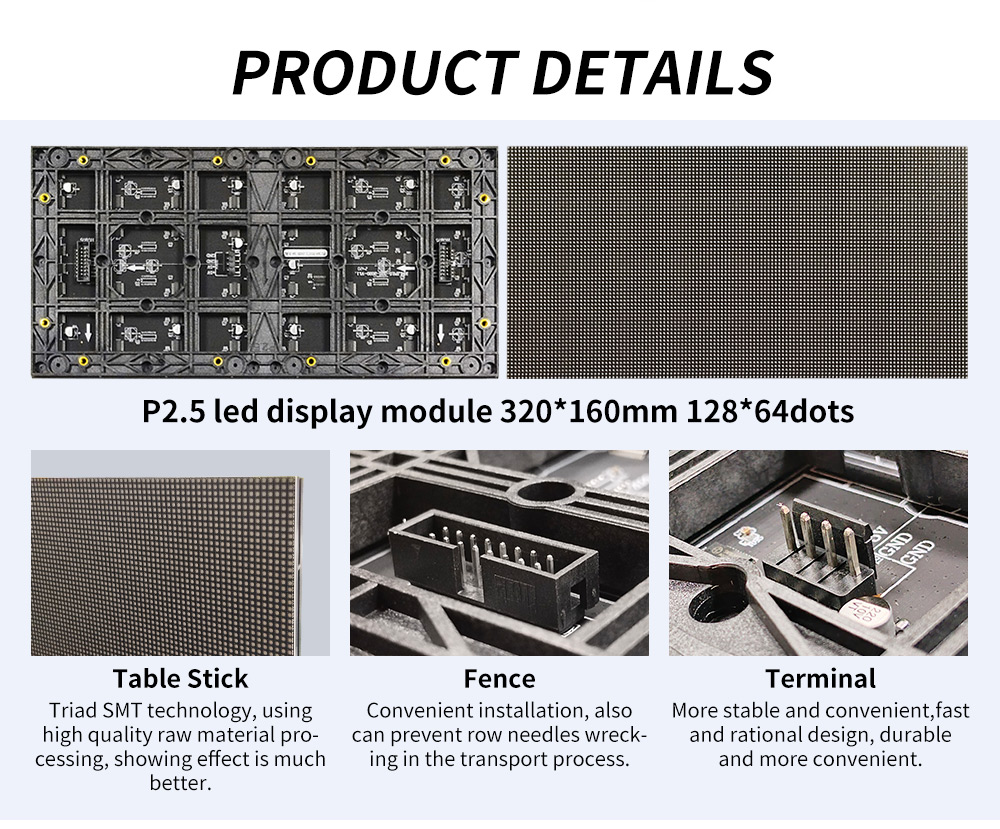
Understanding module structure helps project teams evaluate factory quality and long-term maintenance plans before placing an order.
View LED Module ProductsAn indoor LED module is designed for close viewing environments with high resolution and lower brightness requirements. Common applications include:
Indoor modules usually feature fine pixel pitches such as P1.25, P1.53, P1.86, and P2.5 for detailed image quality.
An outdoor LED module is engineered for weather resistance and high brightness performance. These modules are commonly installed in:
Outdoor models use waterproof protection, UV-resistant materials, and reinforced structures for long-term durability.
| Check item | Indoor Module Expectations | Outdoor Module Expectations | Risk if Ignored |
|---|---|---|---|
| Brightness Level | 600 - 1000 nits | 5500 - 8000+ nits | Low outdoor brightness = invisible content in sunlight |
| Protection Rating | IP31 (indoor dry environment) | IP65+ front / IP54+ rear minimum | Water ingress causes short circuits and module failure |
| Pixel Pitch | P1.25 to P2.5 (fine pitch) | P4 to P10 (longer viewing distance) | Wrong pitch = wasted budget or poor visual quality |
| Material Durability | Standard plastic or aluminum mask | UV-resistant, anti-corrosion, reinforced structure | Material degradation leads to color shift and structural weakness |
A professional LED module delivers stable brightness and accurate color reproduction. High-quality LED chips and driver ICs ensure smooth image performance and reduce color inconsistency across the display surface.
Brightness consistency is especially important for advertising and broadcast applications where image quality directly affects audience experience.
Efficient thermal management extends the lifespan of an LED module. Advanced PCB layouts and cabinet ventilation systems help reduce heat accumulation during long operating hours. Stable temperatures improve performance reliability and minimize failure rates.
Precision manufacturing allows LED modules to align seamlessly with minimal gaps. This creates smooth visual output without visible interruptions between modules. Seamless assembly is critical for large video walls and commercial display systems.
Modern LED module technology uses efficient driver ICs and optimized power management systems to reduce energy consumption while maintaining high brightness levels. Lower power usage helps reduce long-term operational costs for large installations.
Use this checklist to verify supplier claims before placing an order.
Hello, please provide technical details for the LED modules you recommend: brightness uniformity report, thermal test data after continuous operation, module gap tolerance measurement, power consumption at standard and max brightness, and the driver IC model with supported refresh rate. Please also share aging test proof and a recommended spare-part list for this project.
Different applications require different viewing distances and resolutions. Popular LED module pixel pitches include:
Choosing the right pixel pitch ensures the best balance between image quality and project budget.
Need help choosing the right pitch for your project? Share your viewing distance and screen size for a matched recommendation.
Explore LED Module RangeLarge advertising screens are built using multiple LED modules to create seamless visuals with high brightness and vivid colors.
Retail environments use LED screens for product promotions, digital signage, and interactive branding experiences. Reliable modules ensure long-term stable operation.
Stadiums and event venues depend on durable LED modules for scoreboards, live broadcasting, and sponsor advertisements.
Train stations, airports, and traffic systems use LED-based displays for schedules, announcements, and emergency notifications.
Fine-pitch modules provide high-definition image quality for data visualization and long-duration monitoring environments.
Hello, please recommend an LED module configuration based on the following project details: application type, screen size, viewing distance, indoor or outdoor environment, front or rear maintenance access, content type, local voltage, and whether camera recording is required. Please explain the rationale behind the recommended pitch, brightness, refresh rate, and module type.
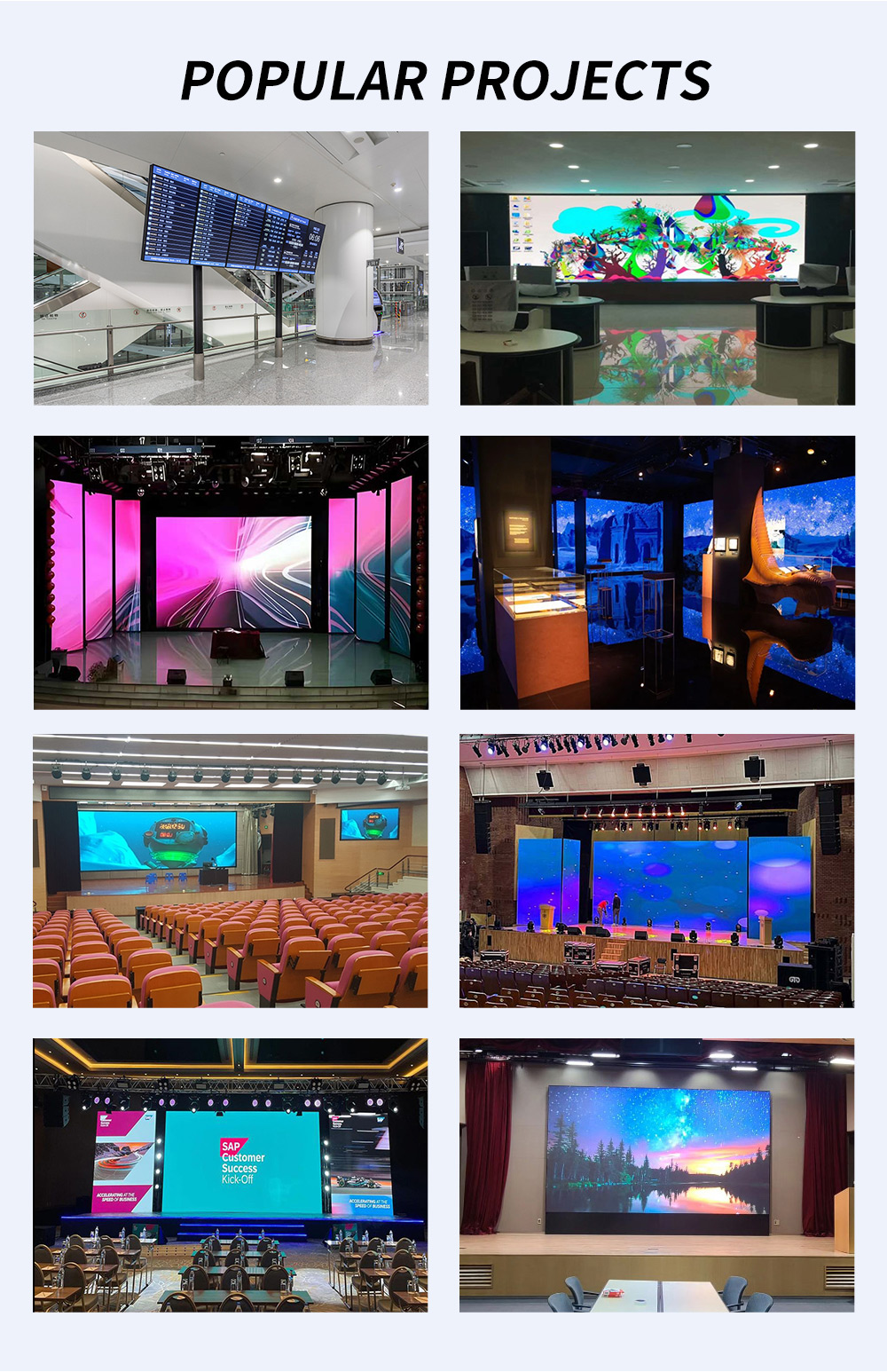
Wall-mounted digital display projects need clear maintenance planning. Confirm your module replacement route, power routing, and remote troubleshooting support before shipment.
View LED Digital Display BoardUsing modular structures provides several important benefits:
Because individual LED modules can be replaced independently, repair work becomes more efficient and economical.
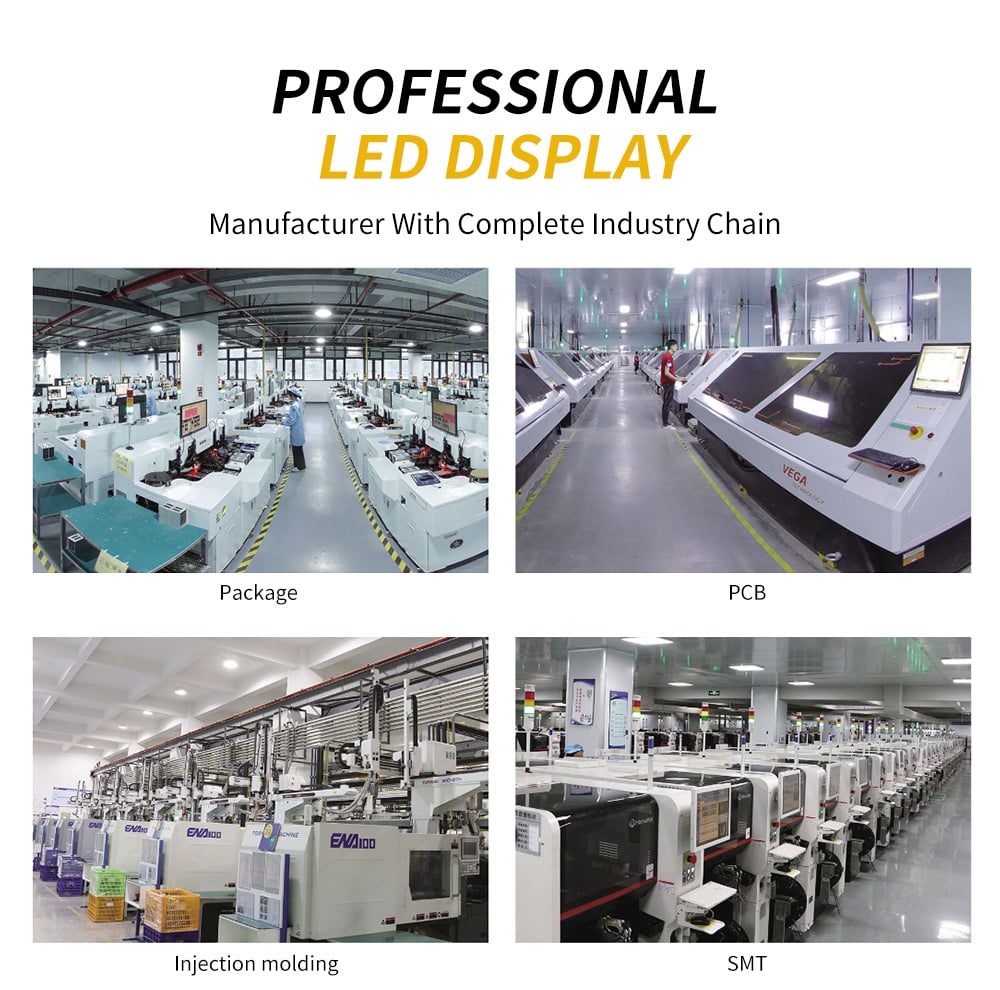
A professional factory provides: stable production quality, better pricing, strict testing standards, and faster lead times. Direct manufacturing also improves long-term technical support.
High-performance displays require reliable LED chips, stable driver ICs, durable PCB boards, and certified power supplies. Premium components improve lifespan and reduce maintenance issues.
Reliable suppliers perform aging tests, brightness calibration, waterproof testing, and signal stability inspection. Strict quality control ensures consistent performance across all LED modules.
| Check item | Strong signal (factory-direct) | Risk signal (third-party trader) | Why it matters |
|---|---|---|---|
| Production proof | Project-related SMT, assembly, and aging photos | Only generic product catalog images | Confirms real manufacturing versus reselling |
| Component transparency | Provides LED chip brand, IC model, and PCB specs | Unclear about component sources | Determines real product lifespan |
| Aging test record | 72h+ aging video or photo tied to the batch | Only verbal promise of "tested" | Catches dead pixels and early failures before shipping |
| After-sales route | Named engineer for remote support with process doc | Only "24/7 support" wording, no named contact | Saves critical commissioning time overseas |
Include screen size, indoor/outdoor application, viewing distance, maintenance access, and delivery target in one message. A structured inquiry makes factory capability easier to compare.
Contact LED Display FactoryThe LED module market continues evolving toward:
As display technology advances, modular systems are becoming more efficient, flexible, and visually impressive across commercial and public applications.
These pages can help refine your project plan before the final inquiry. Use them to compare application scenes, module options, cost factors, and maintenance planning.
Request aging test videos or photos taken during the production of your specific batch, not a general factory sample. A reliable supplier should provide 48-72 hour burn-in records showing the modules running at full brightness.
Also ask for brightness uniformity measurement data and pixel failure rate reports. These documents give objective proof of quality rather than relying on verbal assurances.
Front-service modules allow maintenance and replacement from the front of the screen using magnetic tools or screw-front systems. This is essential when the screen is wall-mounted with no rear access space.
Rear-service modules require access behind the display cabinet to remove and replace modules. This is common in free-standing structures and outdoor boards with service corridors. Always confirm your installation site's maintenance access before selecting a module type.
A general rule: prepare 3-5% spare modules for small to medium indoor displays, and 5-10% for outdoor or large installations where service distance is long and downtime is expensive.
The key consideration is service distance. If replacement parts take weeks to ship to your location, a stronger spare kit at the initial order saves significant trouble later. Always request spare modules from the same production batch for color consistency.
SMD (Surface-Mounted Device) packages individual LED chips onto the PCB surface. COB (Chip-On-Board) encapsulates multiple LED chips directly onto the board under a protective layer. COB offers better protection, higher contrast, and wider viewing angles, while SMD remains more cost-effective and widely available across all pixel pitch ranges.
The choice depends on your application: COB is preferred for fine-pitch indoor displays under P1.5, while SMD dominates larger pitches and outdoor modules due to proven reliability and easier repair access.
The LED module is the core building block of every professional LED display system. From indoor conference screens to giant outdoor advertising walls, high-quality modules ensure stable performance, seamless visuals, and long-term reliability.
Choosing the right LED module supplier is essential for achieving excellent image quality, efficient maintenance, and lower operational costs. With modern modular technology continuing to improve, LED-based displays remain one of the most effective solutions for commercial communication, advertising, and digital visualization.

TU LED under Shenzhen Oubo Electronic Technology Co., Ltd., is a leading Indoor Outdoor Screen LED display manufacturer factory . We provide complete LED display OEM ODM factory solutions. We provide a 2-year warranty , conduct strict tests, offer affordable prices, and provide 24/7 support.
 EN
EN


