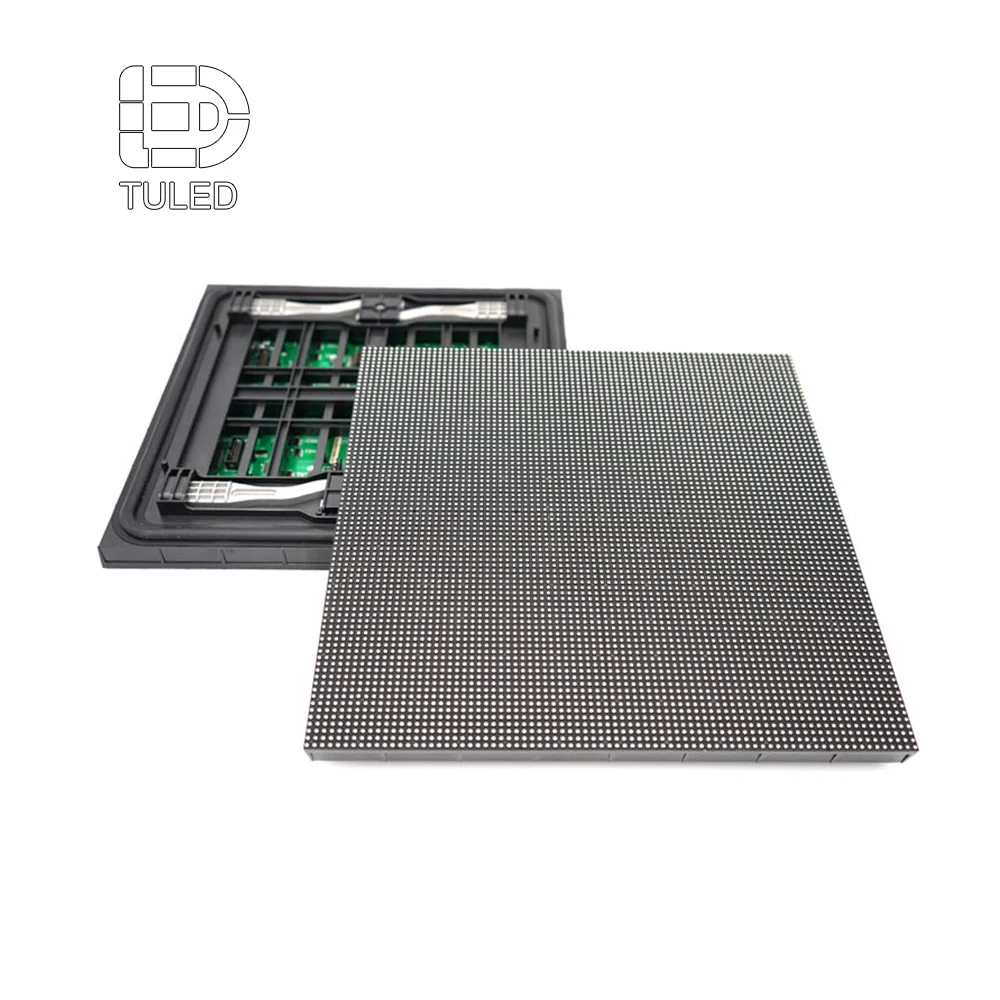
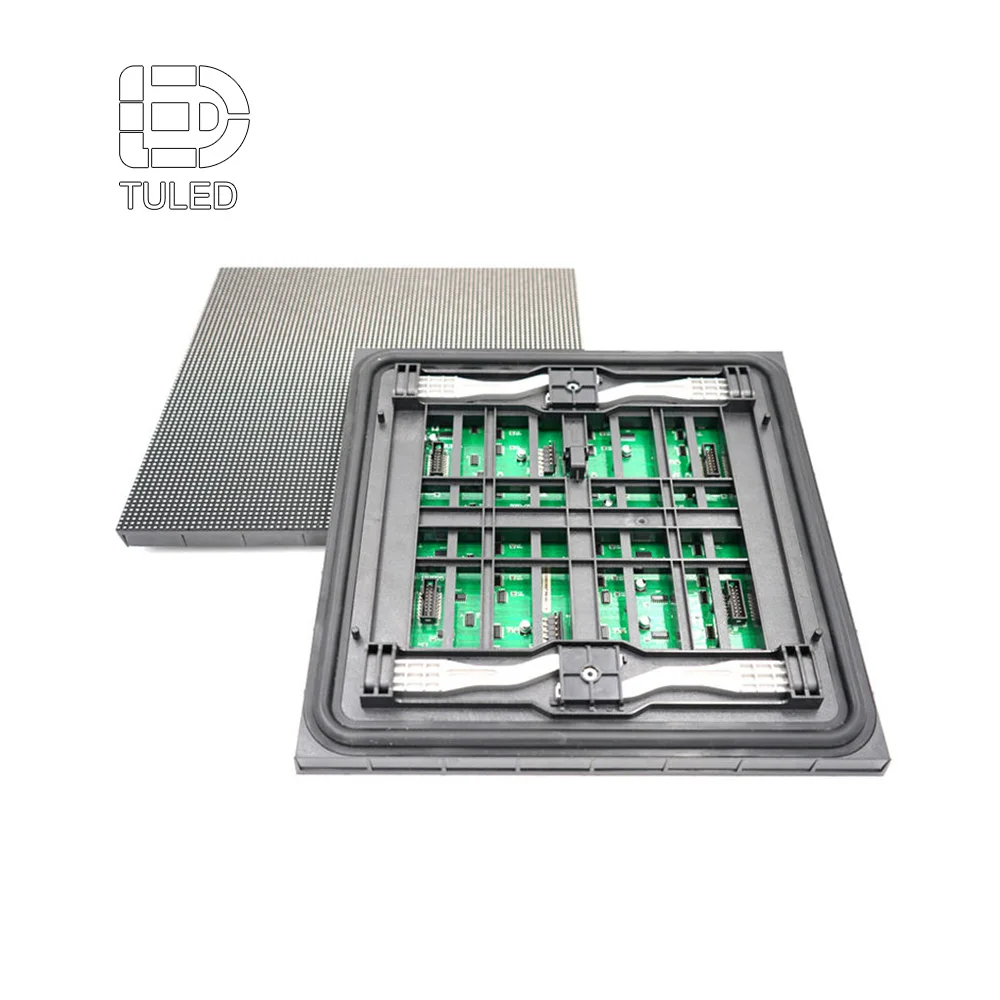
When it comes to building large-scale LED displays, the module size you choose has a direct impact on installation speed, structural stability, and overall cost. Among the standard sizes available in the market, the 320x320mm LED module stands out as the premier choice for outdoor advertising, stadium screens, and large-venue fixed installations.
This guide explains why the 320x320mm format has become the go-to standard for large-format projects, what pixel pitches are available, how it compares to other sizes, and what to look for when sourcing.
A 320x320mm LED module is a square-shaped display panel measuring 320 millimeters on each side. Each module contains a matrix of LED pixels soldered onto a multi-layer PCB, driven by driver ICs, protected by a plastic louver mask, and housed in a durable frame — typically aluminum or reinforced plastic for outdoor versions.
The square 1:1 aspect ratio makes it fundamentally different from the more common 320x160mm rectangular module. This shape enables uniform grid layouts and simplifies cabinet design, especially for large-area displays where alignment precision matters.
| Physical Parameter | Specification |
|---|---|
| Module Dimensions | 320 mm x 320 mm |
| Aspect Ratio | 1:1 (square) |
| Typical Thickness | 15-25 mm (indoor) / 18-30 mm (outdoor) |
| Weight | 0.5-1.2 kg (varies by pixel pitch and frame) |
| Material | Plastic (indoor) / Die-cast aluminum (outdoor) |
| Mount Method | Screw-fixed front-service or rear-service |
| Module Area | 0.1024 m2 per module |
The LED display industry offers several standard module sizes — 160x160mm, 192x192mm, 250x250mm, 320x160mm, and 320x320mm. Each serves a purpose, but the 320x320mm format has distinct advantages for large-scale projects.
KEY TAKEAWAY: If your project is under 20 square meters and uses fine-pitch (P1.5-P3), the 320x160mm format may be more appropriate. For large outdoor displays above 30 square meters, the 320x320mm format delivers superior installation efficiency and cost-effectiveness.
| Feature | 320x320mm | 320x160mm |
|---|---|---|
| Shape | Square (1:1) | Rectangle (2:1) |
| Area per Module | 0.1024 m2 | 0.0512 m2 |
| Modules per 100 m2 | ~976 | ~1,953 |
| Module Weight | 0.5-1.2 kg | 0.3-0.5 kg |
| Typical Pixel Pitches | P4, P5, P6.67, P8, P10 | P1.53 to P10 |
| Primary Applications | Outdoor fixed, stadiums, building facades | Indoor advertising, rental stages, retail |
| Cabinet Fit (3x3) | 960x960mm | 640x640mm |
| Cabinet Fit (2x2) | 640x640mm | 640x320mm (not square) |
| Front-Service | Common (screw-fixed) | Magnetic snap-on |
| IP Rating | Typically IP65 | Varies (IP20-IP65) |
| Cost per Module | Higher (larger board) | Lower (smaller board) |
| Installation Speed | Faster (fewer connections) | Slower (more connections) |
| Pixel Pitch | Resolution (W x H) | Total Pixels | Typical Use | Brightness |
|---|---|---|---|---|
| P2.5 | 128 x 128 | 16,384 | High-res indoor, retail, lobby | >= 1,000 cd/m2 |
| P3.076 | 104 x 104 | 10,816 | Semi-outdoor, shopping malls | >= 1,200 cd/m2 |
| P4 | 80 x 80 | 6,400 | Indoor large-format, stage | >= 1,500 cd/m2 |
| P5 | 64 x 64 | 4,096 | Outdoor advertising, signage | >= 5,000 cd/m2 |
| P5.33 | 60 x 60 | 3,600 | Outdoor billboards, facades | >= 5,500 cd/m2 |
| P6.67 | 48 x 48 | 2,304 | Outdoor billboards, stadiums | >= 6,000 cd/m2 |
| P8 | 40 x 40 | 1,600 | Large outdoor billboards | >= 6,500 cd/m2 |
| P10 | 32 x 32 | 1,024 | Highway signs, venue perimeter | >= 7,000 cd/m2 |
Note: The 320x320mm format spans from indoor fine-pitch (P2.5) to outdoor ultra-large-pitch (P10), but its sweet spot is P5 through P10 for outdoor fixed installations.
The 320x320mm module is most commonly paired with the 960x960mm cabinet standard. A single cabinet holds exactly nine modules in a 3x3 grid layout, forming a nearly 1-square-meter display unit.
960x960mm cabinet (3x3 modules)
640x640mm cabinet (2x2 modules)
For a 6m (W) x 4m (H) outdoor billboard using 960x960mm cabinets:
Cabinets needed: 6.25 wide -> 6 cabinets (6 x 0.96 = 5.76m)
4.17 high -> 4 cabinets (4 x 0.96 = 3.84m)
Total cabinets: 6 x 4 = 24 cabinets
Modules per cabinet: 9 (3x3)
Total modules: 24 x 9 = 216 modules
Final screen size: 5.76m x 3.84m
WARNING: Indoor 320x320mm modules lack waterproofing and sufficient brightness for outdoor use. Deploying indoor modules outdoors will result in water damage, LED degradation, and visibility failure within weeks or months.
One of the defining features of high-quality 320x320mm outdoor modules is dual-service access — the ability to remove a module from either the front or the rear.
Recommended for wall-mounted displays
Standard for free-standing structures
IMPORTANT: Always confirm the service type before purchasing. If your display will be mounted flush against a wall, front-service is non-negotiable.
The 320x320mm module is compatible with all major LED control systems. The receiving card interface is typically HUB75 (indoor) or a proprietary outdoor connector.
| Control System | Receiving Card | Software |
|---|---|---|
| Novastar | MRV series, A5s/A8s | NovaLCT, VNNOX, ViPlex |
| Colorlight | S series, i series | LEDVision, Colorlight Cloud |
| LINSN | RV series | LEDStudio, LEDSet |
| Huidu | HD series | HD Player, LEDArt |
Most 320x320mm outdoor modules come with pre-configured RCFG (receiving card configuration) files from the manufacturer, which simplifies setup. Always request these files with your order.
The 320x320mm module consumes more power per unit than smaller modules due to its larger area and higher LED count. Proper power planning is essential.
| Pixel Pitch | Max Power per Module | Typical Power per Module |
|---|---|---|
| P5 | 30-40W | 12-18W |
| P6.67 | 30-40W | 12-18W |
| P8 | 25-35W | 10-15W |
| P10 | 25-35W | 10-15W |
For a 960x960mm cabinet with nine P8 modules:
Always use 80% of the PSU's rated capacity as the practical maximum load. For outdoor installations, factor in additional power for cooling fans if the cabinet design includes active ventilation.
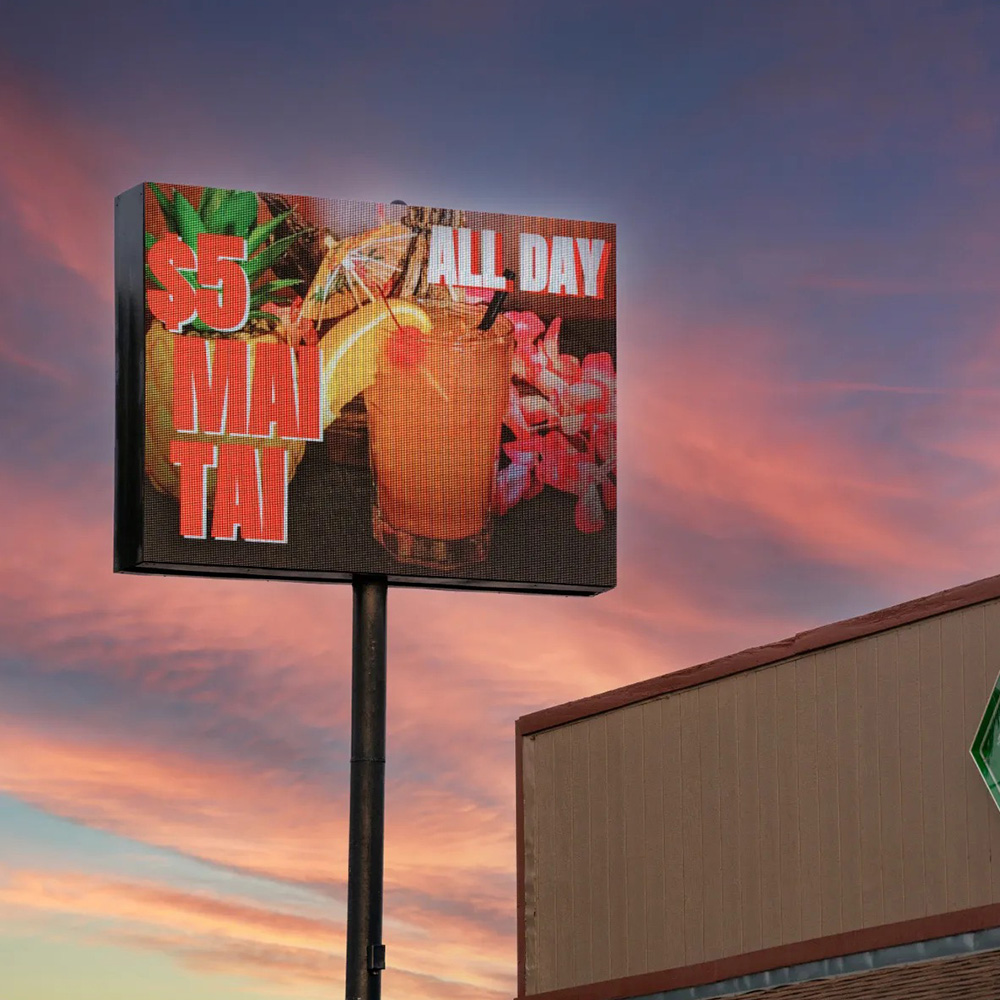
Get professional recommendations for your outdoor billboard, stadium perimeter screen, or building facade project.
View Large Display SolutionsPremium: Nationstar, Kinglight, Nichia, CREE
Standard: Silan, Desay, Hongsheng
Budget: Generic (shorter lifespan, inconsistent color)
Premium: Macroblock MBI5124 / MBI5252, Chipone ICN2053. These deliver high refresh rates (>= 1,920Hz for outdoor, >= 3,840Hz for camera-ready) and smooth grayscale performance. Avoid modules with generic or unmarked driver ICs.
Use this structure when contacting suppliers to get complete, comparable answers:
A 320x320mm outdoor module typically weighs 0.8-1.2 kg versus 0.4-0.6 kg for a 320x160mm outdoor module. The cabinet structure must be designed to support this additional weight, especially for large displays.
Not recommended. The different physical sizes and aspect ratios make it impossible to maintain a uniform grid. You would face severe alignment issues and visible seams. Always use one module size throughout a single project.
With P10 modules (32x32 pixels each), you need 120 modules wide and 67.5 modules high — approximately 8,100 modules covering 38.4m x 21.6m. This is only practical for stadium-scale installations.
Generally not. The larger size and heavier weight make them less convenient for frequent assembly and disassembly. Rental applications typically prefer lighter 500x500mm or 500x1000mm all-in-one cabinets with integrated power and receiving cards, or smaller 320x160mm modules in lightweight frames.
Standard production lead time is 15-25 days for quantities under 500 modules. Larger orders and custom pixel pitches may require 25-45 days. Always factor in an additional 7-15 days for international shipping.
Use a soft, anti-static brush or low-pressure compressed air for dust removal. For stubborn dirt, use a slightly damp microfiber cloth with a mild detergent — never spray water directly onto the module surface. Clean every 3-6 months depending on environmental exposure.
The 320x320mm LED module is the workhorse of large-scale outdoor and fixed-installation LED displays. Its square format, larger coverage area, and compatibility with the 960x960mm cabinet standard make it the most efficient choice for outdoor advertising billboards, building facades, stadium perimeter screens, and highway signage.
While the 320x160mm format dominates the indoor and rental market, the 320x320mm module delivers clear advantages where it counts for big-screen projects: fewer connections, faster installation, better structural integrity, and a cleaner visual result with fewer visible seams.
When sourcing your modules, prioritize proven LED brands (Nationstar, Kinglight), quality driver ICs (Macroblock), and proper certifications (CE, FCC, IP65, LVD, EMC, CCC, RoHS). Remember to buy from a single production batch for color consistency, and always plan your power distribution and cabinet layout before placing your order. With the right 320x320mm modules and proper planning, your outdoor LED display project will deliver years of reliable, high-impact visual performance.

TU LED under Shenzhen Oubo Electronic Technology Co., Ltd., is a leading Indoor Outdoor Screen LED display manufacturer factory . We provide complete LED display OEM ODM factory solutions. We provide a 2-year warranty , conduct strict tests, offer affordable prices, and provide 24/7 support.
 EN
EN