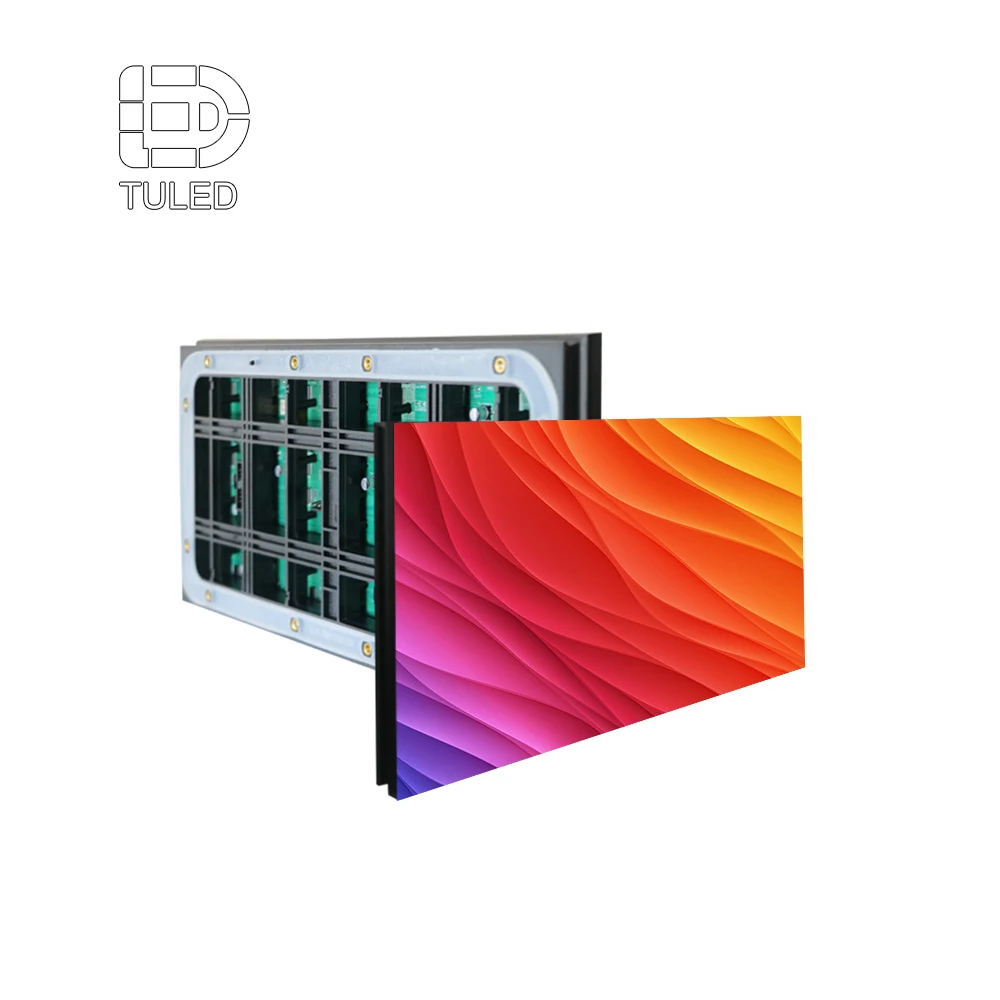
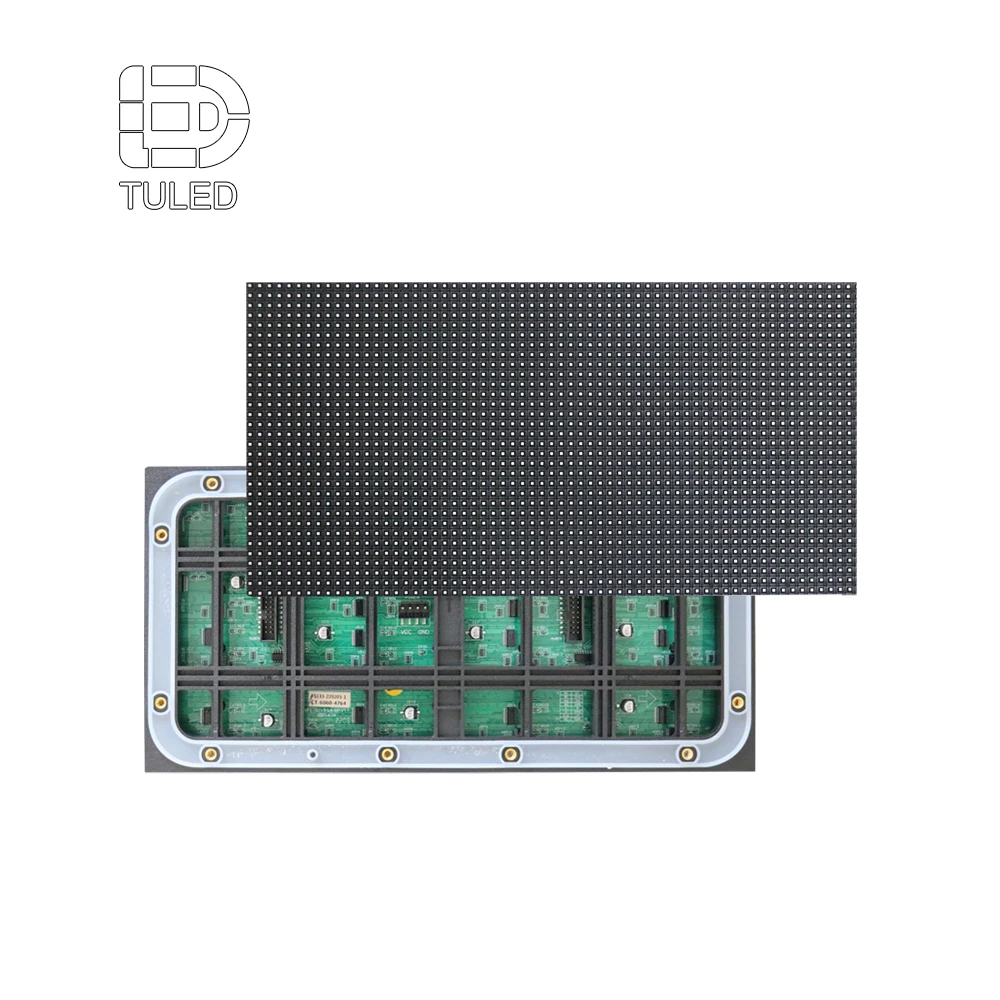
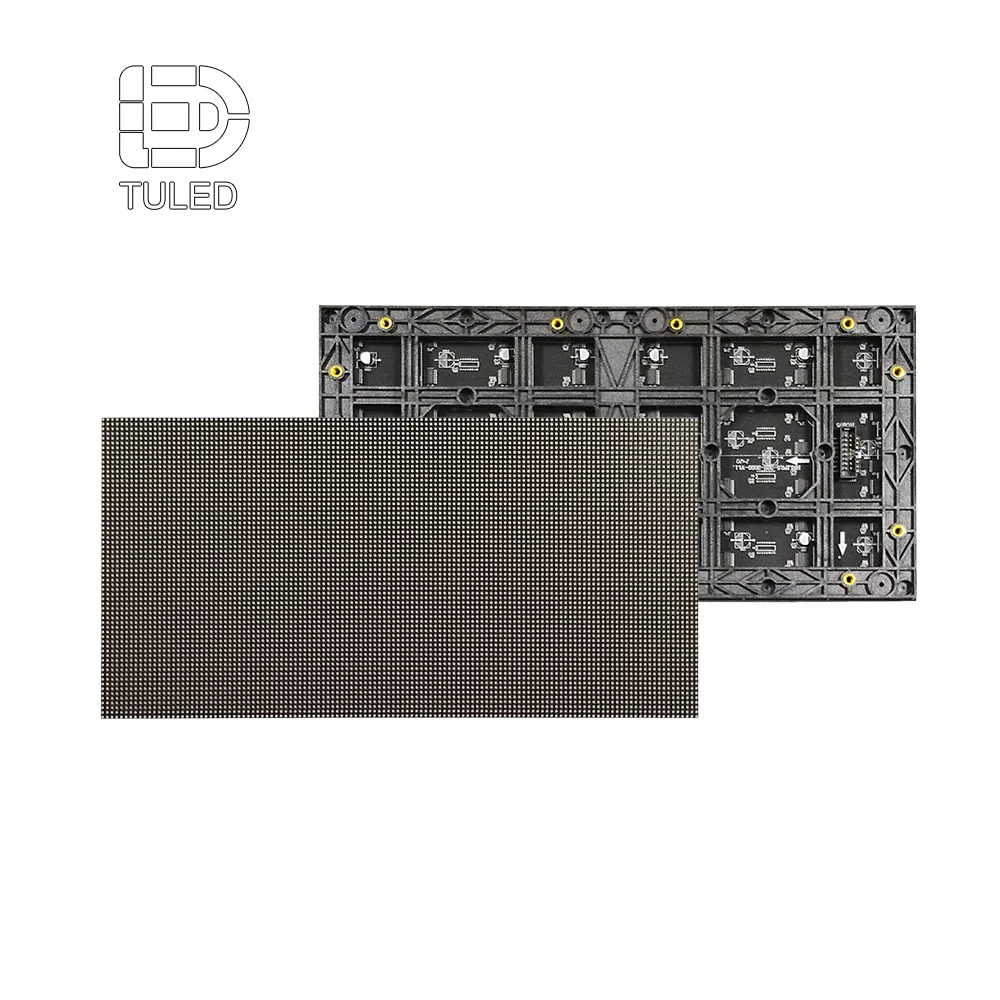
The 320x160mm LED module has become the de facto standard size in the global LED display industry. Whether you are building an indoor advertising wall, a rental stage backdrop, or a permanent outdoor billboard, chances are you will work with this exact module format. But why has this specific dimension gained such widespread adoption, and how do you choose the right variant for your project?
This guide covers everything you need to know — from specifications and pixel pitch options to installation, maintenance, and buying tips — so you can make an informed decision with confidence.
A 320x160mm LED module is a self-contained display panel measuring 320 millimeters wide by 160 millimeters high. Each module contains a grid of LED pixels mounted on a printed circuit board (PCB), driven by driver ICs, and housed in a plastic or metal frame. Multiple modules are tiled together to form a complete LED display screen of virtually any size.
The module connects to a receiving card, power supply, and control system (typically from brands like Novastar, Colorlight, or LINSN) to display video content, images, or text.
| Physical Parameter | Specification Details |
|---|---|
| Module Dimensions | 320 mm x 160 mm |
| Aspect Ratio | 2:1 |
| Typical Thickness | 12-18 mm |
| Weight | 0.3-0.5 kg (varies by pixel pitch) |
| Material | Plastic (indoor) / Aluminum (outdoor) |
| Mount Method | Magnetic front-service or screw-mounted |
This 2:1 aspect ratio makes the module extremely flexible for cabinet design. Four modules placed in a 2x2 grid form a 640x320mm cluster — or two modules side by side create a perfect 640x160mm strip, which aligns with many standard cabinet frames.
The LED display industry previously used a wide range of module sizes: 160x160mm, 128x128mm, 192x192mm, 250x250mm, and 320x320mm. So why did 320x160mm rise to dominance?
INDUSTRY FACT: The 320x160mm format accounts for an estimated 60-70% of all LED display modules sold globally for both indoor and outdoor applications.
| Pixel Pitch | Resolution (W x H) | Total Pixels | Typical Use Case | Brightness |
|---|---|---|---|---|
| P1.53 | 208 x 104 | 21,632 | Ultra-fine indoor, broadcast studios | >= 600 cd/m2 |
| P1.86 | 172 x 86 | 14,792 | Conference rooms, retail | >= 800 cd/m2 |
| P2.0 | 160 x 80 | 12,800 | Indoor advertising, control rooms | >= 800 cd/m2 |
| P2.5 | 128 x 64 | 8,192 | Indoor displays, exhibitions | >= 1,000 cd/m2 |
| P3.076 | 104 x 52 | 5,408 | Semi-outdoor, shopping malls | >= 1,200 cd/m2 |
| P4 | 80 x 40 | 3,200 | Indoor large-format, stage backdrop | >= 1,500 cd/m2 |
| P5 | 64 x 32 | 2,048 | Outdoor advertising, street signs | >= 4,000 cd/m2 |
| P6.67 | 48 x 24 | 1,152 | Outdoor billboards, stadiums | >= 5,000 cd/m2 |
| P8 | 40 x 20 | 800 | Large outdoor billboards | >= 6,000 cd/m2 |
| P10 | 32 x 16 | 512 | Highway signs, large-venue displays | >= 7,000 cd/m2 |
How to read the table: P2.5 means the distance between pixel centers is 2.5 millimeters. A 320x160mm P2.5 module therefore contains 128 pixels horizontally and 64 pixels vertically, for a total of 8,192 individual LED pixels.
Although the 320x160mm form factor is identical, indoor and outdoor modules differ significantly in construction and performance.
PRO TIP: Never use an indoor module outdoors. The lower brightness and lack of waterproofing will cause rapid degradation and failure. Always confirm the IP rating before deployment.
The optimal pixel pitch depends primarily on viewing distance. A simple rule of thumb: the minimum viewing distance in meters roughly equals the pixel pitch in millimeters.
| Pixel Pitch | Minimum Viewing Distance | Best For |
|---|---|---|
| P1.53-P2.0 | 1.5-2.0 meters | Close-up: control rooms, broadcast, retail counters |
| P2.5-P3.0 | 2.5-3.0 meters | Conference rooms, lobbies, exhibitions |
| P4-P5 | 4-5 meters | Stage backdrops, event screens, shopping mall atriums |
| P6.67-P8 | 6.5-8 meters | Outdoor billboards, building facades |
| P10 | 10+ meters | Highway signs, stadium perimeter boards |
Additionally, consider:
A standard 640x640mm cabinet accommodates exactly four 320x160mm modules in a 2x2 layout. This modular design enables rapid on-site assembly.
| Target Screen Size | Cabinets (640x640mm) | Modules (320x160mm) |
|---|---|---|
| 1.92m x 1.28m (approx 87 inches) | 3x2 = 6 cabinets | 24 modules |
| 3.84m x 2.24m (approx 170 inches) | 6x3.5 = 21 cabinets | 84 modules |
| 5.76m x 3.2m (approx 260 inches) | 9x5 = 45 cabinets | 180 modules |
Most 320x160mm indoor modules support magnetic front-service — the module can be pulled off from the front using a suction tool, without accessing the rear of the display. This is critical for wall-mounted installations where rear access is unavailable.
Outdoor modules typically use screw-fixed rear-service, requiring access behind the display. Some premium outdoor cabinets now offer front-service as well, but at a higher cost.
The 320x160mm module format is compatible with all major LED control systems:
| Control System | Software | Best For |
|---|---|---|
| Novastar | NovaLCT / VNNOX | Professional installations, large venues |
| Colorlight | LEDVision | Cost-effective, widely used in rental |
| LINSN | LEDStudio | Traditional fixed installations |
| Huidu | HD Player | Standalone and Wi-Fi-controlled displays |
When purchasing modules, always confirm the receiving card interface type (typically HUB75 for indoor, HUB320 for outdoor) to ensure compatibility with your control system.
When sourcing 320x160mm LED modules, evaluate these factors beyond just pixel pitch and price:
Premium LED chips from Nationstar, Kinglight, or Nichia offer better brightness uniformity, color consistency, and longevity (100,000 hours rated lifespan).
Driver ICs from Macroblock (MBI5124, MBI5252) or Chipone deliver smoother grayscale performance and higher refresh rates (>= 3,840Hz), critical for cameras.
Look for modules with at least 4-layer PCBs for better heat dissipation. Thicker copper traces (>= 1oz) improve reliability.
The plastic mask should fit snugly without gaps. Check for uniform LED alignment — misaligned LEDs cause visible lines and color shifts.
Technically possible, but not recommended. Modules with different pixel pitches have different resolutions per module, making seamless image alignment difficult. If you must mix, use the control system's scaling and cropping features to create separate zones.
It depends on pixel pitch. For example, a P2 module has 160x80 pixels. To reach 1920x1080, you need 12 modules wide (12x160=1,920) and 13.5 modules high (13.5x80=1,080). The physical size would be 3.84m x 2.16m (approximately 151 inches diagonal).
Indoor modules consume approximately 15-30W per module at full white. Outdoor modules consume 30-60W per module. Average real-world consumption is about 30-50% of maximum, depending on content brightness.
Physically, yes — most conform to the same mounting hole positions. However, electrical interfaces, color calibration profiles, and connector pinouts may differ. It is best to source all modules from the same manufacturer for a single project.
Quality modules have a rated lifespan of 100,000 hours to half-brightness. At 12 hours of daily use, this translates to approximately 22 years of operation. In practice, technology obsolescence often drives replacement before physical failure.
The 320x160mm LED module is not just another size option — it is the backbone of the modern LED display ecosystem. Its standardized dimensions reduce costs, simplify logistics, and make display projects more predictable from design through installation and long-term maintenance.
When selecting your modules, focus on the right pixel pitch for your viewing distance, match indoor or outdoor specifications to your environment, and verify component quality — LED brand, driver IC, and PCB construction — rather than choosing based on price alone. A well-sourced 320x160mm module will deliver reliable, high-quality visual performance for years to come. Whether you are building a single retail window display or a stadium-spanning video wall, this modular format gives you the flexibility, scalability, and value that no custom-size solution can match.
Request A Custom Project Brief
TU LED under Shenzhen Oubo Electronic Technology Co., Ltd., is a leading Indoor Outdoor Screen LED display manufacturer factory . We provide complete LED display OEM ODM factory solutions. We provide a 2-year warranty , conduct strict tests, offer affordable prices, and provide 24/7 support.
 EN
EN