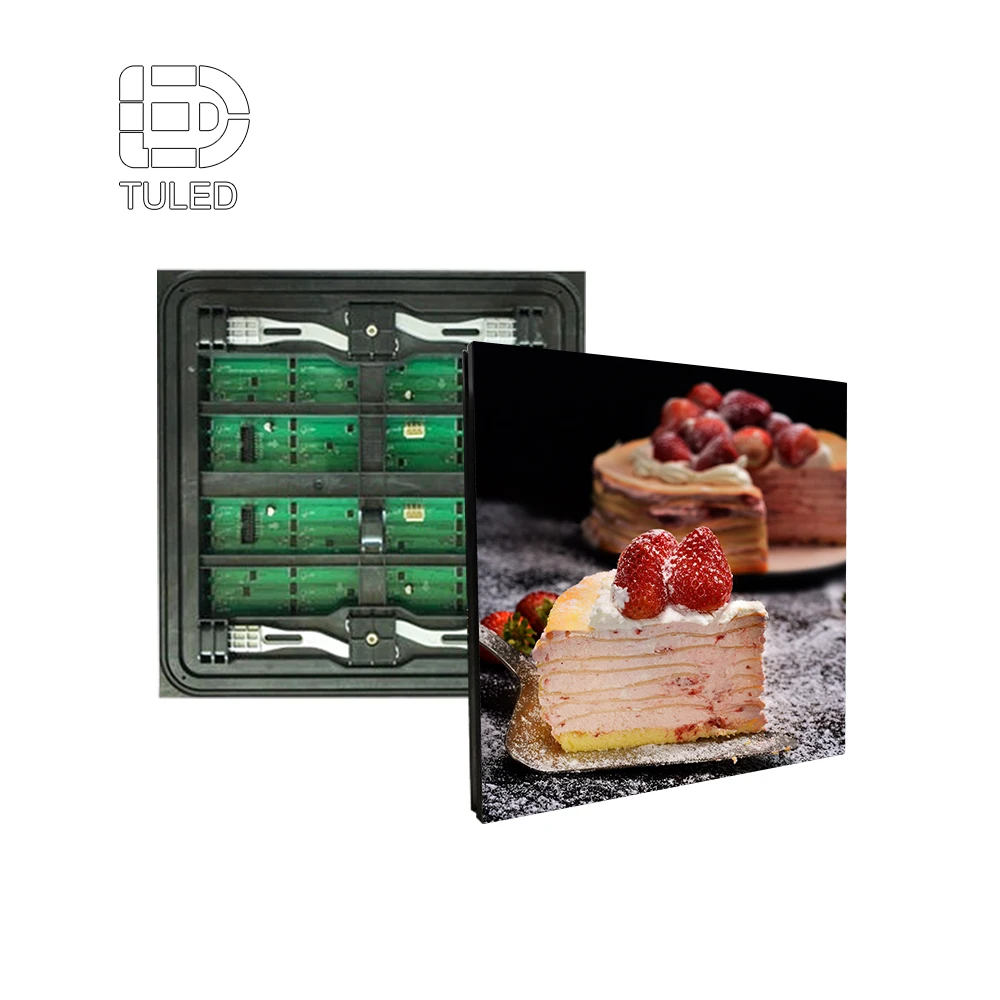
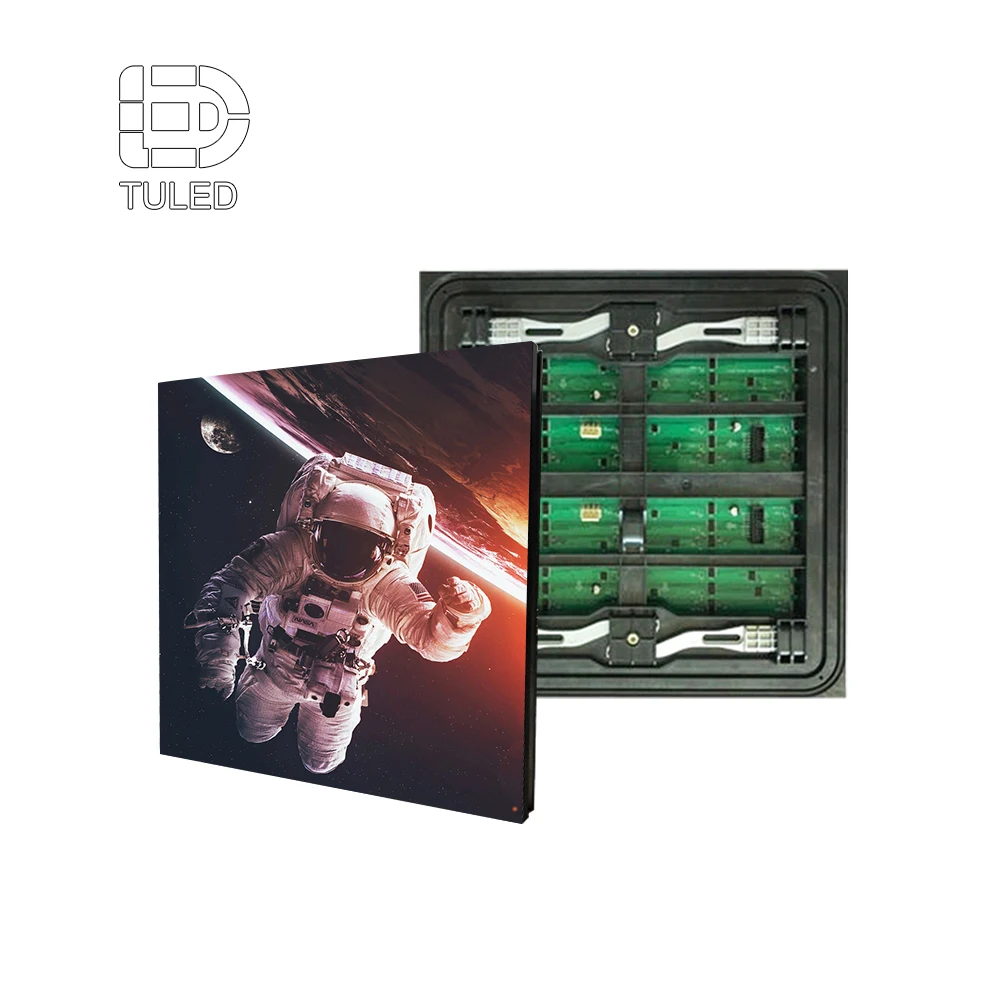
In the LED display industry, module size is not just a technical specification — it defines how you build, transport, and deploy your screen. While 320x160mm dominates indoor advertising and 320x320mm serves large outdoor billboards, the 250x250mm LED module occupies a unique and critical niche: rental staging, touring events, and mid-scale outdoor applications where portability meets performance.
This guide explains everything you need to know about the 250x250mm format — its applications, available pixel pitches, cabinet systems, and why it has become the preferred choice for event production companies and rental service providers worldwide.
A 250x250mm LED module is a square display panel measuring 250 millimeters on each side. It contains an array of RGB LED pixels on a multi-layer PCB, protected by a plastic or metal frame. Multiple modules are connected to form a complete LED screen.
The square 1:1 aspect ratio gives it unique tiling properties. Unlike rectangular modules that create a directional grain across the display, square modules tile uniformly in all directions, making them ideal for creative stage designs that require non-standard aspect ratios.
| Physical Parameter | Specification |
|---|---|
| Module Dimensions | 250 mm x 250 mm |
| Aspect Ratio | 1:1 (square) |
| Typical Thickness | 12-18 mm (indoor) / 15-22 mm (outdoor) |
| Weight | 0.3-0.6 kg (varies by pixel pitch) |
| Material | Plastic (indoor) / Aluminum or reinforced (outdoor) |
| Mount Method | Magnetic front-service or screw-fixed |
| Module Area | 0.0625 m2 per module |
The 250x250mm module has carved out a dominant position in the rental and staging market. Here is why event companies overwhelmingly choose this format.
| Pixel Pitch | Resolution (W x H) | Total Pixels | Typical Use | Brightness |
|---|---|---|---|---|
| P2.604 | 96 x 96 | 9,216 | High-res indoor, broadcast studios | >= 800 cd/m2 |
| P2.976 | 84 x 84 | 7,056 | Conference rooms, retail displays | >= 800 cd/m2 |
| P3.91 | 64 x 64 | 4,096 | Rental stage, concerts, events | >= 1,200 cd/m2 |
| P4.81 | 52 x 52 | 2,704 | Outdoor rental, touring, festivals | >= 4,500 cd/m2 |
| P6.25 | 40 x 40 | 1,600 | Outdoor signage, building facades | >= 5,500 cd/m2 |
Note: P3.91 and P4.81 are the most widely produced pitches for this module size. P2.604 and P2.976 serve the indoor fine-pitch market, while P6.25 targets cost-sensitive outdoor fixed installations.
| Feature | 250x250mm | 320x160mm | 320x320mm |
|---|---|---|---|
| Shape | Square (1:1) | Rectangle (2:1) | Square (1:1) |
| Area per Module | 0.0625 m2 | 0.0512 m2 | 0.1024 m2 |
| Weight per Module | 0.3-0.6 kg | 0.3-0.5 kg | 0.5-1.2 kg |
| Best Cabinet Fit | 500x500mm (2x2) 500x1000mm (4x2) |
640x640mm (2x2) 640x320mm (2x1) |
960x960mm (3x3) 640x640mm (2x2) |
| Primary Application | Rental staging | Indoor advertising, retail, general use | Large outdoor fixed |
| Key Pixel Pitches | P3.91, P4.81 | P1.53-P10 | P4-P10 |
| Installation Style | Toolless quick-lock | Magnetic front-snap | Screw-fixed |
| Portability | High | Medium | Low |
| Creative Flexibility | Excellent | Good | Limited |
SUMMARY:
The true value of the 250x250mm module is realized when paired with the right cabinet system.
IMPORTANT: Always match the module's IP rating to your deployment environment. An indoor-rated 250x250mm P3.91 module costs significantly less than its IP65 outdoor counterpart, but using it outdoors — even for a single day — can cause catastrophic water damage.
| Pixel Pitch | Max Power per Module | Max Power per 500x500mm Cabinet (4 pcs) |
|---|---|---|
| P2.604 | 15-20W | 60-80W |
| P2.976 | 15-20W | 60-80W |
| P3.91 | 20-25W | 80-100W |
| P4.81 | 25-35W | 100-140W |
| P6.25 | 25-35W | 100-140W |
Average real-world consumption is typically 30-40% of maximum, varying with content brightness. For a 500x500mm cabinet, a single 200W power supply is sufficient for most indoor applications; outdoor cabinets may require 300W PSUs to handle peak loads at full white.
250x250mm modules are compatible with all major LED control systems via standard HUB75 interfaces:
| Control System | Receiving Card | Software |
|---|---|---|
| Novastar | A5s, A8s, MRV series | SmartLCT, VNNOX |
| Colorlight | S2, S4, i5A-905 | LEDVision |
| LINSN | RV908, RV320 | LEDStudio |
| Brompton | Tessera SX40/S8 | Tessera (premium) |
RECOMMENDATION FOR RENTAL: Novastar A5s or A8s receiving cards are the industry standard for rental applications. They support auto-calibration and quick cabinet swapping, which is essential for fast-paced event setups.
Premium: Nationstar, Kinglight, Nichia
Standard: Silan, Desay
Budget: Generic (not recommended for rental)
Macroblock MBI5124 / MBI5252 (industry standard); Chipone ICN2053 / ICN2065. Minimum refresh: 1,920Hz (live), 3,840Hz (broadcast).
4-layer PCB for outdoor; 2-layer for indoor. FR-4 material, >= 1.6mm thickness. Black solder mask for indoor contrast.
Precisely aligned louver mask; reinforced corners for rental durability against transport vibration.
P3.91 (64x64 pixels) is the highest resolution that remains cost-effective for outdoor rental at typical stage viewing distances of 4-5 meters. P4.81 (52x52 pixels) offers comparable performance at a lower price point. The 250x250mm board size accommodates these pixel counts perfectly, matching the 500x500mm cabinet standard used by rental companies worldwide.
Yes, but only with IP65-rated outdoor modules using SMD1921 or SMD2727 LEDs and aluminum frames. However, for purely fixed outdoor billboards over 30 square meters, the larger 320x320mm format offers better cost efficiency with fewer modules and connections.
4m x 3m = 12 m2. Each module covers 0.0625 m2. You need 192 modules total. Using 500x500mm cabinets: 8 cabinets wide x 6 cabinets high = 48 cabinets, each with 4 modules = 192 modules.
Module-based systems use individual 250x250mm modules that mount into a shared frame. Cabinet-based systems pre-integrate 4 modules, power supply, and receiving card into each 500x500mm unit. Cabinet-based is the modern standard for rental because pre-integration dramatically reduces on-site setup time.
Physically, most share the same screw hole pattern and dimensions. However, electrical pinouts, color calibration data, and LED bin characteristics differ between manufacturers. For uniform display quality, source all modules from the same supplier.
Use dedicated flight cases with foam-cut inserts for each module or cabinet. Never stack modules without protective interleaving. For rental fleets, invest in cabinet-based systems where modules remain installed inside the cabinet — this is the most reliable method for transport protection.
Use this structure when contacting suppliers for rental-grade 250x250mm modules:
The 250x250mm LED module may not be the largest or the most widely produced format, but it has become irreplaceable in one of the LED display industry's most demanding segments: rental staging and live events. Its square shape, lightweight build, and perfect compatibility with 500x500mm and 500x1000mm cabinet standards make it the engine behind concert tours, conferences, and broadcast productions worldwide.
When sourcing 250x250mm modules, your priorities should match your use case. For rental companies, invest in premium LED chips (Nationstar, Kinglight), Macroblock driver ICs, and cabinet-based pre-integrated systems that minimize on-site labor. For fixed installations, balance budget and performance by choosing the right pixel pitch for your viewing distance.
The compact square that moves the stage — that is the 250x250mm LED module.

TU LED under Shenzhen Oubo Electronic Technology Co., Ltd., is a leading Indoor Outdoor Screen LED display manufacturer factory . We provide complete LED display OEM ODM factory solutions. We provide a 2-year warranty , conduct strict tests, offer affordable prices, and provide 24/7 support.
 EN
EN