EN

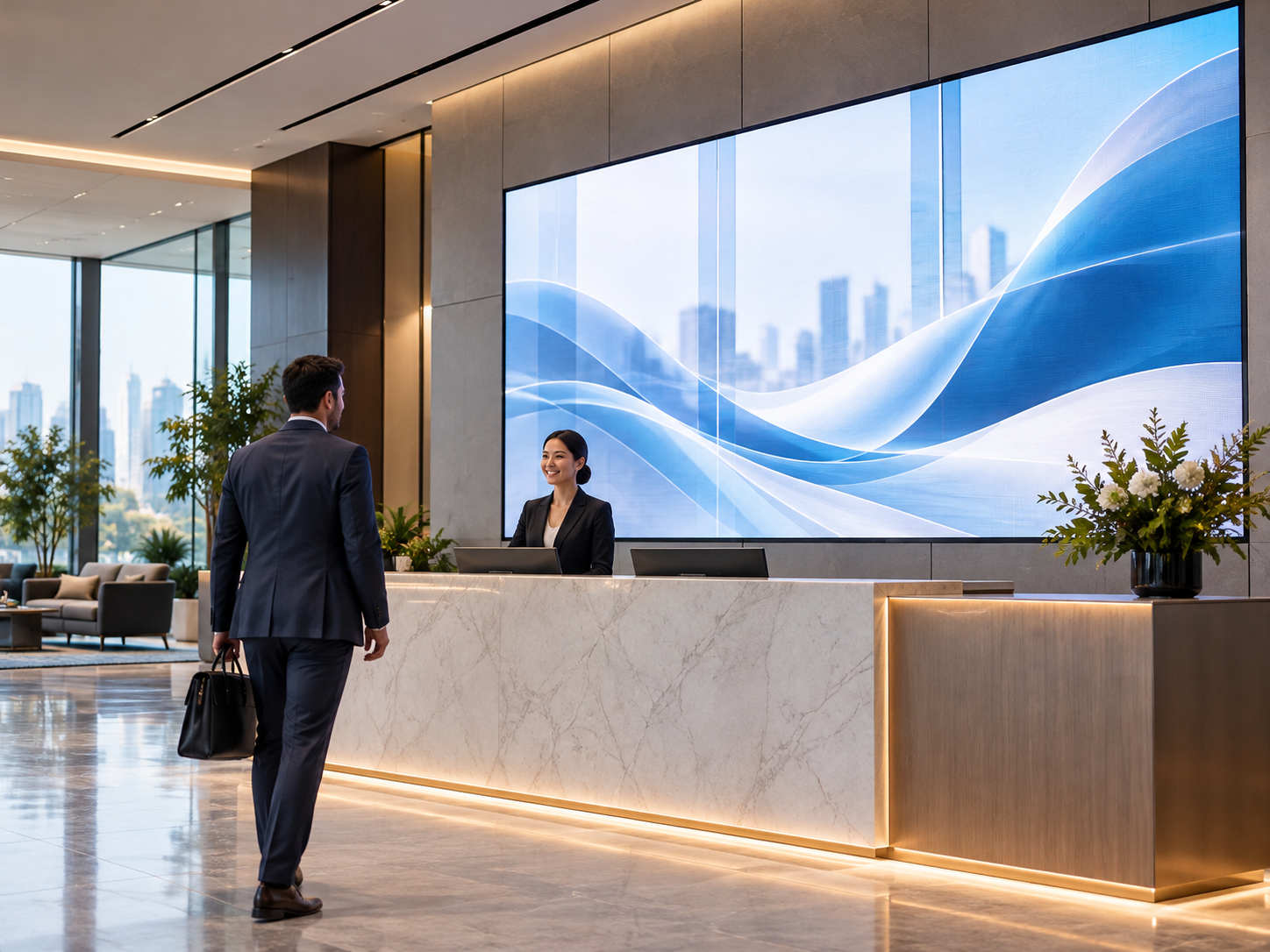
A visitor arrives for a meeting, approaches the reception desk and notices a large LED wall playing a company video. The presentation looks polished, but the visitor still has to ask where to check in. The screen is communicating the brand without helping with the arrival.
A dependable corporate lobby LED welcome starts with a simple priority: show approved arrival information when it matters, then return to the regular brand sequence. Reception staff can make routine changes without having to redesign content or seek a marketing sign-off for every adjustment.
That makes the central buying question operational as much as visual: can the proposed wall, content system and team workflow keep the right welcome visible when schedules change?
Start with the arrival experience at reception
The wall should answer the question a visitor has upon entering the building, not the question a brand team wants its next slide to answer. A clear company welcome and an obvious route to the reception desk normally matter before a longer corporate story.
That difference becomes apparent when the entrance, LED wall and check-in counter are considered together. A display positioned for the waiting area may look impressive in a design render yet sit outside the natural line of sight for someone approaching the desk. A visitor might also see the screen from a distance at which a small meeting instruction is not yet readable.
One useful review is to stand at the entrance and ask what can be understood before approaching the wall. If the message only makes sense from the seating area, its location or hierarchy may need to change. If it competes with the receptionist's instructions, it probably contains too much information.
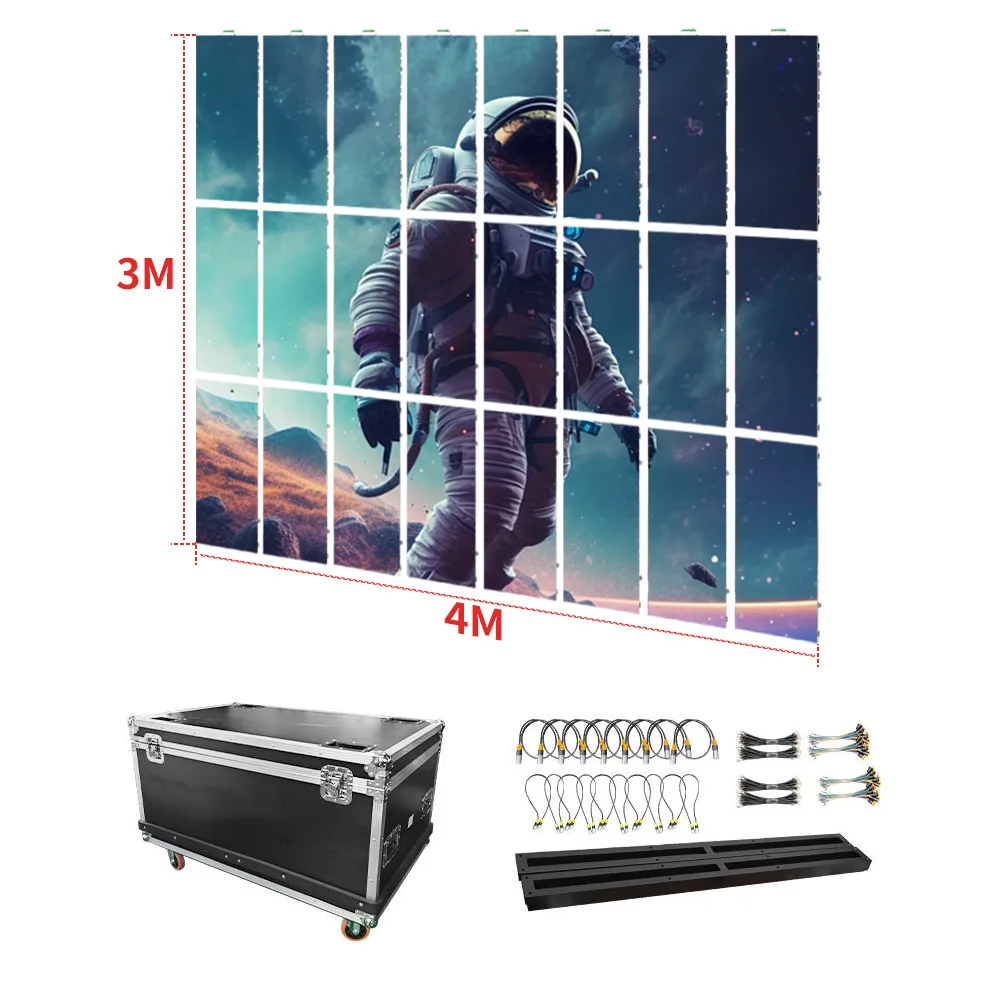
When considering a custom led wall sign, connect the physical format to this arrival path: viewing position, available wall space and readable message area should shape the selection before decorative content does. The LED Wall Panel category is a relevant starting point, not evidence that any particular panel includes visitor scheduling or reception software.
Sequence welcome messages and brand content by visitor need
A company may have excellent brand material and still need a quieter screen when visitors are trying to check in. The best lobby LED welcome content is rarely a nonstop video loop. It is a limited set of messages with clear priorities, used according to what is happening at the desk.
For a scheduled group arrival, an approved organization-level greeting can briefly take precedence over the usual brand sequence. That is different from an ordinary morning with no anticipated visitors, when a general company welcome and selected brand material are enough. Both states can share a visual identity without carrying the same amount of information.
Please check in at the reception desk.
Our reception team will assist with check-in.
Timing becomes harder when arrivals overlap. A late meeting, an early delegation and an unscheduled visitor do not need three simultaneous personalized banners. Showing too many greetings can make the wall less useful and may expose information the organization has no reason to display publicly.
Reception LED content scheduling should therefore distinguish fixed, approved messages from material that can run whenever the wall is otherwise free. A meaningful brand sequence might include company identity, selected achievements or approved imagery, but it should yield cleanly to a relevant arrival message and return when that message is no longer current.
The proposed publishing process might use manual selection or scheduled playlists; either is acceptable only if it fits staffing and can be demonstrated. Ask to see how a welcome is selected, when it disappears and what the wall shows next. A smooth promotional demo is not a substitute for that ordinary working-day test.
Give reception a manageable update and approval workflow
The most elegant screen design becomes an operational nuisance if reception has to call marketing every time a visitor changes plans. Equally, unrestricted editing can leave staff responsible for branding and privacy decisions they were never meant to make.
For routine arrivals, reception should ideally work from approved material. Staff may need to select a prepared greeting, confirm the appropriate display period or restore a default message. Creating new branded assets or approving public use of a person's details is a different responsibility and should sit with a named approval role.
Consider a delegation arriving earlier than expected. If its organization-level greeting has already been approved, the reception supervisor could request that it appear sooner. If the visitor asks for a new message containing individual names or an unapproved logo, the change should go to the responsible approver rather than straight to the wall.
The handover question that matters: can a receptionist make an approved routine change, tell whether it is live and return to the default message without also gaining unrestricted control over the brand library?
Project owners should define who requests a change, who approves it, who publishes it and who removes it. The schedule owner may confirm the visit; brand operations may approve visual material; and reception may be responsible for the on-the-day action. Those roles can be combined in a smaller team, but the accountability should not disappear.
Before choosing a control arrangement, ask the proposed supplier or software provider to demonstrate an ordinary update and a manual override. Check whether user roles can be separated, whether current content is identifiable and how staff recover if the wrong message is published. These are project questions, not verified functions of every LED Wall Panel product.
Protect visitor information and handle schedule changes
A lobby is a public-facing space. Employees, contractors, delivery drivers and other visitors may all see the wall, so even a well-intentioned personalized greeting can reveal more than the company intended.
There is usually no need to display someone's full name just to make them feel expected. A general welcome or an approved organization-level message can often achieve the same purpose. Where names or meeting details are proposed, the facilities and privacy teams should determine what is justified, who approves it and how long it may remain visible under the organization's applicable rules.
Privacy also affects the way changes are handled. An approved greeting may stop being accurate after a cancellation, a delayed meeting or the visitor's arrival. If the schedule owner does not communicate the change, the wall can continue announcing a visit that is already over.
Set a clear withdrawal route: reception reports the change, the responsible person confirms it and an authorized operator removes or replaces the message. If the information cannot be confirmed, the safest editorial choice is to use the general welcome rather than invent a meeting time or guess who is expected.
Out-of-hours operation deserves the same attention. When the desk is unstaffed, the content schedule should not depend on someone remembering to remove a personal greeting. Ask what the proposed system actually does when scheduled material ends or a publishing change fails, and verify the answer before relying on it.
The wall communicates approved information; it is not a substitute for building access control, formal visitor registration, emergency messaging or other authorized safety procedures.
Prepare a lobby content-and-control brief
By this stage, the display discussion should be more specific than screen size and the preferred brand animation. Corporate facilities managers, reception leads and brand operations teams can make a more grounded selection when they bring the same description of the visitor experience to the project review.
One concise brief is usually more useful than a large folder of visual references. It should cover the real arrival path and establish who owns the information after the wall is installed.
Include lobby photographs, the proposed wall location and a few examples of normal, scheduled and cancelled-visit content. These inputs show whether a design works for the actual reception journey rather than only in a presentation mockup.
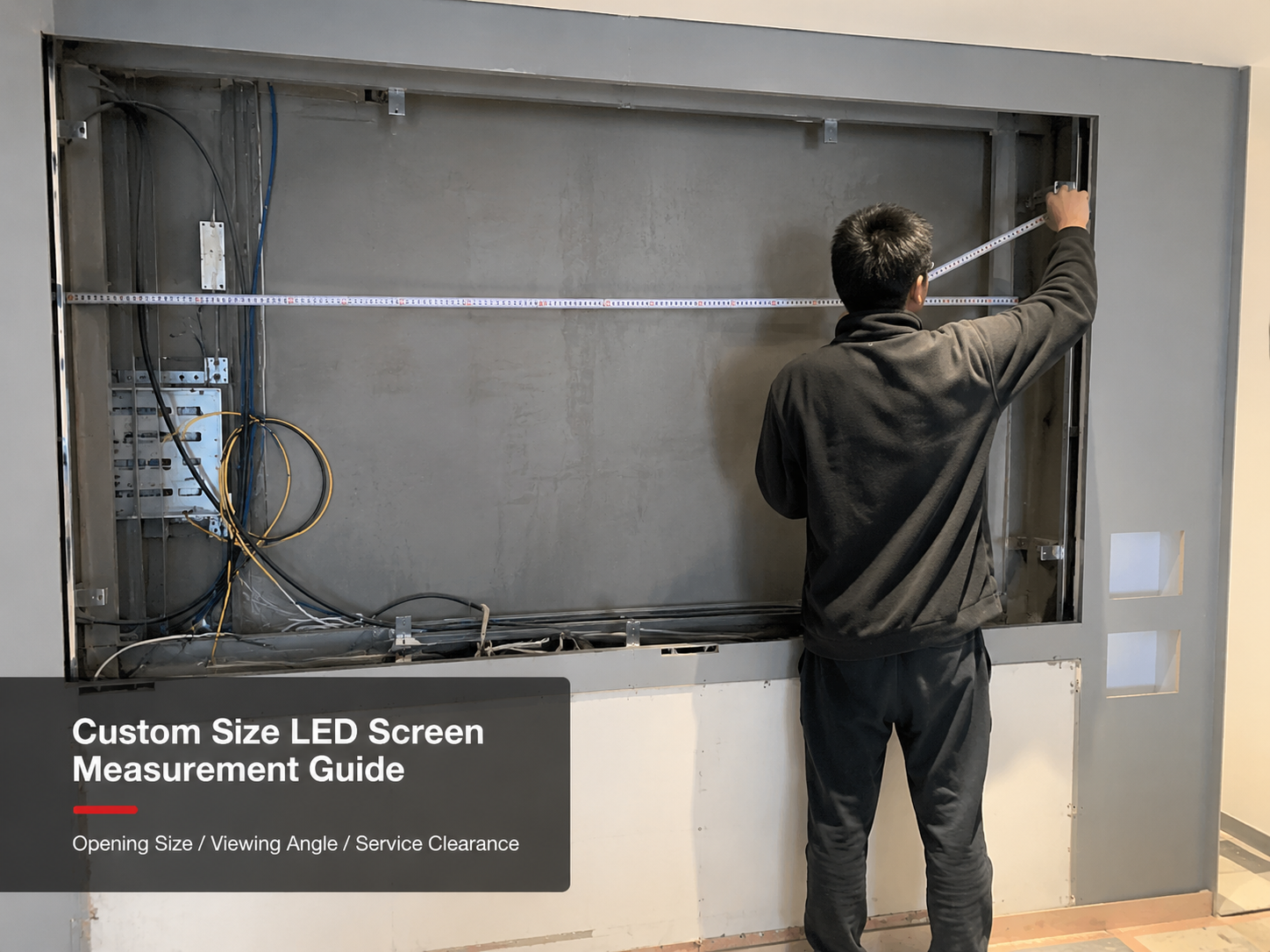
For the display itself, record the nearest regular viewing position, daylight conditions, available wall space and service-access constraints. These details help narrow the hardware options, while scheduling and user permissions should be assessed separately for the proposed content-management setup.
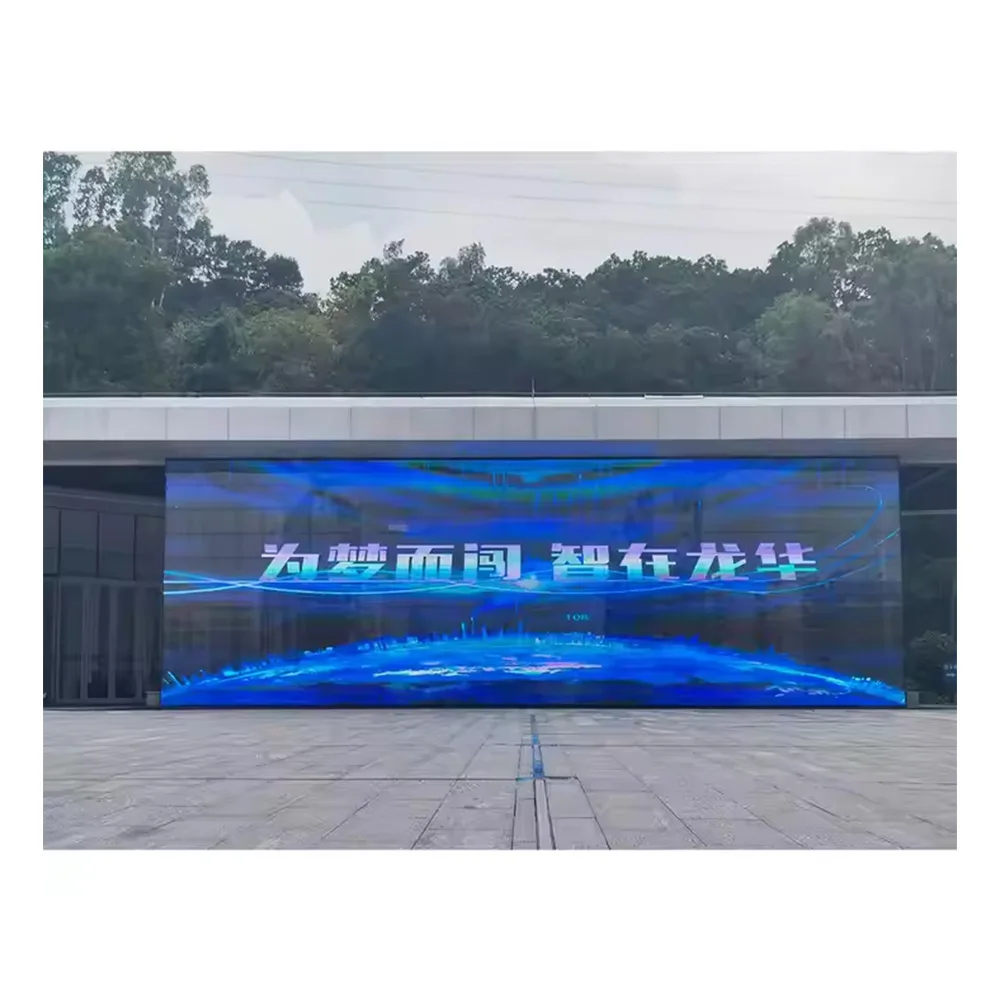
An existing indoor installation can help the project team evaluate the visual scale of a wall display within an entrance area. It cannot, by itself, establish how reception staff will approve, schedule or withdraw visitor messages.
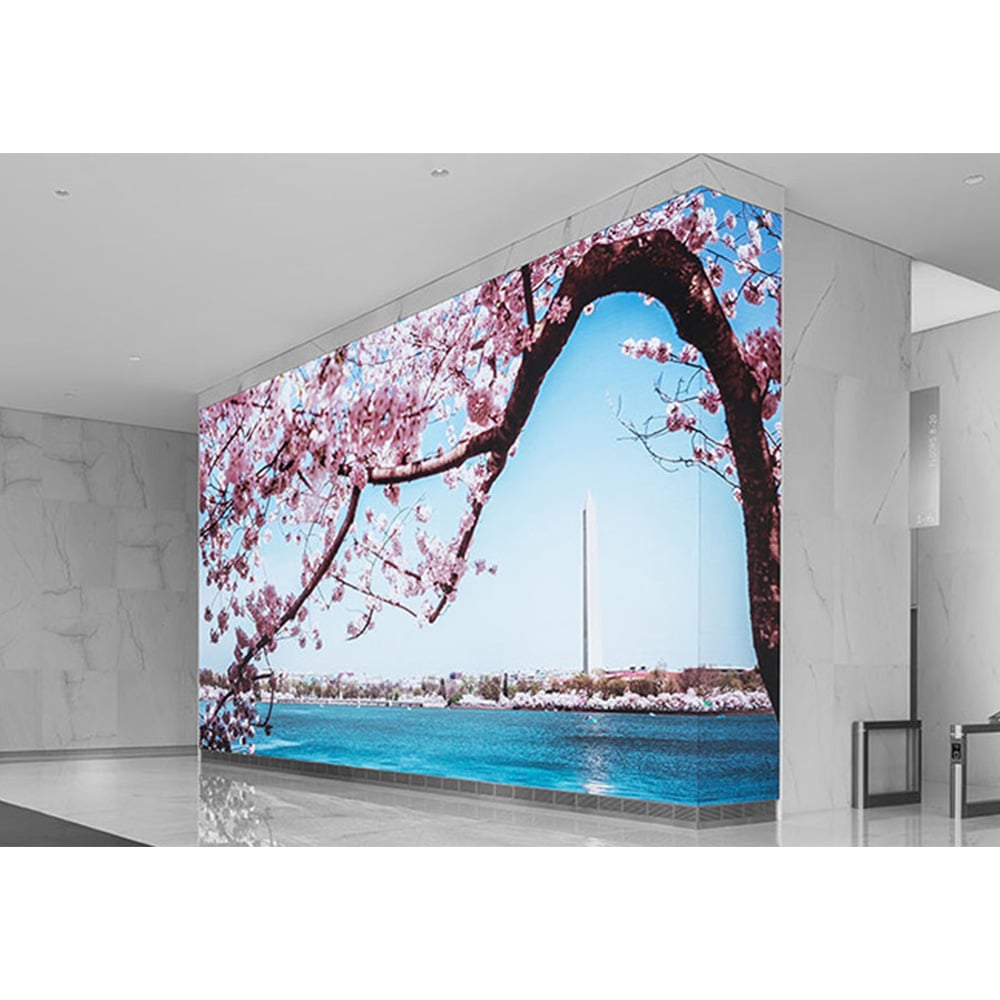
With that context, lobby display options for reception teams can be reviewed against the physical space and the verified capabilities of the proposed content setup. Compare only what supplier documentation or a project demonstration supports; the display category alone does not establish a complete visitor-management workflow.
A successful corporate lobby LED visitor welcome does not need to show everything the company could say. It needs the right message at the right stage of an arrival, a dependable default when plans change and a reasonable amount of control for the people working at reception.