EN

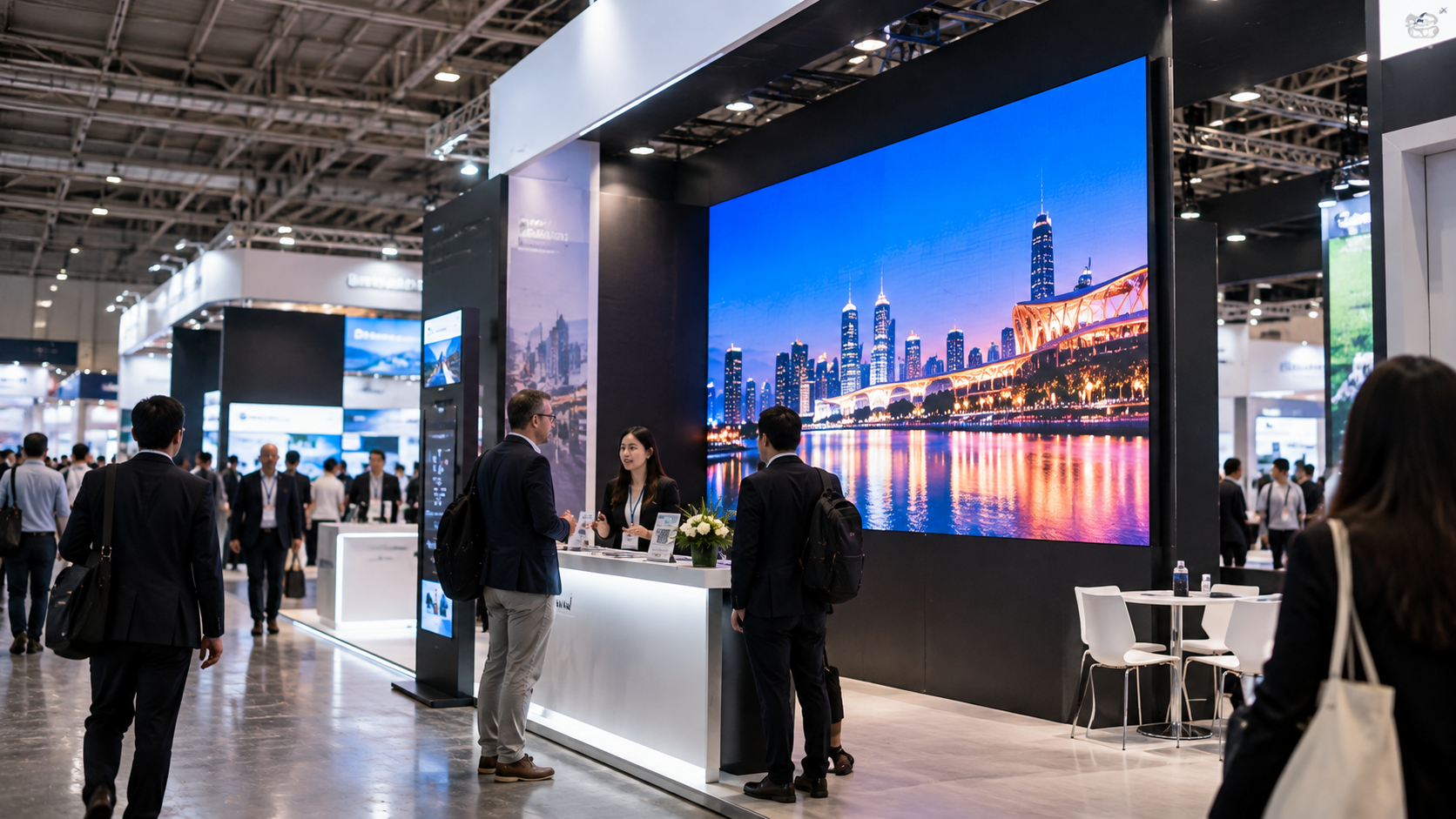
An exhibition booth LED display can support lead generation when its message is legible from the aisle, its format and position suit the booth and venue constraints, and visitors have a clear next step. A polished video loop cannot compensate for a headline facing away from the main approach or a QR code placed where visitors cannot comfortably scan it.
The important decision comes before screen selection: which visitor approach matters most, what should be understood at that point, and where can the conversation or inquiry realistically happen? Those answers determine both the viewing position and the content—not simply how large the display looks in a rendering.
Decide what an approaching visitor should understand first
A passing attendee rarely starts by reading a detailed product list. More often, they catch a fragment of the display between neighboring stands, people and structural elements. The first message must work even when the visitor has not seen the beginning of the content loop.
Choose a single idea that establishes relevance: an application the exhibitor serves, a problem its offering addresses or a demonstration worth seeing. Supporting detail belongs where someone who has stopped can explore it. For instance, an industrial exhibitor might lead with the production task a machine supports and save component specifications for the discussion at the stand. This is a planning example, not a customer result.
Think of the content as a conversation with different reading distances. From the aisle, visitors need a reason to look. Near the booth, they need enough context to decide whether to speak with the team. Only after that does detailed technical or commercial material become useful. Separating these stages makes it easier to decide which information belongs on the main screen and which should wait until a visitor stops.
The test: If someone notices the display halfway through its loop, can they still identify what the exhibitor offers and how to find out more?
Match the screen position to aisle sightlines and booth limits
Exhibition booth sightlines depend on the booth footprint and the directions from which visitors approach—not simply on the screen position shown in a design rendering. Counters, pillars, exhibits and groups of visitors can hide the lower or outer portions of a screen. A message that works face-on may lose its meaning when viewed briefly from the side.
The booth drawings therefore need to show the likely first viewing points as well as the screen location. At this stage, indoor LED display options should be assessed against the actual booth conditions. The supplier should then review the proposed format and mounting approach using the submitted layout; a category label alone cannot confirm the fit.
One open aisle edge
A screen facing inward can support a demonstration after visitors enter, yet leave the main offer invisible to someone walking past. The aisle-facing message may need a different position or a simpler presentation.
Corner booth, two approaches
A message readable from one aisle may be oblique from the other. Before adding another screen, compare the viewing angles and consider whether repositioning or repeating the key idea solves the problem.
Compare what visitors can actually see from each approach. Ask the designer to show mock-ups from walking height, not only a flattering frontal rendering. The same review should identify where someone could stop without blocking circulation.
That last point matters for capture. A large display may attract attention from a distance, while scanning a QR code or speaking with staff requires an accessible interaction point. The attention message and the response action can occupy different places in the stand without weakening the visitor journey.

Plan setup tasks around the actual venue access window
The installation question is not simply how quickly a screen can be assembled. The booth contractor may need to finish the structure before equipment can be positioned; power and signal provisions may depend on designated venue services; AV may not be able to check the final media until other work is complete. A short setup window is manageable only when these dependencies are understood.
Work backward from the required stand handover. Confirm when equipment can enter, which tasks are permitted during each access period, when the support arrangement will be ready and who authorizes the final installation. The exhibitor manual, approved stand drawings and contractor schedule should be consistent before the equipment plan is locked.
Rapid setup depends on mapping the handoffs before the build window opens: venue access and approvals, support-structure readiness, power and signal availability, equipment assembly, media loading, and final playback and QR testing. The exact order will depend on the venue and stand contractor, but each handoff needs an owner and a confirmed time.
When comparing event LED display options, ask suppliers to make the installation requirements explicit. Request documentation for the actual configuration, including the proposed support method, power and signal coordination, access needed for assembly and checks, and the work expected from the venue or booth contractor. Do not assume that a particular product is quick to install because it appears modular in a photograph.
Allow time for the finished message, not only the hardware. The team still needs to check the approved content loop, verify the promised next step and confirm that the responsible staff know what to do if the destination or media changes.
Venue approval remains with the authorized organizer and contractors. Promotional displays must not substitute for approved safety signs, emergency information, permit processes or control systems. If the access window changes, any revised physical arrangement needs proper review rather than an improvised workaround.
Connect content to a clear and accessible lead-capture action
Lead-capture content works best when the invitation matches the viewing moment, rather than appearing as a QR code on every frame. A message such as “Discuss your production application at the stand” can be useful from the aisle. A request form or downloadable application sheet may become relevant once the visitor has approached and understood the offer.
The sequence should remain clear even when someone joins the loop midway: recognize the offer, understand why it matters, and see one clear next action. Keep the core offer visible long enough to register, and avoid competing prompts that make visitors choose between several unrelated responses.
A QR destination needs to match the promise on-screen. Check the destination on a phone, scan the final artwork from the intended stopping position and submit a test inquiry so the team can confirm it arrives. If the destination is unfinished or unreliable, use a prepared staff-assisted action instead of leaving a nonworking code visible.
Content ownership also needs to be settled. Marketing approves the offer and landing-page wording; the exhibition AV lead checks that approved media can be presented as planned; the inquiry owner verifies the response path; and a designated approver signs off on changes. Whether the display can be updated during the show depends on the chosen equipment and operating arrangement and must be confirmed, not presumed.
When online capture is not appropriate, staff can direct visitors to an approved alternative. Any personal data collected should follow the exhibitor's applicable privacy process.

Consider a floorstanding LED poster for a smaller message zone
Where the main aisle display is too distant for a detailed response prompt, a floorstanding LED poster display near the staffed discussion area may be worth evaluating. It is one real product format to compare against the available footprint, approved placement and expected content. Its suitability for a specific stand and capture workflow still needs confirmation.
View LED Poster DisplaySend a booth brief that suppliers can evaluate
“We need an LED wall for a trade show” leaves too much unresolved. The useful brief shows where the display would sit, how people arrive and what they should do next. That lets the supplier discuss exhibition display options against real constraints rather than recommend a format based only on a target screen size.
For exhibitors, booth designers and exhibition AV project managers, these are the inputs worth assembling before requesting a proposal:
- Booth dimensions and footprint: scaled plan, elevations, open edges, counter and exhibit locations, and the proposed screen area.
- Aisle approaches: likely walking directions, the closest and farthest intended viewing positions, primary sightlines and any obstructions that could affect readability.
- Venue rules and approvals: the current exhibitor manual, booth height and rigging restrictions, available power and cable routes, contractor responsibilities and required approval status.
- Setup window: delivery access, permitted work periods, stand handover deadline and dependencies between the booth and AV crews.
- Content goal: the one idea the passerby should understand, supporting material for closer visitors and the person responsible for final approval.
- Lead-capture destination: the confirmed page or staff-led action, intended QR position if used and the contact responsible for testing inquiries.
Ask the supplier to identify what evidence is still needed to evaluate the chosen display arrangement. Drawings, installation requirements and exact configuration details are more useful than a general assurance that a format is suitable for exhibitions. This is also the right moment to decide what an approaching visitor should understand first in the final content mock-up.
Once the brief connects visitor behavior with the booth's physical limits, the supplier can evaluate the display format, mounting approach and content plan against the actual project conditions. This keeps the screen and its lead-capture message within the booth plan rather than leaving them as a last-minute graphic decision.
Frequently Asked Questions
Should a booth screen show one offer or a long product list?
How can a team check a QR destination before the show?
What venue and setup details should be sent for a quote?
Share your booth dimensions, aisle approaches, venue rules, setup window, content goal and lead-capture destination. These details make it possible to review the proposed display arrangement and the visitor journey together before finalizing the approach.
Discuss Your Booth Brief