EN

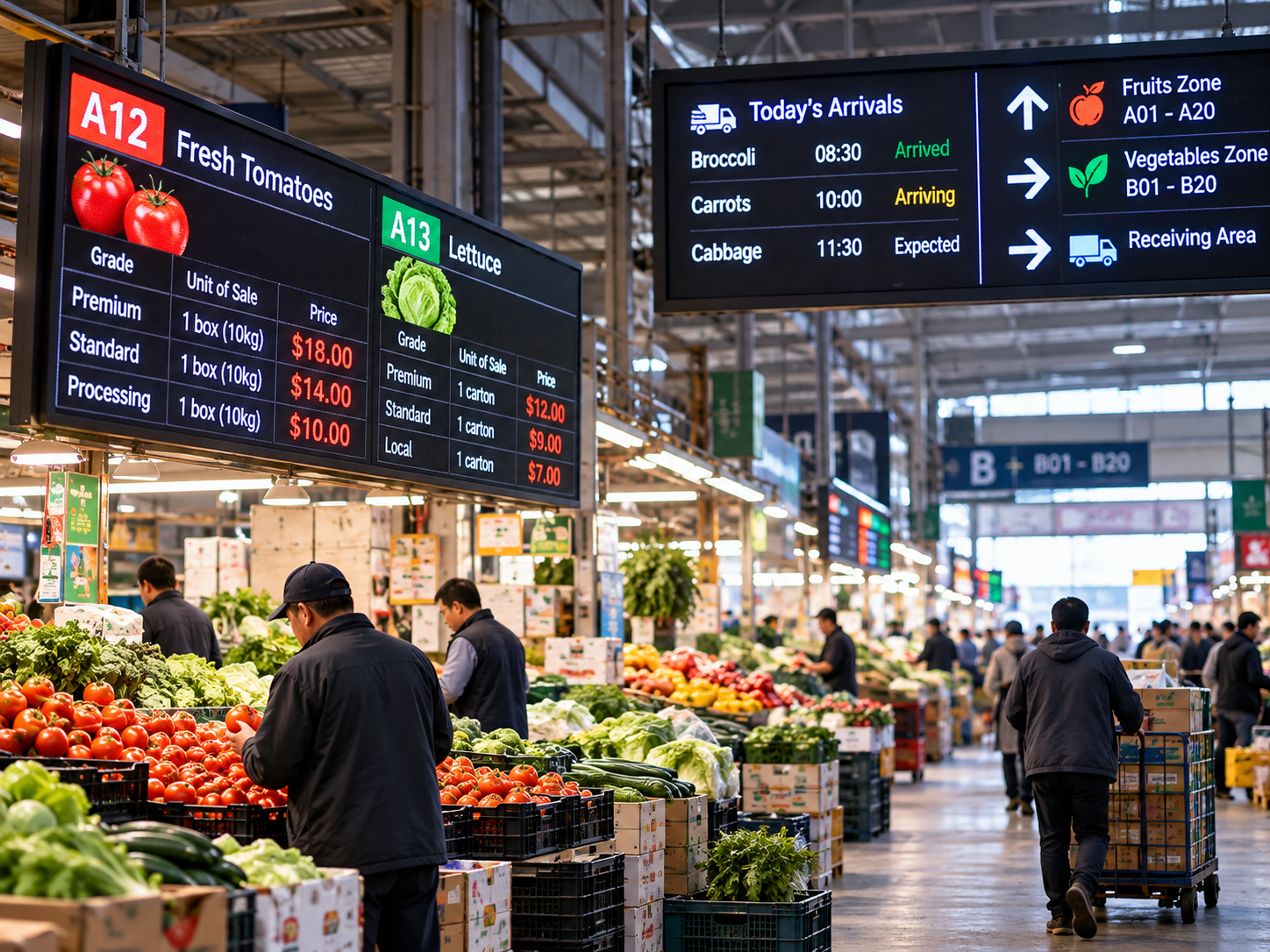
LED signs in wholesale produce markets are most useful when they make three kinds of information easy to distinguish: stall prices, delivery status and buyer directions. A price should identify the product and unit being sold, while an arrival notice should make clear whether a shipment is expected, received or ready for sale.
For LED stall pricing in produce markets, the challenge is not simply choosing where to install a screen. It is deciding which information can be published, who approves each change, and how buyers can identify the correct stall and product lot.
Make price and unit of sale readable together
A displayed price can be confusing even when the amount is correct. A purchaser looking for tomatoes sold by the carton may interpret a prominent figure differently if a nearby stall sells the same commodity by weight. The ambiguity grows when varieties, grades, package sizes, or incoming batches differ.
The essential rule is to keep the product description, approved price, and unit of sale together as one readable transaction message. Stall identifiers and grades need to remain attached to that message whenever they distinguish one offer from another.
A stall selling potatoes in bags of different weights, for example, should not show one price beside a general product name. Each bag specification needs its own price, or the sign must clearly identify which bag the figure applies to. The same problem arises when a revised price for one grade appears to cover every grade available at the stall. Origin information can help distinguish products, but should be shown only when verified and relevant.
Design the price message around the transaction
The price layout should reflect the distinctions buyers need to make before placing an order. A straightforward offer may require only the commodity, price, selling unit, and stall number. Multiple grades or packaging formats make those distinctions indispensable rather than optional. A weight-based offer should also make clear whether its figure applies to a stated weight or to a specific packaged lot; otherwise a buyer may mistake a per-weight price for a package price.
Market operators comparing options with LED sign suppliers should begin with representative stall records rather than a blank-screen specification. Request a demonstration using the longest commodity names, real unit labels, and the distinctions that frequently change at the market.
A practical layout review should make price and unit of sale readable together from the places where purchasing decisions occur. More information is not automatically better if a buyer can no longer tell which number belongs to which product or batch.
Separate arrival updates from confirmed stock information
An expected delivery is not stock ready for sale. An arrival display should make that distinction clear before an incoming shipment changes purchasing plans or sends buyers to a stall prematurely.
Scheduled, not verified: The market has an authorized expected arrival time, but the shipment has not been checked at the receiving point. Show the status as expected and avoid promising immediate availability.
Received, not released for sale: Goods are physically present, but the saleable quantity, grade, or batch allocation remains unconfirmed. A message such as “Received — Stock Confirmation Pending” is more accurate than “Available Now.”
An estimated arrival time should be revised or withdrawn when its authorized source changes. Likewise, receiving confirmation should not silently inherit the displayed price of an earlier batch. If a market uses consignment or batch identifiers, the relevant identifier should accompany the status wherever buyers might otherwise confuse new and existing stock.
An entrance display might provide a broad arrival notice, while the stall-level message provides confirmed purchasing details. That division only works if the market decides who validates each status and how updates move between receiving staff, stall managers, and display operators.
Whether a display can deliver these updates depends on the proposed system, not the product category name. Live inventory integration, automatic status changes, centralized control, and the delay between approval and publication all need to be demonstrated for the specific setup.
Route buyers by stall and purchasing task
In a wholesale produce market, wayfinding needs to do more than point buyers toward a row of stalls. A visitor may be finding a particular wholesaler, checking an incoming shipment, collecting an order, or locating the area where the purchase will be completed. Those tasks do not necessarily lead to the same destination.
An entrance display can identify a market zone, an aisle sign can narrow the route, and the stall display can confirm that the purchaser has reached the intended seller. The stall identifier connects these messages. If one location uses a zone name, another uses an aisle label, and the price sign omits the stall number, buyers are left to reconstruct the route themselves.
Observe where the purchasing decision changes
Before choosing sign locations, observe where people pause, turn back, request directions, or mistake one stall for another. Entrances, aisle junctions, designated purchasing points, and locations used to confirm arrivals may each call for a different level of detail.
An entrance screen is usually read from farther away than a stall-level price display, so the two should not carry the same amount of detail. Check the longest viewing distance, mounting height, viewing angle, and ambient light at each position, then test real stall names, arrows, and price lines from those viewpoints. If a display is near an exposed entrance or loading area, confirm the environmental rating and mounting method for the exact model rather than assuming one sign type will suit every location.
When an arrival changes, the right direction depends on whether the buyer's destination has changed. A delayed shipment may only require a revised arrival status. If an approved buying location changes, the directional information should change with it. Neither condition justifies directing buyers into receiving or vehicle-handling areas that are not approved for public access.
The integrator needs the current stall map, approved routes, viewing positions, obstacles, installation constraints, and access restrictions. Without those inputs, a proposal may describe the screen but fail to address the path a buyer is expected to follow.
Any proposed display arrangement should be checked at the real decision points with recognizable stall names and routes. Readability and placement must be assessed in the project's environment, not assumed from a product photograph.
Assign price approvals and correction procedures
Reliable stall pricing depends as much on clear information ownership as on the display itself. A stall manager may know the latest agreed selling price, but that does not mean every market employee is authorized to publish it. Receiving personnel may confirm that a delivery has arrived without being responsible for its selling grade or commercial price.
Each stall needs a designated pricing authority. If a central team publishes updates for multiple stalls, it needs an agreed method of recording which stall approved the commodity, grade, unit, and price. Treating those details as one record prevents the new figure from accidentally retaining an old selling unit.
Imagine an approved price change arrives before the updated package weight is confirmed. Publishing the new amount beside the previous weight could create a misleading offer. The safer procedure is to hold that transaction message until its essential fields agree, or withdraw an existing entry that can no longer be trusted.
The same principle applies to arrival reports. A more recent message is not necessarily a more reliable one. The market should define who can report an error, who approves the correction, and who confirms that the visible sign now matches the approved record.
A simple revision record identifying the stall, information category, approving person, update time, and correction status can make disputes easier to resolve. Whether that record is kept manually or in software is a separate project choice; it is not a capability that should be attributed to an LED sign without verification.
Prepare a market-specific signboard brief
The most useful supplier discussion starts with real market records and the way information moves through the site. Wholesale produce market operators, stall managers, and signage integrators should agree on what each display must communicate before comparing market LED signboard options.
The brief should cover the following six inputs:
- Stall map: Current stall identifiers, market zones, entrances, and places where purchasing information is needed.
- Units of sale: Commodities, grades, package descriptions, selling units, and batch distinctions.
- Pricing authority: Who approves each stall's prices, who publishes them, and how corrections are handled.
- Arrival source: Where estimated arrivals originate and how receiving and saleable-stock states are verified.
- Buyer routes: Approved purchasing paths, stall decision points, and restricted areas.
- Update frequency: Normal revision patterns, urgent changes, and publication responsibility.
These inputs help determine what deserves space on each sign and what the proposed display workflow must handle. They also give the project team a fair basis for comparing supplier demonstrations instead of assuming a category name guarantees suitability.
Review the display format against market messages
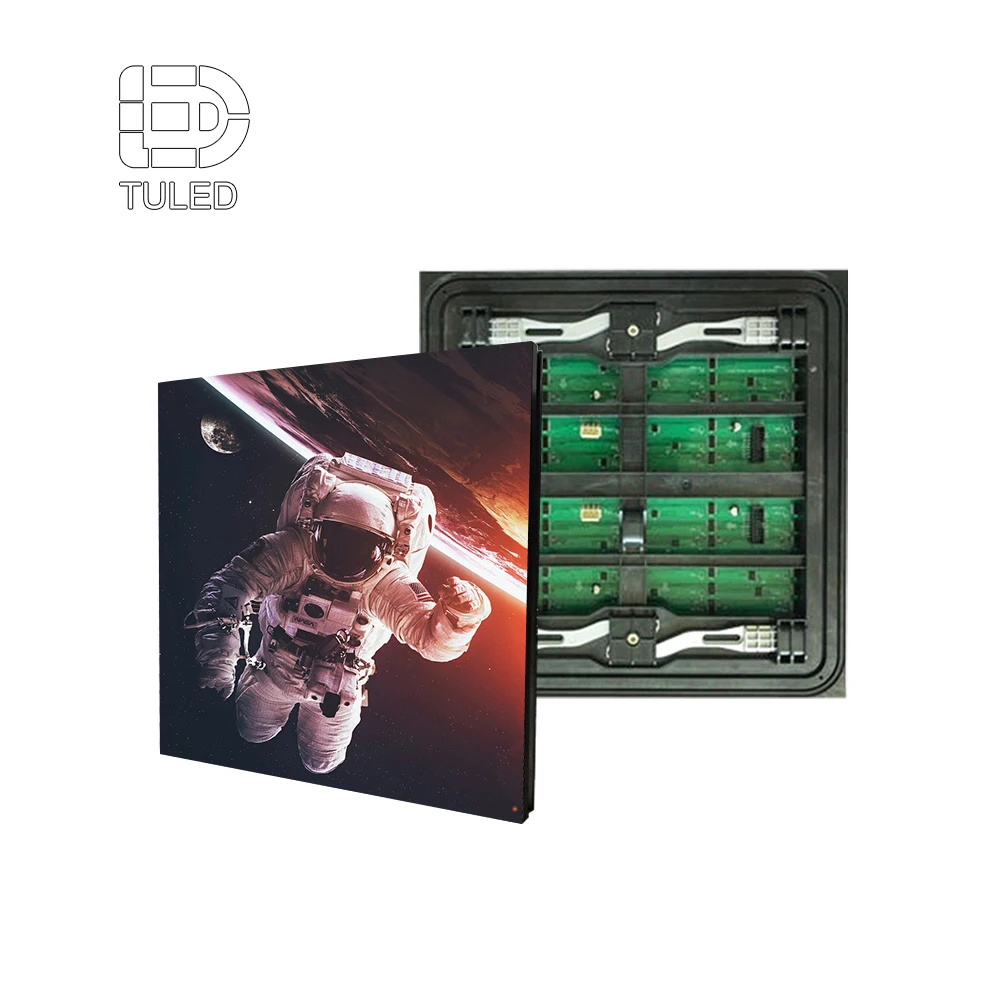
The Digital Sign Board listing gives a physical reference for discussing display format and the visible rear construction. The photographs show the listed product, not a produce-market installation, and do not establish that any specific pricing, inventory, or wayfinding workflow is supported.

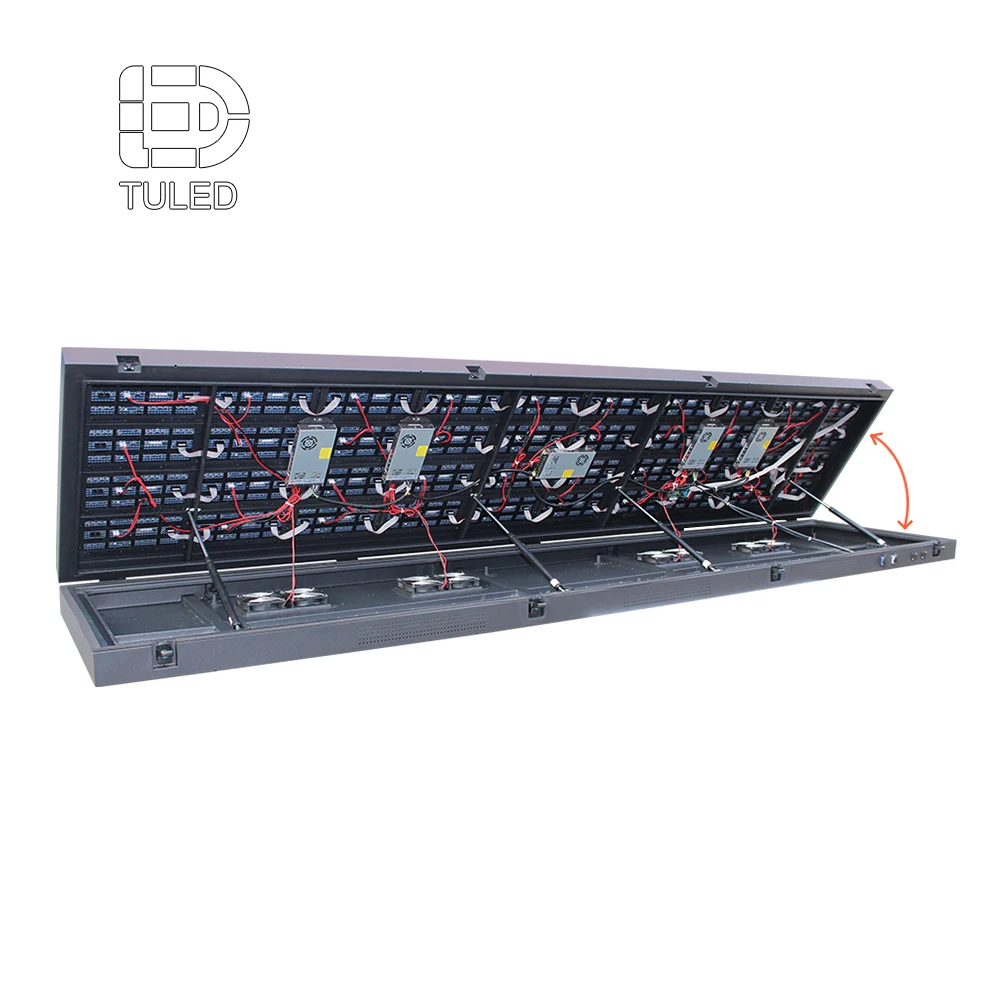
For a wholesale market, the next evaluation is practical: ask the supplier to use actual stall-price and arrival messages, explain the proposed update process, and confirm installation and maintenance access for the intended position.
View Digital Sign BoardThe most suitable signboards for produce market updates are those whose content layout, installation conditions, and update workflow have been demonstrated against the market's actual requirements. Supplier evidence should determine the recommendation, not an assumption that every LED Sign Board includes the same software or controls.
Frequently Asked Questions
How should unit changes be shown beside a price?
What should a sign show when arrival information is provisional?
Who should approve price changes across multiple stalls?
A proposed signboard setup should be judged by whether buyers can identify the correct product and selling unit, understand the latest verified arrival status, and reach the right stall. The next step is to test representative messages with the people who approve and use them.
Share the stall map, units of sale, pricing authority, arrival source, buyer routes, and expected update frequency. These details allow a proposed display layout and update workflow to be reviewed against real market operations.