EN
EN

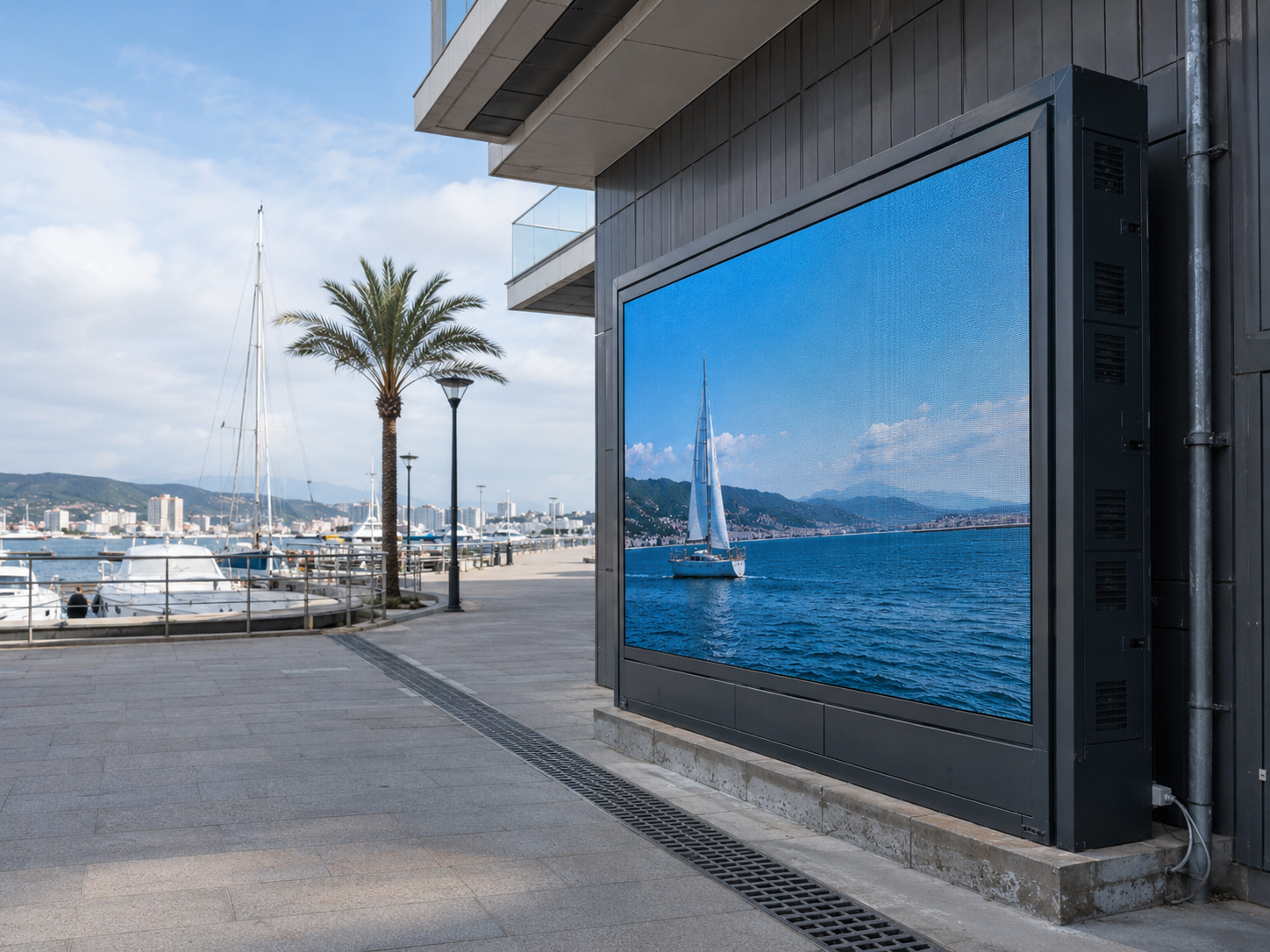
Coastal outdoor LED projects can look simple during quotation, but salt fog, humid air, wind-driven rain and trapped heat often expose weak cabinet design later. Therefore, working with an outdoor LED screen supplier should involve more than screen size and basic waterproof wording. Cabinet coating, drainage route, cable sealing, airflow design, mounting structure and maintenance access all affect long-term stability near the sea.
Instead of repeating common IP rating or brightness points, this guide focuses on the coastal project details that affect real operation: anti-corrosion cabinet structure, water drainage, heat control under strong sunlight, spare-part planning and service access before installation.
Quick Navigation
Why Coastal LED Projects Need Extra Planning
First, coastal damage often develops slowly. Salt particles can settle around screw points, rear doors, brackets, vents, cable glands and frame joints. Over time, those small exposed areas may become corrosion points before the display face shows any obvious problem.
Meanwhile, humidity keeps moisture around the cabinet for longer periods. A display near a port road, marina, beach resort, seaside shopping center or coastal transport hub may face wet mornings, strong sun during the day and damp night air after sunset.
However, the planning focus should not stay only on waterproof grade. A coastal LED display also needs protected cabinet edges, a clean drainage path, sealed cable entry, suitable airflow, safe service space and a realistic maintenance plan.
For enclosure protection, IEC IP ratings help explain dust and liquid ingress protection. However, coastal LED screen planning should also review corrosion, standing water, cabinet heat and service clearance because those factors affect long-term outdoor performance.
Coastal risk usually starts from the rear side
For example, a screen may look clean from the front while corrosion begins around rear hinges, lock areas, cable entries or frame bolts. Therefore, the back of the cabinet deserves the same attention as the LED surface.
In addition, wind-driven rain can reach side seams and rear service doors. This is why cabinet drawings should be reviewed together with site photos, sea-facing direction and installation structure.
Anti-Corrosion Cabinet Design
Anti-corrosion planning starts with the cabinet. However, it also includes fasteners, rear service doors, support brackets, module frames, cable glands and installation hardware. In coastal environments, these small details often decide long-term service cost.
Therefore, cabinet material and surface treatment should match the real exposure level. Aluminum structures can reduce weight and resist rust better than untreated steel. Still, aluminum cabinet parts need proper surface treatment because salt and moisture can attack weak coating points.

View Outdoor 500x1000mm LED Display Panel
Coating quality should be checked at weak points
Flat cabinet surfaces usually look good after coating. Yet corners, screw holes, hinge areas and cut edges reveal the real process level. In coastal projects, these weak points need special attention before shipment.
Also, rear-door seals should stay compressed without tearing. Locks and hinges should open smoothly without scraping the coating. As a result, routine maintenance will not create new exposed metal points every time the cabinet is opened.
Fasteners and brackets should match coastal use
Secondly, screws, bolts, washers and mounting plates should not be treated as minor accessories. These parts sit at connection points where water often stays. Therefore, protected hardware helps reduce hidden corrosion risk.
In addition, mixed-metal contact should be reviewed carefully. Wet salty conditions may accelerate galvanic corrosion when incompatible metals touch. A stable display cabinet still needs a protected support frame.
Drainage and Heat Control
Drainage and heat control should be planned together. A cabinet that traps water may also trap hot air. Meanwhile, a cabinet with too many open vents may pull in salt, dust and moisture.
Therefore, the design needs a controlled path for both water and airflow. Rainwater should leave the structure quickly, while internal heat should move out without exposing sensitive components to salty air.
Drainage details worth checking
- Bottom drainage holes should not be blocked by brackets, cable trays, sand or leaves.
- Rear doors should close evenly, so wind-driven rain cannot enter through uneven gaps.
- Cable entries should match cable diameter and avoid top-entry risk where possible.
- Steel frames should not create hidden water pockets behind the display.
- Wall-mounted screens should leave practical space for inspection, drying and airflow.
Cable entry is a common failure point
For many outdoor failures, water does not enter through the front module surface. Instead, it follows a cable, conduit or poorly sealed opening. Therefore, cable glands and power routes should be checked early.
Also, the power distribution box should match the same coastal risk level. A protected LED cabinet cannot compensate for a weak electrical box nearby. The full power route should be part of the review.
Heat control under coastal sunlight
Coastal sites often combine strong sunlight with humid air. Therefore, cabinet thermal design should consider screen direction, rear clearance, power supply position, fan access and airflow path.
Passive cooling can reduce moving parts and simplify maintenance. However, larger full-sun screens may need active cooling. In that case, fan placement and filter access should allow quick inspection and replacement.

View 960x960 Outdoor LED Display Cabinet
Best-Fit Coastal Project Types
This coastal planning approach fits permanent outdoor LED display projects where salt, humidity, drainage and heat can affect the full service life of the screen. It is especially useful when installation space is limited or future maintenance needs to be controlled from the beginning.
Suitable applications
- Seaside road billboard projects exposed to wind-driven rain.
- Marina, port and harbor information screens.
- Coastal shopping mall advertising displays.
- Resort, hotel and tourism-area façade displays.
- Transport hub outdoor information screens near humid coastal zones.
- City landmark and public communication LED display projects.
Project Preparation: Details to Send Before Quotation
A clear project brief helps the factory recommend the correct outdoor LED display configuration. In addition, it reduces repeated communication and avoids a design that looks correct on paper but creates site problems later.
The first message does not need to be perfect. However, complete project details make cabinet selection, quotation, drawings and spare-part planning more accurate.
Site and environment
Include country, city, site type, distance from sea, sea-facing direction, wind exposure and photos from front, side and rear.
Screen and installation
Send screen width, height, quantity, installation method, mounting structure, viewing distance and front or rear service preference.
System and equipment scope
Clarify operation hours, content type, power route, local voltage, control method, spare modules, accessories and installation support needs.
Product Path for Coastal Outdoor Display Projects
A coastal LED display project needs factory support that can discuss cabinet details, not only unit price. Display size, pixel pitch and control system still matter. However, coastal conditions add extra review points for coating, airflow, drainage and service planning.
For fixed outdoor applications, the Outdoor LED Display page is a practical next step. It connects the project to outdoor cabinet formats, common product sizes and permanent installation directions.
For roadside media, public squares and commercial advertising sites, LED Advertising Screen solutions can support planning around layout, content updates and long-term operation. Meanwhile, large-format roadside projects can be compared through Billboard LED options.

View P4.81 Outdoor LED Billboard Screen
Maintenance Access and Project Checklist
Maintenance access should be decided before cabinet drawings, steel structure and cable route are approved. Otherwise, a clean installation may become difficult to repair. In coastal environments, delayed service can turn small issues into larger problems.
Front-service cabinets can fit wall-mounted screens, narrow streets and façade projects where rear access is limited. Rear-service cabinets can fit large billboards with safe walkways behind the screen. However, both methods require real access planning.
Final pre-production checklist
- Confirm screen size, cabinet layout and service direction.
- Review cabinet material, coating process and exposed hardware.
- Check drainage path, cable entry and bottom clearance.
- Confirm cooling method, fan access and airflow direction.
- Prepare site photos, sea-facing direction and access limitations.
- Plan spare modules, power supplies, receiving cards and cables.
- Request wiring diagrams, cabinet numbering and configuration files.
- Confirm packaging method for sea freight or long-distance delivery.
Extended Reading and Related Resources
FAQ
What makes a coastal outdoor LED display different from a standard outdoor screen?
A coastal outdoor LED display faces salt fog, high humidity, wind-driven rain and stronger corrosion risk. Therefore, cabinet coating, fasteners, cable entry, drainage and maintenance access need deeper review than a normal outdoor project.
How should anti-corrosion cabinet design be checked before production?
First, review cabinet material, surface treatment, exposed screw points, locks, rear-door seals and support brackets. In addition, request cabinet detail photos or drawings to confirm cable entry, vent placement and service direction.
Why does drainage matter if the screen is already made for outdoor use?
Drainage matters because water can still collect around frames, seams, cable routes and support structures. In coastal areas, blocked drainage may also hold salt and sand, which can speed up corrosion around metal parts.
What heat-control details should be reviewed for seaside LED screens?
Thermal review should include cabinet airflow, power supply position, fan access, vent protection, sun direction and rear clearance. However, vents should not be opened randomly, because salt fog and dust may enter through weak airflow design.
What project details help a factory quote a coastal LED display accurately?
A useful brief includes screen size, quantity, country, city, application, installation method, site photos, sea-facing direction, power route, service access and equipment scope. These details support better cabinet selection and fewer drawing revisions.
Summary: Build the Coastal Display as a Complete Outdoor System
Coastal LED display projects need more than a bright module and a standard outdoor cabinet. Salt fog, humidity, rain direction, trapped heat and limited repair access can all affect long-term stability. Therefore, the project plan should connect cabinet coating, drainage, cable sealing, airflow, spare parts and service access from the start.
For the next technical review, prepare screen size, quantity, country, site photos, mounting method, sea-facing direction, power route, operation schedule and equipment scope. Then send the project information through Contact so the discussion can focus on corrosion protection, drainage, heat control and long-term service planning with an outdoor LED screen supplier.
Three practical actions before quotation
- Confirm the coastal risk level: salt exposure, wind direction, humidity, sunlight, drainage and access.
- Send complete project details: size, quantity, location, mounting method, photos, power route and equipment scope.
- Review the full system before production: cabinet coating, cable entry, cooling, spare parts, service direction and documentation.