EN
EN

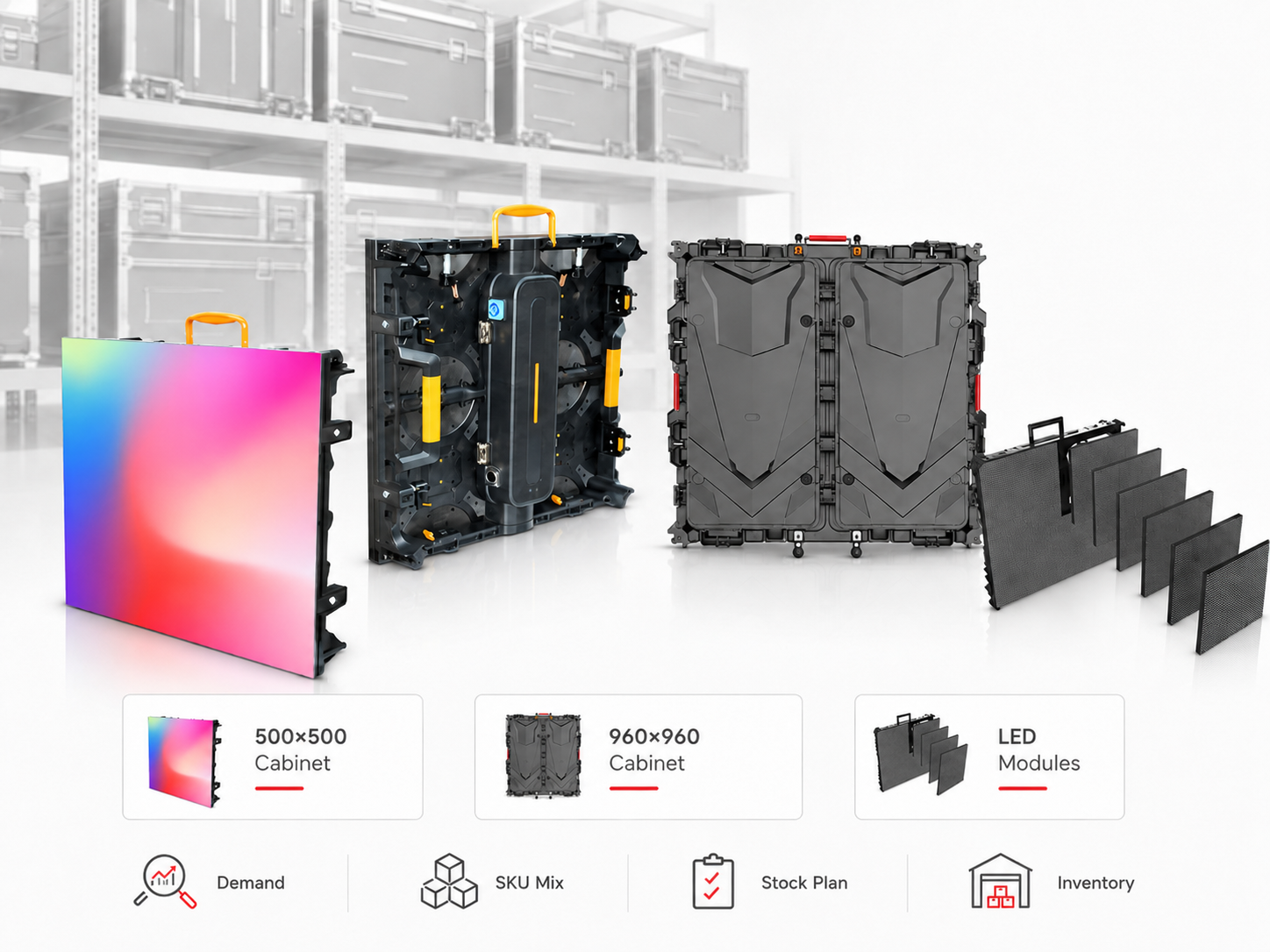
A distributor warehouse should not look like a smaller copy of a factory catalog. Instead, it should hold the display families that repeatedly solve local demand. For long-term LED Display Wholesale operations, the real inventory question is not how many specifications are available. It is which combinations deserve permanent space, which should stay project-based, and which spare parts can support several active platforms without creating unnecessary stock.
A practical stock plan starts with repeated demand, then narrows the pitch and cabinet mix, protects the spares that matter, and gives slow inventory an exit rule. This keeps useful availability without allowing every new quotation to create another permanent SKU.
Start With the Demand That Actually Repeats
A broad product range can create the impression that more warehouse choice means better market coverage. In practice, permanent stock works best when it follows repeat applications rather than every available specification.
Retail installations, engineering work, rental fleets, and outdoor advertising create different movement patterns. The first decision is therefore not pixel pitch. It is identifying where repeat demand comes from and how predictable that demand is.
Strong stock candidates appear when similar viewing distances, cabinet formats, and screen proportions return across commercial spaces.
Standard platforms may deserve stock, while unusual dimensions, structures, and service conditions remain tied to confirmed projects.
Another pitch earns space only when it fills a real coverage gap instead of splitting usage across several similar fleets.
Repeating media-network configurations can support stock. One-off landmark formats normally should not define the warehouse range.
The useful signal is repetition. A specification that appears once in a large installation may create more volume than a standard indoor platform, but that does not make it a better long-term SKU.
By contrast, a less dramatic configuration may deserve regular stock when it moves month after month across several applications. Inventory quality comes from repeatability, not from the size of one isolated project.
Turn a Wide Product Range Into a Small Working SKU Core
After demand has been grouped, the next job is subtraction. Pixel pitch, cabinet format, indoor or outdoor use, and spare compatibility should reduce the range rather than keep expanding it.
The strongest warehouse platform is often not the specification with the most options. It is the one that covers the largest share of recurring work while creating the fewest dedicated components.
The warehouse range should become smaller as demand evidence becomes stronger.
Pixel Pitch Should Follow Demand Bands
Closely spaced pitch options can create unnecessary duplication. Instead of stocking every neighboring value, inquiry and order history can be grouped by application and viewing-distance band.
When several applications repeatedly settle around the same pitch family, that family becomes a stronger stock candidate. Less common alternatives can remain available for project supply without occupying permanent warehouse space.
| Demand Pattern | Inventory Direction | Decision Question |
|---|---|---|
| Frequent + concentrated | Core stock | Can availability improve repeat business without creating another spare family? |
| Frequent + fragmented | Flexible stock | Can one preferred platform replace several near-duplicate choices? |
| Occasional + reusable | Review before reorder | Does the SKU serve more than one recurring application? |
| Rare + specialist | Project-based | Would this stock move without one specific project? |

A Reusable Cabinet Family Is More Valuable Than Another Isolated Pitch
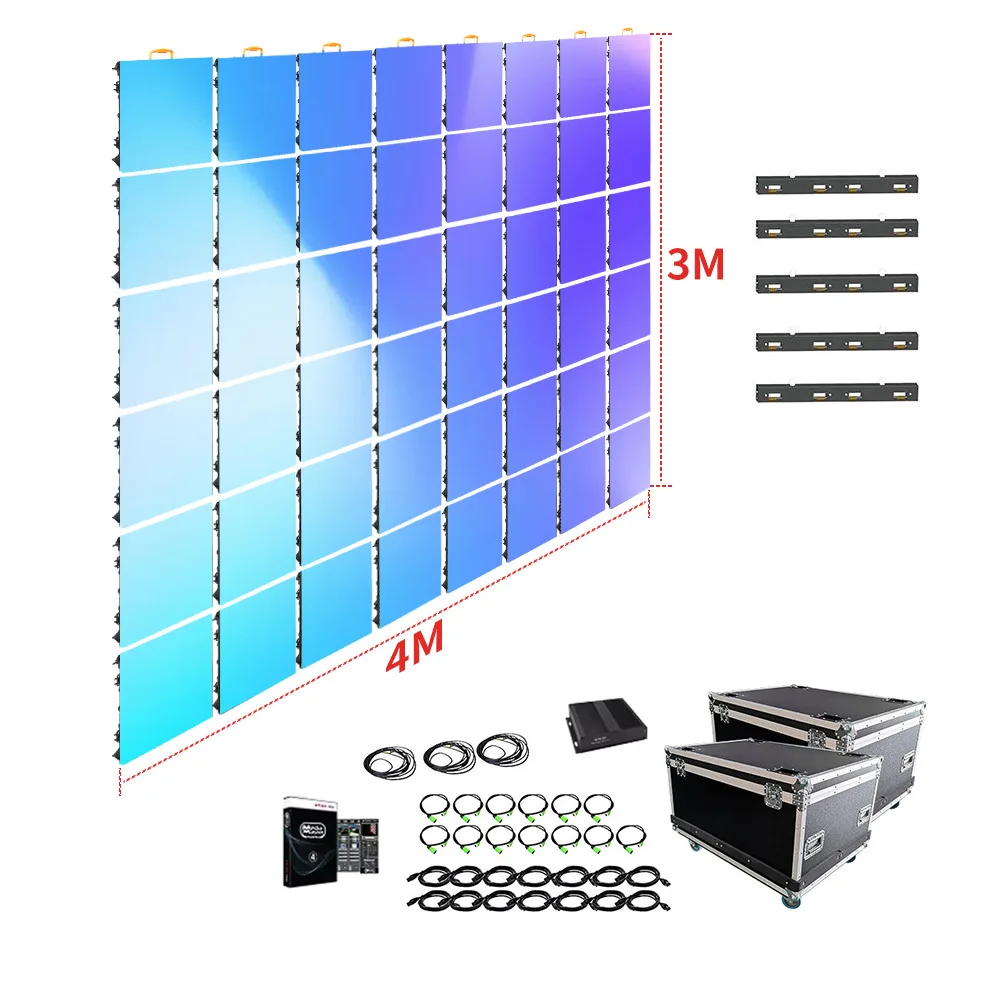
Rental stock becomes easier to manage when one cabinet platform can cover repeated screen sizes and stays connected to a clear module and service-parts family.
Before another rental SKU enters regular stock, compare current fleet utilization, existing pitch coverage, spare overlap, and whether the new option solves a genuine application gap.
View 500×500 LED DisplayCabinet Commonality Can Matter More Than One Extra Specification
Cabinet proliferation quietly increases inventory pressure. Another mechanical format may bring separate modules, packing arrangements, replacement parts, technical records, and warehouse locations.
A preferred cabinet family does not need to cover every possible installation. It only needs to cover enough recurring work that keeping the platform ready creates a clear operational advantage.
Standard Mechanical Platforms Help Keep SKU Growth Under Control
A standard cabinet family can make sense where recurring fixed-display demand repeatedly uses the same mechanical platform.
The inventory decision still depends on local movement. A standard product family is useful only when the stocked pitch mix and service stock remain aligned with actual demand.
View 960×960 LED Display
During product-family review, the Wholesale LED Screen range can help compare indoor, outdoor, rental, module, and accessory directions. The range itself, however, should not become the warehouse list.
A product can remain available for project supply without becoming permanent inventory. That distinction is what allows a broad commercial offering to coexist with a disciplined warehouse.
Reduce Spare Stock Before It Becomes a Second Product Catalog
Spare inventory often grows faster than finished-screen stock. A new display family can bring another module, another receiving configuration, another power component, new cables, and new cabinet hardware.
The solution is not simply carrying fewer parts. It is separating genuinely shared components from platform-specific parts and documenting that difference clearly.
Parts technically confirmed across several active families can sit in one service pool and follow combined consumption.
Modules, mechanical parts, or other restricted components remain tied to the exact platform when interchangeability is not confirmed.
Visual similarity is not enough to merge spare stock. Mechanical dimensions, electrical characteristics, connectors, configuration files, and component versions may differ even when two parts look nearly identical.
For that reason, “shared,” “dedicated,” and “pending confirmation” are more useful inventory labels than informal notes such as “probably compatible.”
| Part Group | Stock Logic | Record Needed |
|---|---|---|
| Module | Keep closely tied to the approved display family unless compatibility is confirmed. | Exact module reference and compatibility status. |
| Receiving / control part | May enter a shared pool when configurations are confirmed. | Approved configuration record. |
| Power-side part | Share only after electrical compatibility is confirmed. | Technical confirmation. |
| Cables / connectors | Good candidates for consolidation when the specification is identical. | Approved parts list. |
| Cabinet hardware | Often remains platform-specific. | Mechanical reference. |
Service stock also deserves its own logic. A display family may stop generating new orders while installed screens still depend on its modules and replacement components.
In that situation, finished stock can move downward while a controlled service reserve remains. This avoids treating current sales demand and installed-base support as the same inventory problem.
Replenishment Should React Before the Warehouse Looks Empty
Physical stock alone gives a weak view of availability. Some units may already be reserved, some may be waiting for repair, and some incoming quantity may already belong to confirmed work.
A stronger replenishment view separates physical quantity from the quantity that can actually support new demand.
The proportions above illustrate the logic only. Actual thresholds should come from internal movement and replenishment records.
A practical internal view can treat available quantity as physical stock minus reserved and blocked stock. Incoming inventory should then be divided into committed incoming and free incoming.
This matters because a warehouse can look full while very little stock remains genuinely free. Replenishment should respond to usable quantity instead of waiting for the physical count to reach zero.
Safety stock should also vary by role. A repeat core platform, a flexible SKU, a shared service spare, and a project-only line do not carry the same shortage or excess-stock risk.
Average movement is useful, but variability matters as well. A platform that moves steadily every month is easier to protect than one that remains idle and then moves a large quantity at once. Recent monthly movement, zero-movement months, reservations, and peak periods give a more useful picture than one annual average.
Slow Stock Needs a Destination, Not Another Reorder
Slow inventory becomes expensive when its status never changes. The problem is often not that one SKU moved slowly, but that the SKU stayed active and continued to receive replenishment.
Age alone is not enough to judge the stock. An older unit may belong to a healthy family that still moves regularly. A recently received specialist configuration may already have little future use.
Nearby SKUs should also be reviewed together. Two close pitch options or cabinet families may be competing for the same application. If one platform receives stronger repeat demand and shares more spares, keeping both in regular stock may no longer make sense.
This turns slow-stock review into range management rather than warehouse cleanup. Removing one weak SKU can sometimes improve availability more than adding another new one because stock and service parts become concentrated around the stronger platform.
Distributor LED Inventory Sheet: Keep Only Fields That Drive a Decision
A useful inventory sheet should explain three things quickly: what the SKU is, what quantity is actually available, and what action comes next.
Too many fields make the sheet difficult to maintain. The following structure keeps the operational core visible while still connecting each SKU to its product family and spare strategy.
| Field | What It Helps Decide |
|---|---|
| SKU code | One warehouse identity for the active stock line. |
| Product family | Connects related cabinets, modules, and technical records. |
| Application segment | Shows which repeat demand supports the SKU. |
| Pixel pitch | Tracks demand concentration by pitch direction. |
| Cabinet format | Shows whether the mechanical platform is standardized. |
| Module reference | Protects service stock from incorrect substitution. |
| Spare group | Shows shared, dedicated, or pending compatibility. |
| Stock tier | Core, flexible, project-only, service, or phase-out. |
| Physical stock | Total quantity physically present. |
| Available stock | Quantity genuinely free for new demand. |
| Reserved stock | Prevents already committed units from being promised again. |
| Service reserve | Protects installed-base support. |
| Blocked stock | Separates inspection or repair holds from usable stock. |
| Incoming / free incoming | Shows what is arriving and what remains uncommitted. |
| Recent movement | Shows whether demand is steady, intermittent, or weakening. |
| Last movement date | Highlights stock that may need review. |
| Reorder point | Starts replenishment review before usable stock runs out. |
| Lifecycle status | Stops older platforms from remaining active indefinitely. |
| Next action | Reorder, hold, review, reclassify, or phase out. |
One primary row should represent one stock decision. Quotations, reservations, service withdrawals, and incoming purchases can remain in linked records instead of creating duplicate inventory rows.
This makes the sheet easier to use during a monthly review. The important question becomes visible immediately: does this SKU still deserve the same inventory policy as last month?
A Short Monthly Review Is Better Than an Annual Warehouse Cleanup
Inventory decisions become easier when changes are reviewed while they are still small. A monthly stock review does not need to examine every technical detail. It needs to identify which SKUs have changed status.
Commercial records reveal recurring demand. Technical records confirm compatibility. Warehouse records show usable stock, while service history reveals which older platforms still require support.
Bringing those views together prevents one department from expanding the SKU list based on only part of the picture.
Four Inventory Habits That Usually Create Too Many SKUs
FAQ
How should a distributor decide which LED screen specifications deserve regular stock?
The strongest stock candidates combine repeated demand, concentrated requirements, broad application coverage, and manageable spare complexity. Unusual pitches or cabinet formats are better left project-based until the same requirement appears repeatedly.
How can historical demand produce a smaller useful SKU mix?
Group past inquiries and orders by application, pitch direction, cabinet family, and indoor or outdoor use. Then identify which small set of platforms covers most repeated demand. Remaining requirements can stay flexible or project-based.
What should influence safety stock and reorder points?
Recent movement, movement variability, reserved quantity, blocked quantity, service demand, and the practical replenishment cycle all matter. Core, flexible, service, and project-only stock should not automatically use the same buffer.
Which spare parts can be shared between several active SKUs?
Only technically confirmed parts should enter a shared pool. Some control-side components, cables, connectors, or power-side items may support several families, while modules and mechanical parts often need closer platform control.
What should happen when an LED display SKU stops moving?
Routine replenishment should be reviewed first. The remaining quantity can then be classified as active slow stock, service reserve, reusable stock, project residue, or phase-out inventory. Nearby overlapping SKUs should be reviewed at the same time.
A Strong Inventory Plan Is Usually a Smaller One
Long-term distributor inventory becomes easier to manage when the warehouse range stays smaller than the commercial product range. Repeated applications define the core. Cabinet and module commonality reduce duplication. Shared spare pools protect service without multiplying warehouse codes.
Reorder points should react to usable stock rather than physical quantity alone. Slow-stock rules then stop declining SKUs from remaining active simply because they already exist in the system.
- Group recent demand by application, pitch direction, and cabinet family.
- Mark each SKU as core, flexible, project-only, service, or phase-out.
- Map confirmed shared spares before adding another permanent product family.
Prepare a Distributor SKU Review
A useful starting point includes the target market, main application mix, preferred pixel-pitch directions, existing cabinet families, estimated monthly movement, current stock position, service-spare requirements, and known seasonal demand.
With those inputs, the discussion can focus on which platforms deserve standing stock, which should remain flexible or project-based, and which spares can support several active families. This keeps led display wholesale inventory tied to repeat demand and measurable movement instead of uncontrolled SKU expansion.