EN
EN

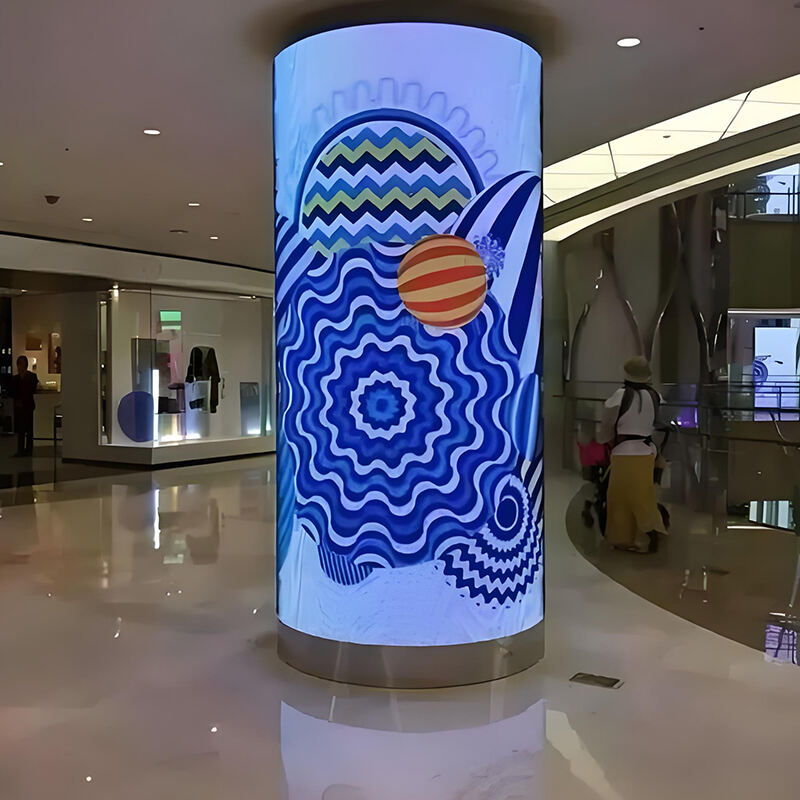
What Is a COB LED Display? Technology, Structure, and Advantages
COB LED Display Definition: Monolithic Integration vs. Traditional SMD
COB or Chip-on-Board LED tech works by placing raw LED chips straight onto circuit boards instead of wrapping them individually as done in standard SMD Surface-Mounted Device approaches. The basic setup for COB involves gluing several tiny LEDs onto a base material with conductive glue before covering everything with a protective layer of epoxy resin. Traditional SMD screens have each LED mounted on its own spot, but COB takes a different approach altogether. Because all those little lights are bonded together in one piece, manufacturers can achieve pixel spacing under 1mm which means super sharp images when viewed up close. There's also about half the number of solder connections compared to regular setups, so there are simply fewer places where things might go wrong. Plus, the flat smooth surface doesn't have any bumps or gaps that could get damaged over time from knocks or weather exposure.
Internal Construction: Die-Bonding, Encapsulation, and Thermal Efficiency
COB displays employ a technique called die-bonding where LED chips are mounted straight onto PCB boards, which makes them much more structurally stable overall. Manufacturers apply a generous layer of silicone resin on top of everything to create a protective barrier against common environmental hazards like dust accumulation, water damage, and corrosive elements. Because of their compact design, these displays handle heat better too. Tests show they can get rid of excess heat around 40 percent faster compared to traditional SMD options. Better heat dissipation means the display stays bright for longer periods and lasts well past the 100,000 hour mark before showing signs of wear and tear.
| Thermal Performance Metric | COB LED | Traditional SMD |
|---|---|---|
| Heat Dissipation Efficiency | 95% | 55-70% |
| Operating Temperature | ≤45°C | 60-75°C |
| Brightness Loss (10k hrs) | <5% | 15-20% |
| Data: Industry Standards Report 2023 |
Flexible LED Display Cost Breakdown: How COB Technology Affects Pricing
Material and Manufacturing Costs: Yield Rates and Production Efficiency
Flexible COB LED displays need special stuff like polyimide substrates which cost around $80 to $120 per square meter, plus they require really precise bonding equipment that drives up material expenses. The whole monolithic integration thing isn't easy either. Manufacturers have to invest in high-end production lines and maintain strict quality checks throughout the process, which naturally leads to lower yields when things go wrong. Industry insiders report that making COB displays generally costs about 20 to 25 percent more than traditional rigid SMD panels. This translates to market prices ranging from $8,000 to $12,000 per square meter for COB products, while standard fixed displays typically fall between $5,000 and $7,000. These price differences reflect both the technology involved and the manufacturing challenges associated with flexible display production.
Long-Term Value: Repairability, Lifespan, and Maintenance Savings
COB technology might cost more initially, but it pays off handsomely over time. What makes this possible? Well, the protective coating around those tiny components acts like armor against water damage and knocks around, which means these units can keep running for over 100,000 hours. That's roughly twice what we see with regular flexible displays on the market today. Another big plus is how easy it is to fix specific modules when problems arise. Businesses report cutting their downtime by anywhere between 40% to 60% just by being able to swap out faulty parts rather than replacing whole panels. And let's not forget about failures happening less often too. Real world experience shows companies spend about 30% less each year on maintenance once they switch from traditional SMD setups to COB technology.
COB vs. Packaged LEDs: 5-Year TCO Comparison for B2B Buyers
For businesses, Total Cost of Ownership (TCO) is a critical metric. COB's durability offsets its initial premium within 2-3 years in most commercial applications. A 2023 installation analysis shows:
| Cost Component | COB LED Display | Packaged LED Display |
|---|---|---|
| Initial Investment | $10,500/m² | $6,200/m² |
| Annual Maintenance | $400/m² | $1,100/m² |
| Module Replacement Rate | 2% | 11% |
| 5-Year TCO | $12,500/m² | $11,800/m² |
Higher energy efficiency—up to 30% lower power consumption—and reduced operational downtime further enhance COB's value for corporate and retail environments.
Real-World Applications: Where Flexible COB LED Displays Deliver ROI
Case Study: Retail Brand Activation with Curved COB LED Walls (Shanghai, 2023)
A high-end store located on Nanjing Road in Shanghai recently put up this amazing 270 degree curved COB LED screen for their big brand launch event. The results were pretty impressive actually - they saw around 40 percent more people walking through the doors and customers stayed about 28% longer than usual. The display has these super fine 0.9mm pixels that make products look almost real when viewed up close. And despite all the touching and pointing from curious shoppers, the screen held up really well over time. Looking at the numbers, these COB displays last roughly 200 thousand hours before needing replacement. Plus, since parts can be swapped out individually instead of replacing whole sections, the store saved nearly two thirds on maintenance expenses compared to what they used to pay for those old SMD systems. Makes sense why more retailers are starting to see physical space as something that can generate serious revenue when done right.
Use Cases in Corporate, Retail, and Experiential Environments
Flexible COB LED displays deliver measurable ROI across industries:
- Corporate: High-brightness (1500-nit) lobby video walls ensure visibility in daylight and support real-time data visualization
- Retail: Curved digital showcases boost conversion rates by 22% through dynamic, rotating content
- Experiential: Pressure-sensitive COB interactive floors enable gamified brand experiences
- Broadcast: 3840Hz refresh rates eliminate flicker and artifacts in live camera production
By eliminating rigid cabinets, COB displays enable seamless integration into organic architectural forms—offering a distinct advantage where conventional displays fall short. Combined with 30% lower energy use and expanded color reproduction (NTSC 110%), COB technology proves that performance, efficiency, and design innovation can coexist in modern visual environments.
FAQ
-
What are the main advantages of COB LED displays over traditional SMD displays?
COB LED displays offer advantages such as sharper images with sub-1mm pixel spacing, reduced solder connections thereby lowering potential points of failure, better heat dissipation, and a more durable flat surface. -
How does COB technology affect LED display costs?
While COB technology incurs higher initial costs due to complex material requirements and precise manufacturing, it offers long-term savings in maintenance and repairs, making it a cost-effective choice over time. -
Can COB LED displays be used in different environments?
Yes, COB LED displays are versatile and can be used in various environments such as retail, corporate, experiential, and even broadcast settings due to their durability and superior performance.