EN
EN

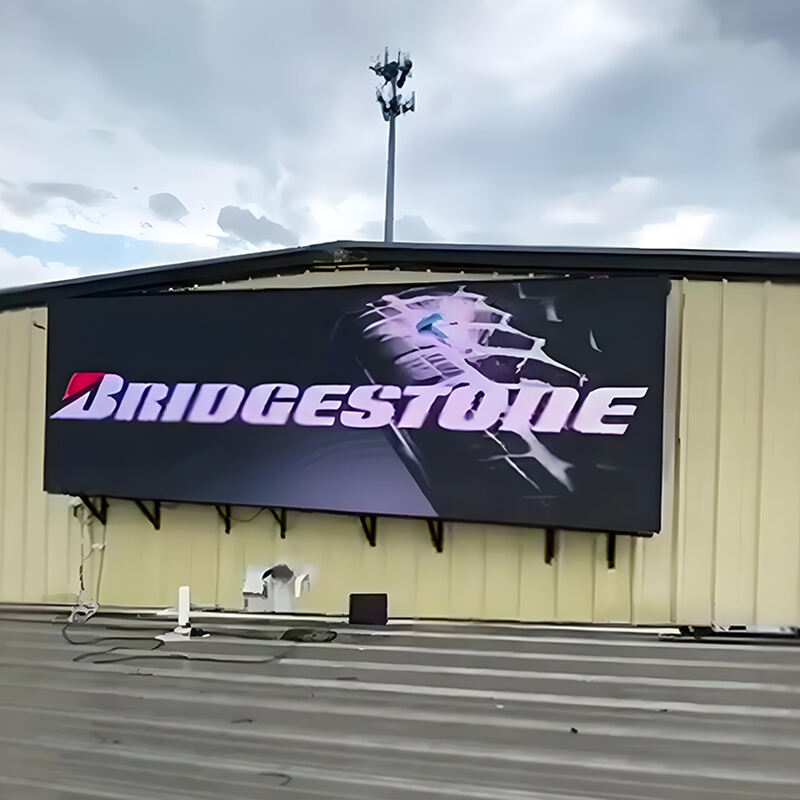
The Working Principle of LED Display Panels
Electroluminescence: How LEDs Convert Electricity into Light
The heart of any LED screen is something called electroluminescence. Basically, this happens when certain materials give off light after getting hit with electricity. Inside those tiny diodes, electrons jump around in what we call a p-n junction. They move across an energy barrier and then let out light as they settle down again. What makes LEDs so great? They don't create much heat during this whole process. Studies show they can be almost twice as efficient compared to old fashioned incandescent bulbs. Manufacturers need to keep tight control over the voltage going into each diode though. Otherwise, some parts might glow brighter than others. This careful management lets screens produce sharp images with accurate colors even when displaying thousands of individual pixels at once.
From Electrical Current to Visible Light Output
Driver circuits basically take those input signals and turn them into properly adjusted light output by controlling how much current flows to each LED through something called pulse width modulation or PWM for short. With this method, brightness levels can be controlled across quite a broad range of light intensity usually between around 100 to 10,000 nits which makes things visible even outside under bright sunlight. Managing heat remains really important though. According to studies done by the US Department of Energy, keeping those tiny LED junctions about 10 degrees Celsius cooler than their maximum operating temperature actually doubles how long they last before needing replacement. That's why high quality displays keep looking sharp and colorful well beyond the 100 thousand hour mark in real world usage conditions.
The Role of Semiconductor Materials in LED Light Emission
Semiconductor compounds determine color output through bandgap engineering:
| Material Composition | Wavelength | Emitted Color | Efficiency (%) |
|---|---|---|---|
| Gallium Arsenide (GaAs) | 850–940 nm | Infrared | 40–50 |
| Gallium Phosphide (GaP) | 555 nm | Green | 30–40 |
| Indium Gallium Nitride (InGaN) | 450 nm | Blue | 60–70 |
Doping these substrates with elements like aluminum or indium tailors electron transitions, enabling precise RGB color generation. Advanced epitaxial layering minimizes energy loss–achieving over 200 lumens per watt in top-tier displays.
Core Components and Structure of LED Displays
LED Chip: The Heart of the Display Module
At the heart of every display module lies the LED chip, which acts as the primary source of light emission. These tiny components are typically constructed using materials like gallium arsenide or gallium nitride, part of the broader family known as III-V semiconductors. What makes them work is pretty fascinating actually - when electricity flows through them, electrons meet up with what scientists call "holes," creating those little bursts of light we see as photons. The best quality LED chips can produce over 150 lumens for each watt consumed while keeping colors looking consistent even after tens of thousands of hours of operation. Modern microLED versions have gotten incredibly small too, measuring less than 100 microns across, allowing manufacturers to pack in those stunning high resolution displays. And getting back to manufacturing processes, careful sorting called binning helps ensure that all the LEDs on a panel shine equally bright and maintain consistent color throughout the entire screen.
Supporting Components: Drivers, PCBs, and Heat Management
Beyond LEDs, three critical subsystems ensure reliability and performance:
- Driver ICs: Regulate current to individual pixels using PWM, supporting up to 16-bit color depth and refresh rates of 7680Hz. Advanced drivers compensate for voltage fluctuations within 0.1% tolerance.
- Printed Circuit Boards (PCBs): Multilayer designs distribute power and data while minimizing signal loss. Thermal vias help dissipate heat from driver components.
- Thermal Management: Aluminum heat sinks and passive convection cooling maintain junction temperatures below 85°C–preventing wavelength shift, which causes color drift of 2–5nm per 10°C temperature rise.
| Component | Function | Impact on Performance |
|---|---|---|
| Driver ICs | Current regulation | Enables 3840Hz refresh rates |
| PCBs | Signal/power distribution | Reduces electromagnetic interference (EMI) |
| Heat sinks | Temperature control | Prevents 15% lumen degradation after 10,000 hours |
Integration with Control Systems for Image Processing
LED displays transform raw data into visual content through tightly synchronized control systems. Receiving processors decode HDMI/SDI inputs, while sending processors distribute frame data via gigabit Ethernet or optical fiber. Real-time algorithms handle:
- Gamma correction
- Color space conversion
- Dynamic refresh rate adjustment
Modular design supports seamless scaling–from single panels to stadium-sized video walls–with pixel-level synchronization under 1ms latency. This integration enables HDR10 support and 20-bit grayscale reproduction.
RGB Color Mixing and Full-Color Display Technology
How Red, Green, and Blue LEDs Create Millions of Colors
LED screens create all those vibrant colors we see because of something called additive color mixing. Basically, tiny red, green, and blue (RGB) pixels work together to make millions of different shades - some estimates say around 16 million possible combinations! The screen controls how bright each pixel is individually using this thing called PWM technology, which lets them adjust brightness levels anywhere between completely off and fully on. When these colored lights overlap, they actually trick our eyes into seeing new colors. Think about when you mix paint colors on paper versus shining different colored lights onto a wall - totally different results!
- Red + Green = Yellow
- Green + Blue = Cyan
- Red + Blue = Magenta
- Equal RGB intensities = White
This trichromatic system leverages the eye’s limited spatial resolution; dithering techniques blend adjacent pixels optically at typical viewing distances, ensuring smooth color transitions.
Pixel and Subpixel Arrangement in LED Panels
A display’s resolution depends on pixel density and subpixel organization. Each pixel contains clustered RGB subpixels, with common configurations including:
- Stripe layout: Vertical R-G-B columns (most common)
- Delta arrangement: Triangular subpixel grouping
- RGBW variants: Adds white subpixels for enhanced brightness
| Arrangement Type | Color Accuracy | Brightness Efficiency | Use Cases |
|---|---|---|---|
| Standard RGB | High | Moderate | Indoor displays |
| RGBW | Moderate | High | Outdoor billboards |
Smaller pixel pitches (under 1mm) increase subpixel density per square inch, reducing visible gaps and enabling higher-resolution imaging.
Color Calibration and Consistency in High-Resolution Displays
Maintaining uniform color output across thousands of LED modules requires automated calibration systems. These measure each subpixel’s:
- Luminance output at multiple drive currents
- Chromaticity coordinates (CIE 1931 color space)
- Thermal drift behavior
Calibration software then generates real-time compensation coefficients stored in the display’s control system–counteracting manufacturing variances, aging-related decay (typically 2–3% annually), and ambient temperature effects on wavelength stability. This ensures ΔE < 3 color deviation, meeting strict fidelity requirements for medical imaging, broadcast studios, and color-critical design workflows.
Understanding LED Display Panels and Their Applications
What Is an LED Display Panel? Definition and Function
LED display panels are basically big screens made up of lots of tiny lights called LEDs arranged in grids. These little lights glow when electricity passes through them, creating whatever image or video needs to be shown. What makes these panels so popular? They can scale up or down depending on what space we have available. Plus they produce bright colors that people can see from almost any angle, even up to around 160 degrees away. And they work great whether it's sunny outside or pitch black inside a building. Another plus point is how efficient they are with power consumption compared to older displays. Businesses love being able to change content instantly too, which means no waiting for hours between updates. With lifespans lasting years longer than traditional options, many stores and public spaces now prefer LED panels over those old fashioned signs that used to flicker and fade so quickly.
Real-World Applications Across Industries
LED panels enable transformative visual communication across sectors:
- Advertising & Retail: Digital billboards and storefront displays deliver dynamic promotions–studies from the Outdoor Advertising Association of America show a 18% lift in message recall versus static ads.
- Transportation Hubs: Airports and transit stations use panels for real-time schedules, emergency alerts, and wayfinding.
- Events & Entertainment: Concert venues and sports arenas deploy large-scale LED backdrops for immersive experiences.
- Corporate & Education: Interactive conference room walls and lecture hall screens support collaborative presentations.
- Public Infrastructure: Municipalities implement traffic information systems and civic announcement boards.
This broad adoption reflects their role in modernizing public-facing communications while lowering long-term operational costs.
LED Display Module: The Building Block of Scalable Visual Systems
What Is an LED Display Module? Architecture and Components
The LED display module serves as the basic component behind today's LED screens, putting together lots of tiny LED pixels in a grid format. Inside these modules we find three main parts working together: LED chips that actually produce the light, PCBs which handle all the electrical connections, and those little driver ICs responsible for controlling how much current flows to each individual pixel. Manufacturers also include protective casings around everything plus built-in heat sinks to keep things running smoothly over time. Standard connector designs mean these modules can be connected easily from one to another without complicated setup procedures. What makes this whole system work so well is that every single pixel can be controlled separately regarding brightness levels and colors displayed, which allows manufacturers to build bigger displays with higher resolution capabilities when needed.
Modular Design Benefits: Easy Installation and Maintenance
The modular approach transforms deployment and service:
- Scalability: Panels expand horizontally or vertically without custom engineering–adapting seamlessly to architectural constraints.
- Rapid Installation: Lightweight, snap-together interfaces cut setup time by up to 60% compared to monolithic alternatives.
- Simplified Maintenance: Less than 0.5% of modules require replacement annually; faulty units are swapped in minutes without disrupting adjacent sections–reducing downtime by 75%.
Case Study: Large-Scale Video Walls Using Interconnected Modules
The main transit station downtown recently installed this massive 360 degree curved video wall made up of around 2,500 connected LED panels. Best part? They didn't have to tear anything apart or reinforce structures because everything fits together so well. The whole 86 foot long thing was up and running within three days flat, which beats what most contractors would normally take by about a third. Even when weather issues caused one panel to go out, the tech team swapped it out real quick during their regular checkup time, and nobody even noticed the screen flickered for those few seconds. Looking back over the past year and a half, this setup has been almost constantly working - missing only about two hours total. That kind of reliability shows why modular systems work so great in places where people depend on them every day without fail.
Frequently Asked Questions
What are LED display panels and what do they do?
LED display panels are screens made of tiny LEDs arranged in grids that light up to display images and video. They are used because of their brightness, energy efficiency, and ability to display clear images from various angles.
How do LEDs in display panels work?
LEDs work through a process called electroluminescence, where electricity causes materials to emit light. This is managed with driver circuits and semiconductor materials to produce the desired visual output.
What are the benefits of modular LED display design?
Modular design allows easy scalability, rapid installation, and simplified maintenance. This makes replacing faulty units quick and minimizes downtime, ensuring reliability even in demanding environments.