EN
EN


Two outdoor LED quotations can look equally polished and still lead a project in completely different directions.
The mistake often does not begin on site. It begins much earlier, when the supplier recommends a screen direction before the project has really been read. On paper, the quote may already look organized. The model name sounds familiar. The specification sheet looks complete. That is exactly what makes this stage risky. A polished quotation can still be built on the wrong reading of the job.
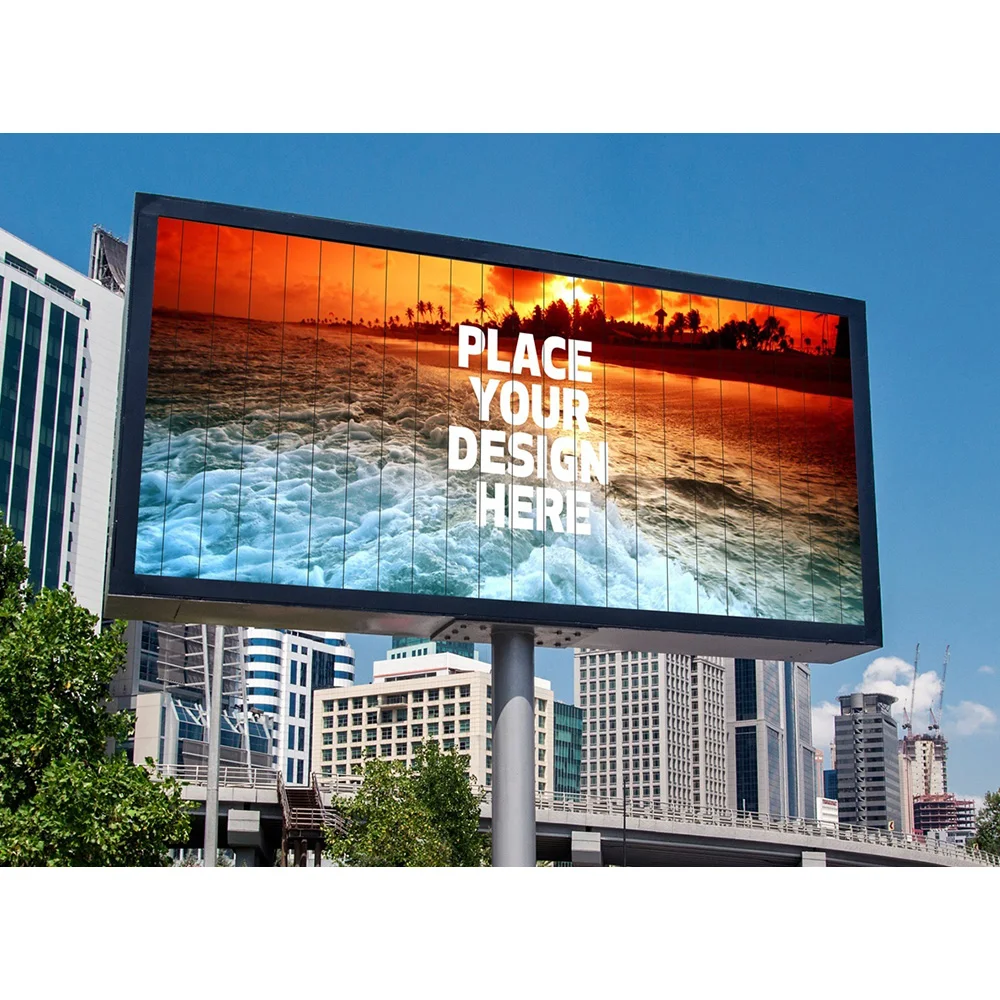
That is why the supplier decision usually matters more than choosing a model too early. A highway billboard, a sunny retail façade, a stadium display, and a rental stage screen can all be sold as outdoor LED. They should not be quoted with the same logic. Your outdoor product structure already reflects that difference: the outdoor LED display range presents the category broadly, the product catalog shows several cabinet paths, and the application pages make it clear that real projects do not all follow the same decision pattern.
This article stays focused on supplier evaluation rather than turning outdoor LED selection into a lab manual. The more useful question is this: when IP rating, nits, and weatherproofing come up in a quotation, what should a buyer actually listen for, what should be checked before the quote feels “safe,” and how can the wrong recommendation be spotted before it becomes expensive to change?
The first real risk is not bad hardware. It is a project being read too quickly.
A lot of outdoor projects start to drift before anyone notices anything wrong.
The first reply comes back quickly. The supplier sounds confident. A cabinet size is suggested. A pitch range is mentioned. Sometimes brightness is even positioned as a strength before the site has really been discussed. On the surface, that feels efficient. In reality, a fast recommendation is not always a good sign.
Outdoor jobs are easy to flatten into one generic category too early. A buyer says “outdoor screen,” and the quote starts forming around that phrase alone. Then the more important questions arrive late: Is this really a billboard-style installation, or is it closer to a façade job? Will the screen sit in direct sun all day, or is the problem more about day-to-night balance? Is the installation fixed for years, or is this a rental setup that will be built, dismantled, moved, and rebuilt? By the time those questions come up, the quotation may already be steering the conversation toward the wrong product logic.
That is how projects get misread. Not through one dramatic technical error, but through sequence. The model appears before the scene has been understood. The cabinet direction appears before the maintenance method has been discussed. The outdoor label gets accepted before anyone asks what kind of real-world exposure the screen is actually going to face.
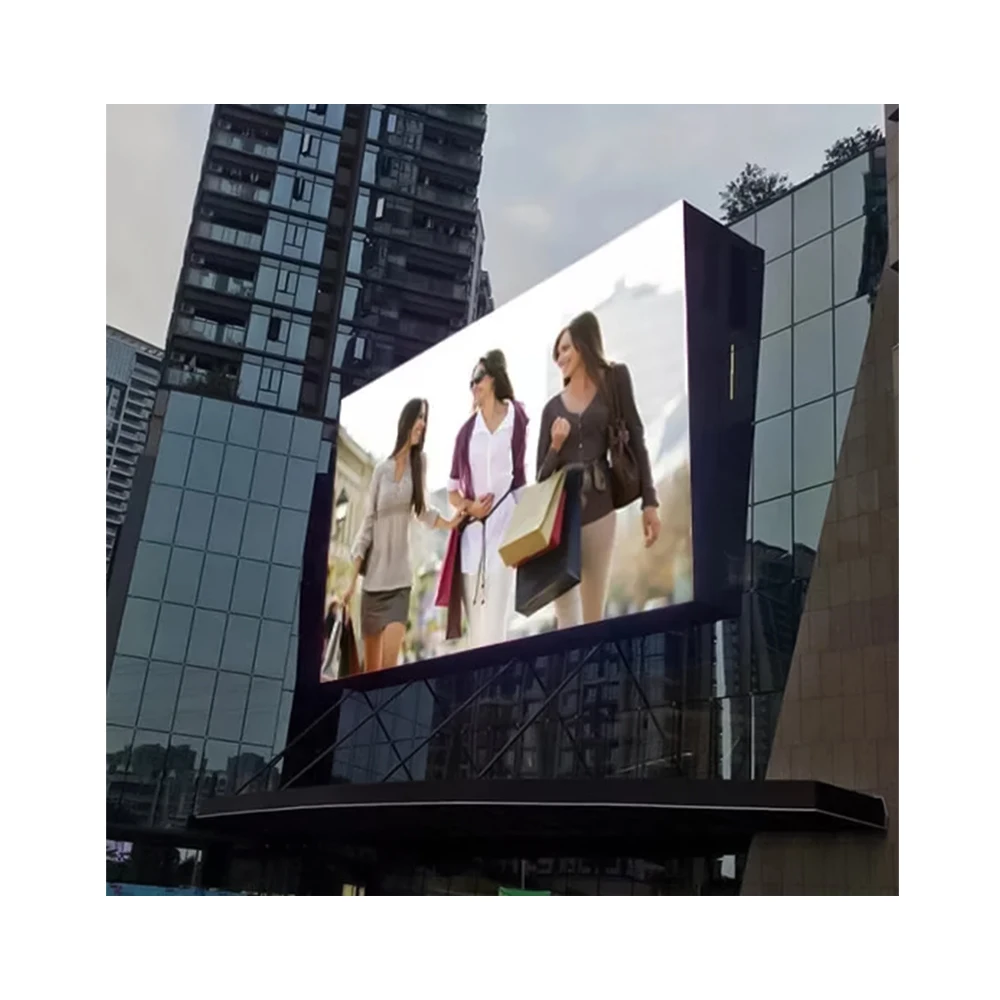
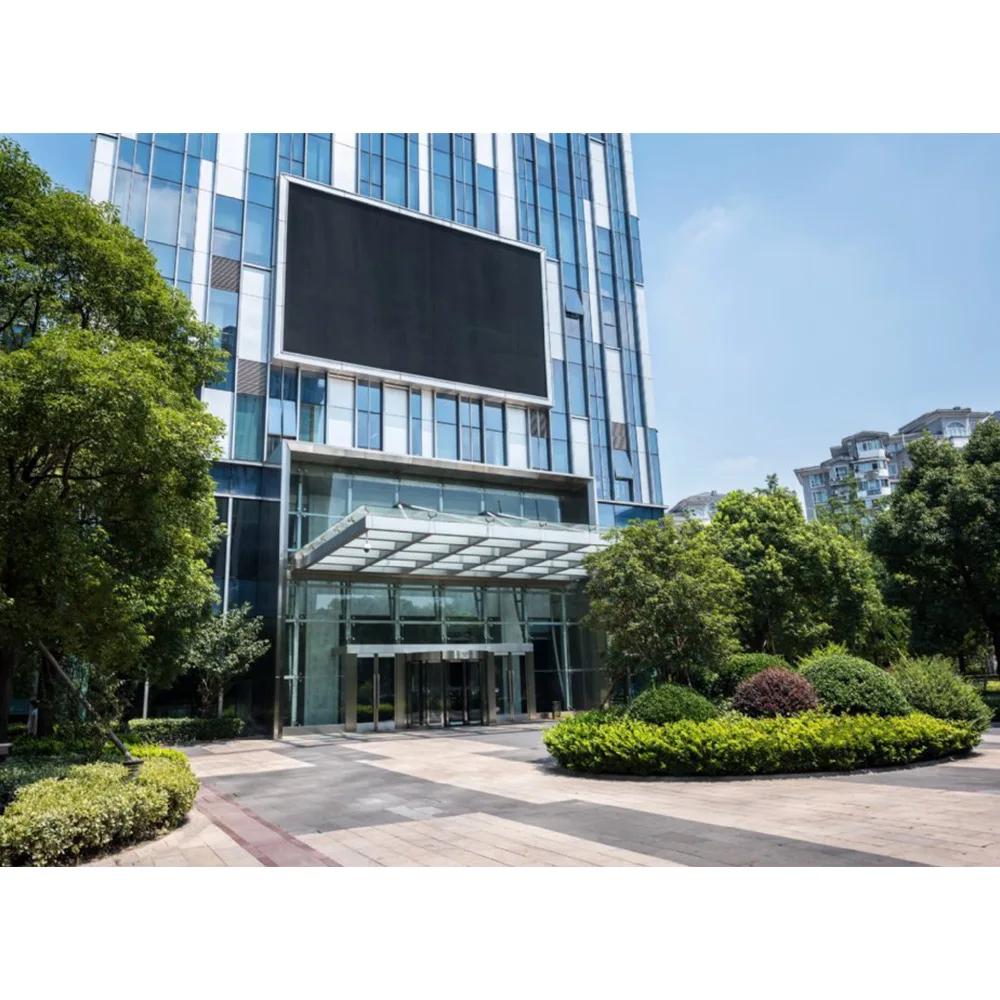
A billboard beside a highway usually belongs to fixed-installation thinking. It is large, exposed, and judged over long operating cycles. A retail façade is different. It often sits closer to the viewer, closer to architecture, and closer to the point where a poor cabinet choice becomes visually obvious. A stadium display has its own pressure again: public visibility, stable operation, and camera-facing performance. Rental is different once more. The product is not just being mounted outdoors. It is being handled, transported, rigged, and reused in changing conditions.
They may all sit under the same outdoor category, but they are not the same purchasing decision.
That is why some of the most useful early questions still sound simple. Where is the screen going? How open is the site? Is this long-view communication or closer-view branding? What kind of content will actually run on it? How will the screen be serviced once it is installed? Is the project structurally fixed, or does it need more flexibility in how the cabinets are handled and arranged?
Those questions do not slow the project down. They stop it from going wrong in a tidy-looking way.

IP rating is often the first reassuring answer. It should be the start of the real conversation.
“IP65” sounds specific. In many supplier conversations, it still is not specific enough.
This is one of the most common outdoor buying traps because the answer arrives in such a reassuring form. A buyer asks whether the screen is suitable for outdoor use. The supplier answers: IP65, waterproof, ready for outdoor installation. Nothing about that answer is technically wrong. The problem is how often the conversation stops there.
Across your outdoor product pages, IP65 is clearly used as a core outdoor baseline, and that makes sense. The outdoor advertising wall content also ties IP65 to an outdoor cabinet structure rather than presenting it as an isolated number. One France outdoor project case is described with IP66, which is a useful reminder that even within outdoor advertising, not every project is being treated as if exposure conditions are identical.
This is where buyers often relax too early. The rating sounds like the outdoor box has been checked. In actual projects, that moment should usually open a deeper discussion.
Because IP rating on its own does not tell the buyer where the practical risk still sits. It does not explain whether the cabinet is most vulnerable at the front, at the rear service area, at the cable path, or where the structure and enclosure meet. It does not reveal whether the recommendation was made with a highway billboard in mind, a more sheltered façade, or an outdoor rental setup that faces a completely different kind of wear.
That is why the better question is not just, “Is it IP65?” but, “How is the cabinet protected in this installation, and where should we still pay attention?”
That question usually changes the tone of the conversation.
A thoughtful answer usually sounds less polished than a sales line, but much more useful. It moves from the label to the cabinet. It starts talking about front and rear exposure, enclosure design, and installation condition. It acknowledges that the same outdoor rating can still sit inside very different project realities.
A highway screen with sustained exposure is not living the same life as a commercial façade that has some architectural protection. A stadium installation may not fail in the same places as a roadside advertising screen. A rental screen that goes in and out of transport cases has outdoor demands of its own that a fixed wall does not. The rating matters in all of them. The scene matters more.
What procurement teams should actually verify when a supplier says “IP65”
The first thing to verify is whether the supplier is talking about the cabinet or just repeating the rating. That sounds obvious, but it is often where the quality gap shows up. Some answers stay at the level of badge language. Others immediately explain how the outdoor claim is expected to hold up in the actual structure.
The second thing is whether the answer sounds the same for every project. If billboard, façade, stadium, and rental jobs all receive the same IP explanation, the supplier may be using the rating as a universal comfort line rather than reading the job.
The third thing is whether the explanation makes the buyer feel that the site has been pictured in real use. That instinct matters. Outdoor purchasing is not just about collecting correct words. It is also about noticing when the recommendation sounds like somebody has imagined the screen installed, exposed, accessed, and maintained, not merely quoted.
That is usually enough to learn a lot. This does not need to become a technical interrogation. If the supplier can explain cabinet protection in ordinary project language, the buyer can usually hear whether the answer comes from actual installation thinking or from generic outdoor copy.

Brightness is one of the easiest numbers to compare badly
Brightness looks safe because it feels measurable.
That is exactly why buyers tend to trust it too quickly.
In outdoor LED, nits are one of the fastest ways for two quotations to look dramatically different, even before anyone has confirmed whether they are solving the same site problem. A bigger number can make a quote feel stronger. It can also hide the fact that the project logic behind the recommendation is still thin.
Your outdoor category page presents outdoor displays as high-brightness solutions, and some related outdoor pages reference 8000 nits in that broader category context. At the same time, the project cases do not present brightness as if every outdoor scene should be sold with one identical formula. The United States commercial project, the France outdoor advertising project, the Mexico scoreboard case, and the Brazil rental-stage case all sit in different visual and operating contexts. That is a much healthier way to talk about nits.
Because brightness is never just a screen number. It is a site number.
A billboard in open sun has one kind of problem to solve. A retail façade has another. It may need enough daytime strength to hold its own on a bright street and enough control to stay comfortable after dark, when that same screen becomes part of the pedestrian environment rather than a distant sign. A stadium screen lives under another set of expectations again. It has to stay readable at scale, often in a venue where the display is constantly being photographed or filmed. A rental screen may still need outdoor performance, but the job is often judged just as much by event use, staging rhythm, and visual capture as by static daylight conditions.
That is why brightness should sound like a site-based recommendation, not a trophy number in a comparison grid.
What to ask before accepting a brightness recommendation
A very simple question does a lot of work here:
Why is this brightness level being recommended for this site, not just for “outdoor use” in general?
That forces the supplier to reconnect the number to the project.
The next question is just as important:
What happens when the site is no longer at peak daylight?
That is where brightness stops being a selling point and starts becoming part of operation. One outdoor advertising wall page on your site references both high brightness and dimming behavior, which is exactly the kind of pairing buyers should want to hear. The useful brightness conversation is not only about whether the screen can remain readable in harsh daylight . It is also about whether it can behave properly for the rest of the day.
Content should also enter the room at this point. A roadside billboard with bold messaging, a retail façade running more detailed brand visuals, a scoreboard displaying sports content, and a stage screen carrying event media are not all asking the screen to perform in the same way. Buyers often compare nits too early because the number feels objective. In practice, it is one of the easiest numbers to compare without enough context.
That is why a quote can look stronger than it really is: the nits figure is visible, while the scene logic often stays hidden.

Weatherproofing becomes real after the screen leaves the page
If IP rating is the label, weatherproofing is what happens later.
This is the part that often looks simple in a quotation and much less simple in long-term use. Buyers think they are checking a product claim. In reality, they are checking whether the screen has been recommended as a working outdoor system.
That is why weatherproofing is such a revealing topic. It pulls the conversation away from slogans and into how the screen is expected to live on the structure.
The outdoor advertising wall content on your site is useful here because it does not stop at protection language. It ties cabinet form, front and back service, and mixed cabinet stacking into the same picture.That feels much closer to how a serious outdoor recommendation should sound. Not “waterproof” as a floating adjective, but a combination of cabinet build, access logic, and deployment style.
This is also where quotations can become misleading in a very polished way. A screen can sound weatherproof long before the buyer has any sense of how that recommendation will behave once the installation is real. The gap only becomes visible later, when maintenance access is awkward, when the cabinet path feels wrong for the structure, or when the recommendation turns out to have been made as if permanent outdoor exposure and rental outdoor use were interchangeable ideas.
A fixed billboard usually points toward long-term outdoor system thinking. The screen is expected to stay there, keep running, and be maintained in place. A façade installation often needs the weatherproofing discussion to sit alongside fit, access, and how the screen interacts with the building face. Rental belongs to another operational reality. The screen still needs to survive outdoor conditions, but it also needs to survive transport, repeated handling, assembly cycles, and changing event sites. That is why rental-stage examples on your site feel like a different outdoor story from a permanent advertising screen, even though both still live under the outdoor umbrella.
The most useful weatherproofing question in a real quotation
A good question here is:
What makes this cabinet suitable for this kind of outdoor installation once it is actually on the structure?
That question sounds simple, but it pulls the discussion toward the real life of the product.
It also tends to bring maintenance into view, which is where outdoor suitability becomes much easier to judge. One U.S. case on your site highlights front and rear maintenance, and the outdoor advertising wall page also refers to front and back service. That matters because weatherproofing is not only about resistance. It is also about whether the screen can be accessed and kept running without the outdoor recommendation turning into a maintenance headache later.
Buyers often feel this before they can phrase it cleanly. Some quotes sound like a product description. Others sound like someone has imagined the screen outdoors, on the structure, being used and serviced over time. The second kind of answer is usually the one worth trusting.
Cabinet direction tells you whether the site has really been read
When a buyer wants a quick way to judge whether a quotation makes sense, cabinet direction is often more revealing than the headline specifications.
This is where project reading starts to show.
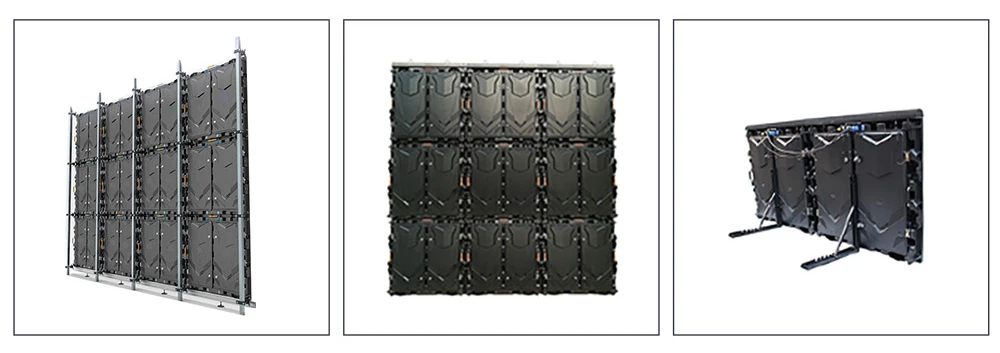
The outdoor range on your site does not flatten outdoor selection into one cabinet route. Across the outdoor category and product pages, the cabinet families include 500×500, 500×1000, and 960×960 directions. That alone makes a useful point: outdoor projects are not all expected to solve the same installation problem.
In many cases, 500×500 and 500×1000 cabinet families are more suitable when flexibility matters. That often makes more sense in façade work, rental setups, or mixed installation thinking where modularity is part of the job, not just a product feature. The outdoor advertising wall page explicitly notes mixed stacking between 500×500 and 500×1000 cabinets, which supports that logic naturally.
960×960 often makes more sense in a different conversation. It usually fits better when the project leans toward larger fixed-installation logic, especially where billboard thinking is stronger than rental or façade thinking. The 960×960 product content on your site presents that direction in a way that feels aligned with large-format outdoor use, structural consistency, and fixed display needs rather than highly flexible mixed builds.
That should not be treated like a rigid rule. It is a judgment pattern.
If a billboard-style project is being pushed toward a more flexible cabinet family without much explanation, it is worth asking why. If a façade or rental-style job is being steered into a large fixed-installation cabinet path simply because it is easier to quote, that also deserves a pause.
The recommendation should feel like it came from the site, not from quoting convenience.
This is where project cases become more useful than product pages
A product page can tell you what a cabinet can do.
A case page often tells you what the supplier thought the job actually was.
That difference matters when two suppliers sound equally confident on paper.
The case direction on your site is helpful for exactly that reason. The United States project reads like a large outdoor commercial display. The France project belongs much more naturally to outdoor advertising logic in an urban or commercial setting. The Mexico example points clearly toward scoreboard use. The Brazil example sits comfortably in rental-stage logic. Read together, they do not feel like one generic outdoor story being retold four times. They feel like different scenes being matched differently.
That is what buyers should want from project references. Not just proof that something shipped, but proof that billboard, façade, stadium, and rental projects are not all being mentally processed as one category.
This is also where many comparisons become much easier. A supplier can sound broad and capable on a product page. That part is normal. The harder test is whether the same supplier still sounds convincing when asked to point to the closest real project and explain why it is similar.
A useful question at this stage is:
Which of your past projects is actually closest to this one, and why?
That question forces the conversation out of broad capability language and into judgment. It also makes the application pages far more valuable. The buyer is no longer just browsing examples. The buyer is checking whether the supplier can connect one real installation to another without flattening their differences.
That is where scene understanding becomes visible.

Billboard, façade, stadium, and rental should not sound like the same job
One of the quickest ways to hear whether a supplier really understands outdoor work is to compare how these four scenes are described.
A billboard conversation usually sounds like a fixed-installation conversation. It is about long-view communication, exposure, structural steadiness, and a cabinet direction that usually fits large-area outdoor display logic.
A façade conversation tends to sound more architectural and more visually sensitive. The screen may sit closer to the public, closer to the building line, and closer to the point where layout and cabinet choice begin to matter aesthetically as much as technically. This is where 500×500 or 500×1000 often makes more sense, especially when installation flexibility or mixed-size cabinet thinking is part of the project.
A stadium conversation usually carries different priorities. The point is not to impress with the finest pitch on paper. It is to deliver clear, stable viewing and dependable performance in a public venue. The Mexico scoreboard case reads that way on your site. It feels like a venue decision, not a retail-display decision.
Rental sounds different again. Transport, assembly, reuse, and visual capture become much more visible in the recommendation. That is why the Brazil stage case feels like its own category of outdoor logic rather than a variation of billboard language.
When all four scenes receive almost the same explanation, the match is probably too shallow.
When they sound different in sensible ways, the supplier usually feels much closer to the real job.

Pixel pitch and refresh rate still matter, just not as the starting point of the decision
These two still belong in the discussion, but they work better as supporting decisions than as the center of the buying process.
Pixel pitch is useful because it reveals whether the supplier is matching the product to the viewing condition or just reaching for a number that looks attractive in a quote. A close-view façade and a long-view billboard are not usually narrowed in the same way, and the outdoor catalog on your site reflects a broad enough product range to support scene-based filtering rather than one-size-fits-all quoting.
Refresh rate becomes more relevant when the screen will be filmed, photographed, or used in event-heavy and public-capture settings. That is why it tends to feel more meaningful in scoreboard and stage conversations than in a simple billboard quote. The site’s Mexico and Brazil case directions support that reading more naturally than a general product page does.
The main point is that neither pitch nor refresh rate should be allowed to overshadow the more important outdoor questions.In this topic, the bigger test is still whether IP rating, nits, and weatherproofing have been explained as project decisions rather than pasted-in specifications.
A practical comparison table for supplier evaluation
This is not a parameter grid. It is a buying-side listening tool.
| What to compare | What a good answer usually sounds like | What should make you slow down | Why it matters |
|---|---|---|---|
| IP rating | Explains how protection applies to the cabinet in the actual installation | The answer stops at “IP65 waterproof” | Shows whether outdoor protection is being treated as real project logic |
| Brightness / nits | Connects brightness to sun exposure, content, and day-to-night use | The highest number is presented as the safest choice | Helps separate site thinking from easy number comparison |
| Weatherproofing | Talks about cabinet build, service access, and how the screen will live outdoors | “Weatherproof” stays broad and comfortable | Usually reveals whether the quote feels operational or just presentational |
| Cabinet direction | Matches cabinet family to fixed, flexible, façade, or rental logic | One cabinet path is used for every outdoor job | Shows whether the site has actually been read |
| Case references | Points to similar projects and explains why they are relevant | Only shares project photos without scene reasoning | Helps verify supplier understanding beyond catalog language |
| Pitch / refresh | Used as supporting decisions tied to viewing and use | Headline specs dominate the whole conversation | Keeps attention on the actual outdoor decision path |
What to confirm before asking for the final quotation
The best final quotations usually come from simple, specific briefs.
Name the scene directly: billboard, retail façade, stadium, rental stage, or the closest equivalent.
Say whether the installation is fixed or more flexible.
Describe the content in ordinary project language: advertising loops, public information, scoreboard content, event playback, brand visuals, sponsor messaging.
State whether the site is open sun, mixed light, or heavy day-to-night use.
Ask the supplier to explain cabinet protection, not just the IP label.
Ask why the brightness recommendation fits this site.
Ask which past project is closest to yours and what cabinet direction that project followed.
That is usually enough to make the quotation much easier to judge. It also makes it harder for the discussion to drift into polished but generic answers that never quite touch the real installation.
It also helps to send the supplier a few practical reference points early: the intended screen size, estimated viewing distance, installation photos or structure drawings, and any limits on front or rear maintenance access. Those details do not make the brief complicated. They make it much harder for the recommendation to drift into a generic outdoor answer.
Conclusion
Outdoor mistakes often begin before the first cabinet is shipped.
They begin when the quote feels complete before the project has really been understood. They begin when “IP65” sounds like the end of the outdoor discussion instead of the beginning. They begin when brightness becomes a comparison game instead of a site decision. They begin when weatherproofing is treated like a label instead of the life the screen will have once it is mounted, exposed, and maintained.
That is why this keyword matters in a very specific way. An outdoor led screen supplier is not just a company that offers outdoor products. It is the team that can read the site correctly, explain the recommendation clearly, and keep billboard, façade, stadium, and rental logic from being mixed together too early.
If the quotation sounds smooth too early, slow down.
Ask how the cabinet is protected in the real installation.
Ask why the brightness level makes sense for this site.
Ask what makes this cabinet direction fit a billboard, a façade, or a rental job.
Ask which project case proves the supplier understands that difference.
That is usually where a better buying decision starts. If you want a recommendation based on your actual site, contact our team.
FAQs
How do I compare outdoor LED screen suppliers before asking for a quotation?
Start with how the supplier reads the project, not how fast the supplier sends a model. A useful comparison checks whether the supplier asks about scene type, sunlight, content, maintenance access, and whether the job is fixed or flexible. If those questions are missing, the quotation may already be too generic for a real outdoor project.
What should a supplier confirm before recommending brightness for an outdoor screen?
The supplier should understand the actual daylight condition, the kind of content being shown, and whether the screen also needs to stay balanced after dark. A brightness recommendation becomes much easier to trust when it sounds tied to the site rather than copied from a standard outdoor sales line.
Is IP65 enough, or should I ask how the cabinet is protected in the actual installation?
IP65 is a common outdoor starting point, but it should not end the conversation. The better question is how the cabinet is protected once it is installed and where the practical exposure points still sit. Front protection, rear access, cable path, and installation condition all matter.
What should a relevant project case actually prove before I trust the recommendation?
Cases show whether different scenes are being matched differently. If billboard, façade, scoreboard, and rental examples all seem to follow one flat product story, the supplier’s judgment may be thinner than it looks. When the case logic changes with the scene, the recommendation usually feels much more credible.
Which cabinet direction usually makes more sense for fixed billboard projects versus flexible façade or rental jobs?
Large fixed billboard projects often make more sense in a 960×960 direction, while 500×500 or 500×1000 cabinet families usually fit better when façade flexibility, rental handling, or mixed installation logic matters more. It is not a rigid rule, but it is a practical way to judge whether the cabinet recommendation matches the job.