EN

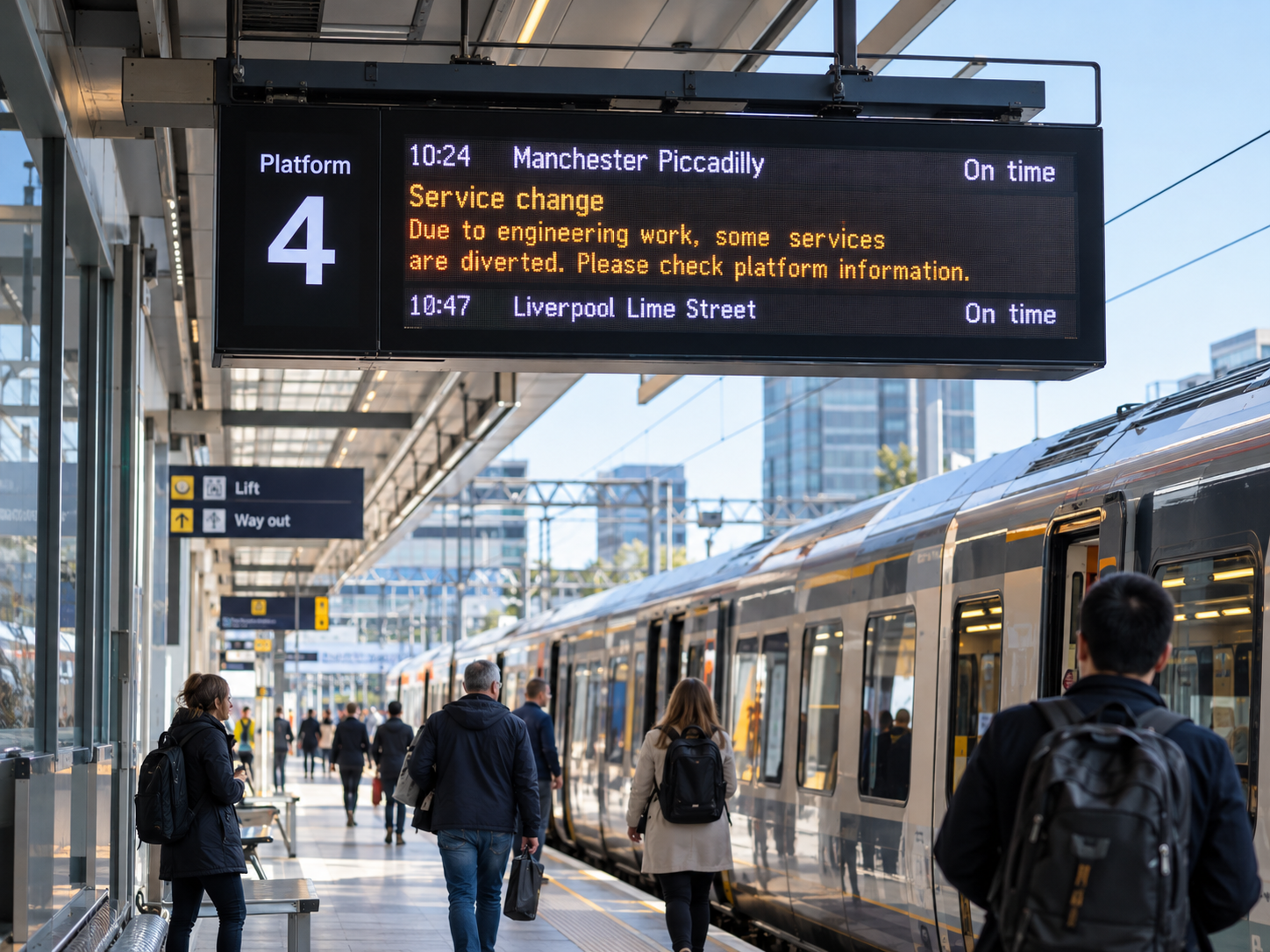
When a train moves to another platform, passengers need to recognise the affected service, find the confirmed replacement platform and understand how to reach it. They must also be able to distinguish that change from instructions about safe waiting positions or restricted areas. Railway platform LED passenger messaging should make those decisions clear without implying that uncertain information is final.
For station operators and rail integrators, this changes the purchasing question. It is not simply whether an LED board can show departure information. It is whether the proposed location, message layout and update process will help passengers respond correctly when a platform changes close to departure.
Start with the message a passenger needs when a platform changes
Imagine passengers waiting at Platform 3 when their train is reassigned to Platform 5. An explanation of the disruption can come later. Their immediate questions are more practical: Is this my train? Which platform is it leaving from? Which way should I go?
A useful update connects those answers. The train's recognisable service or destination identifier stays beside the new platform number, and the direction corresponds to the passenger's actual location. At the old platform, the message needs to prompt movement. At the replacement platform, the message has a different job: confirming that passengers have arrived at the correct place.
Illustrative wording only; actual passenger messages and routes require station approval.
A short message like this is not automatically suitable for every station. If Platform 5 is reached through a separate concourse or accessible passage, the instruction must align with the station's existing wayfinding system. Otherwise passengers may know their destination but still hesitate at the next junction.
That is where reviewing led sign board suppliers becomes relevant. Before comparing board formats, the station team should know what information must remain visible, where passengers will first encounter it and which details the proposed display layout can accommodate. A category listing is a starting point for that discussion, not proof that a particular board meets railway requirements.
Separate service changes from safety and wayfinding messages
A last-minute platform change and a warning to keep clear of a platform edge may both require attention, but they are not the same kind of instruction. One helps passengers find their departure; the other concerns where they can safely stand or move. When both appear in the same visual environment, their purposes must remain distinct.
During a confirmed service disruption, the replacement platform deserves prominence because passengers may have limited time to change direction. Train identity, destination and the new platform should be easier to recognise than the reason for the delay. Additional context is only useful after the passenger understands the immediate action.
Near an active platform edge, the balance is different. Approved safety information must remain identifiable and must not appear to be cancelled or replaced by ordinary departure messages. A board that alternates content, for example, would need its proposed timing and message behaviour reviewed against the station's own safety and communication requirements; those capabilities cannot be assumed from the product category.
A useful distinction at the platform
A service change answers “Where does my train leave now?” A wayfinding message answers “How do I get there from here?” A safety instruction governs where movement or waiting is permitted. They may support one another, but none should be allowed to create ambiguity about another.
Colour and emphasis can reinforce that separation, provided they follow the operator's established conventions. A strong red highlight, for instance, should not be introduced casually if the station reserves that treatment for a different message category. Display information supports passenger communication; it does not replace approved signage, railway control or safety systems.
This distinction is especially useful when assessing passenger wayfinding LED boards. An arrow on a board is not enough if it points ambiguously at a split passage or bypasses the signed accessible route. The message has to correspond to the passenger's next real decision, not merely the destination platform.
Check sightlines from waiting areas and access routes
Passengers rarely read every sign from a fixed position. Some are already seated on the platform; others are coming down a stairway, approaching from a lift or passing through a connecting route. A board that looks clear in an installation drawing may be easy to miss from one of those approaches.
The most useful survey begins before passengers reach a route choice. Look at the first place someone could recognise the changed platform number, then follow the route toward the new departure point. Columns, overhead fixtures, crowds and turns in a passage can interrupt visibility. A board only visible after the turning point may confirm a decision too late to help someone make it.
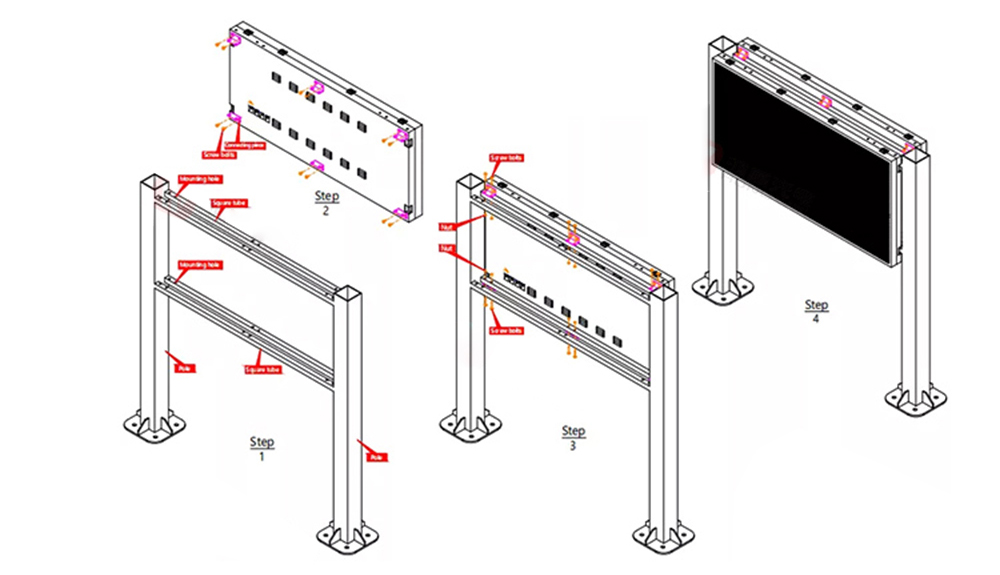
Mounting position matters
This official two-pole mounting drawing shows a possible support arrangement, not a railway installation. The right position still depends on what passengers can see before they reach a platform junction.
Review actual support structures, accessible routes and site restrictions with the station project team.
Waiting areas also deserve a separate view. Passengers standing beneath a sign may be able to read supporting text, while someone farther away may only be able to recognise a larger service identifier or platform number. Those different reading moments should shape the proposed content hierarchy, rather than forcing all information into equally prominent lines.
There is no responsible single figure for viewing distance, mounting height or legibility without the station's geometry and the actual board being evaluated. Station layouts, proposed mounting positions, sightline photographs, lighting conditions and sample messages give an integrator the material needed to check the proposed arrangement against verified supplier documentation.
Consider accessibility as part of the route rather than an afterthought. If a platform transfer requires different directions for a step-free route, a visual instruction should remain consistent with approved accessible signage, audio information and station assistance arrangements. The display cannot independently establish that a route is suitable or open.
Assign update ownership and a stale-message fallback
A clearly written platform change becomes misleading if the service moves again and the message does not. The station therefore needs more than a way to place text on a screen: it needs agreement on who supplies the confirmed information, who authorises its publication and who checks that it is still valid.
Those responsibilities may sit with station control, a passenger information team or another authorised operational role. The important point is to name them within the project rather than expect the equipment to resolve conflicting sources. If one system lists Platform 4 and another lists Platform 5, the display should not be treated as the authority that decides between them.
Late changes make this especially visible. A message prepared for a move from Platform 2 to Platform 4 could be overtaken by another decision while passengers are already walking. The operator needs a defined process for correcting or withdrawing the old instruction and, where appropriate, confirming the updated route with station staff.
The same reasoning applies when live service information stops updating. Leaving the last received platform number in place can create false certainty. Depending on the operator's approved procedures, the fallback might remove that particular departure instruction, make its status visibly uncertain or direct passengers to a staffed information point. It should not invent a new platform or imply a cancellation that has not been confirmed.
Any proposed system behaviour—including content withdrawal, approval controls, update-source handling or language changes—must be demonstrated with the actual offered configuration. Railway platform LED passenger messaging is only dependable when the information process surrounding the board is defined and tested; hardware suitability and operational approval are separate questions.
Prepare a platform messaging brief before selecting a board
Once the station has identified the messages and their viewing locations, a product discussion becomes much more precise. Rather than asking for a generic departure screen, station operators and rail integrators can show prospective suppliers the conditions that a proposed layout must satisfy.
The brief should make clear where passengers choose their route, what they need to see there and who authorises a changed message. These details make discussions about platform passenger information boards more useful than a generic screen request.
What to include in the station brief
Realistic wording matters here. A layout that appears spacious with short sample text may become crowded when a destination name is longer, two languages are required or a platform change must stay visible beside the service identifier. Ask to see how the proposed configuration handles these specific message states, rather than relying on a generic promotional demonstration.
The right time to review platform LED messaging options is after the passenger decision points and message responsibilities have been agreed. The LED Sign Board category is a useful starting point, but a product shortlist should be checked against the station's actual viewing positions and operating requirements.
A board format worth reviewing
Programmable LED Display Board
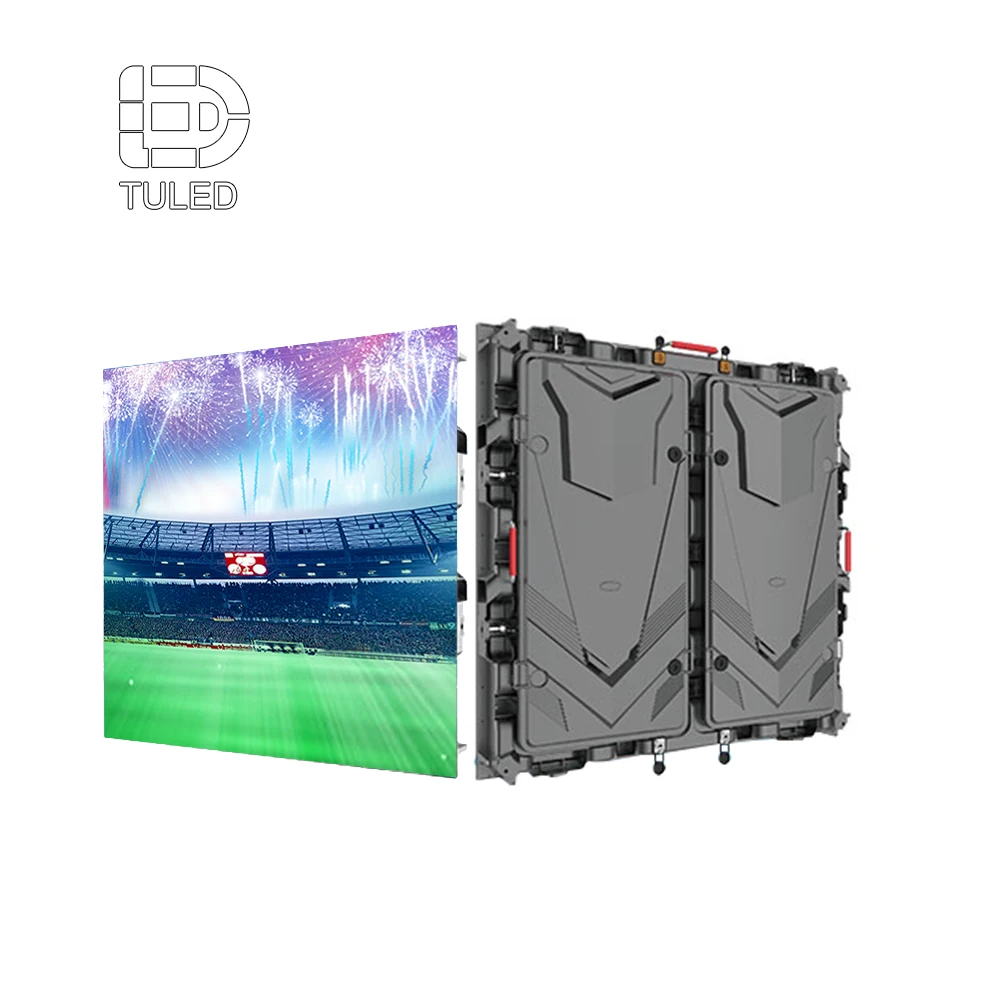
A long-format programmable board is a useful starting point when comparing how much space a platform message needs for the train identifier, new platform and next direction. LEDDisplayFactory's product page shows a front-service board format; it does not establish suitability for an approved railway passenger information installation.

Manufacturer product photograph showing the display cabinet format, not a railway installation or an example of approved platform messaging.
Before selection, ask the supplier to demonstrate legibility with real platform-change text and document the proposed mounting, information-update method and multilingual layout against the station brief.
View Programmable LED Display BoardFor an existing station, the priority may be correcting a poorly placed board without changing an established information workflow. In a new station, the wording and approval process may still need agreement. The same display format can be considered in both projects, but it should not be accepted without evidence for the conditions on site.
Frequently Asked Questions
Can one board handle two languages without hiding a platform change?
Possibly, but the proposed layout needs testing with both full translations. The service identifier and confirmed new platform must remain easy to recognise; language switching should not conceal an instruction at the moment passengers need it.
What should passengers see if live information stops updating?
They should not be shown an unverified platform as current. The station's approved fallback may withdraw the affected information, identify its uncertain status or direct passengers to an authorised information point.
Which site details should a station team send before requesting a quote?
Send station layouts, platform decision points, sightlines, languages, sample messages, the authorised update source and the approval owner. Include any known installation or accessibility constraints.
Discuss your station platform messaging requirements
Send station layouts, decision points, sightlines, required languages, update source and approval owner. Include one example of a last-minute platform change so the team can discuss an appropriate LED Sign Board format, documentation and configuration questions before a quote is prepared.
Discuss Your Requirements