EN
EN

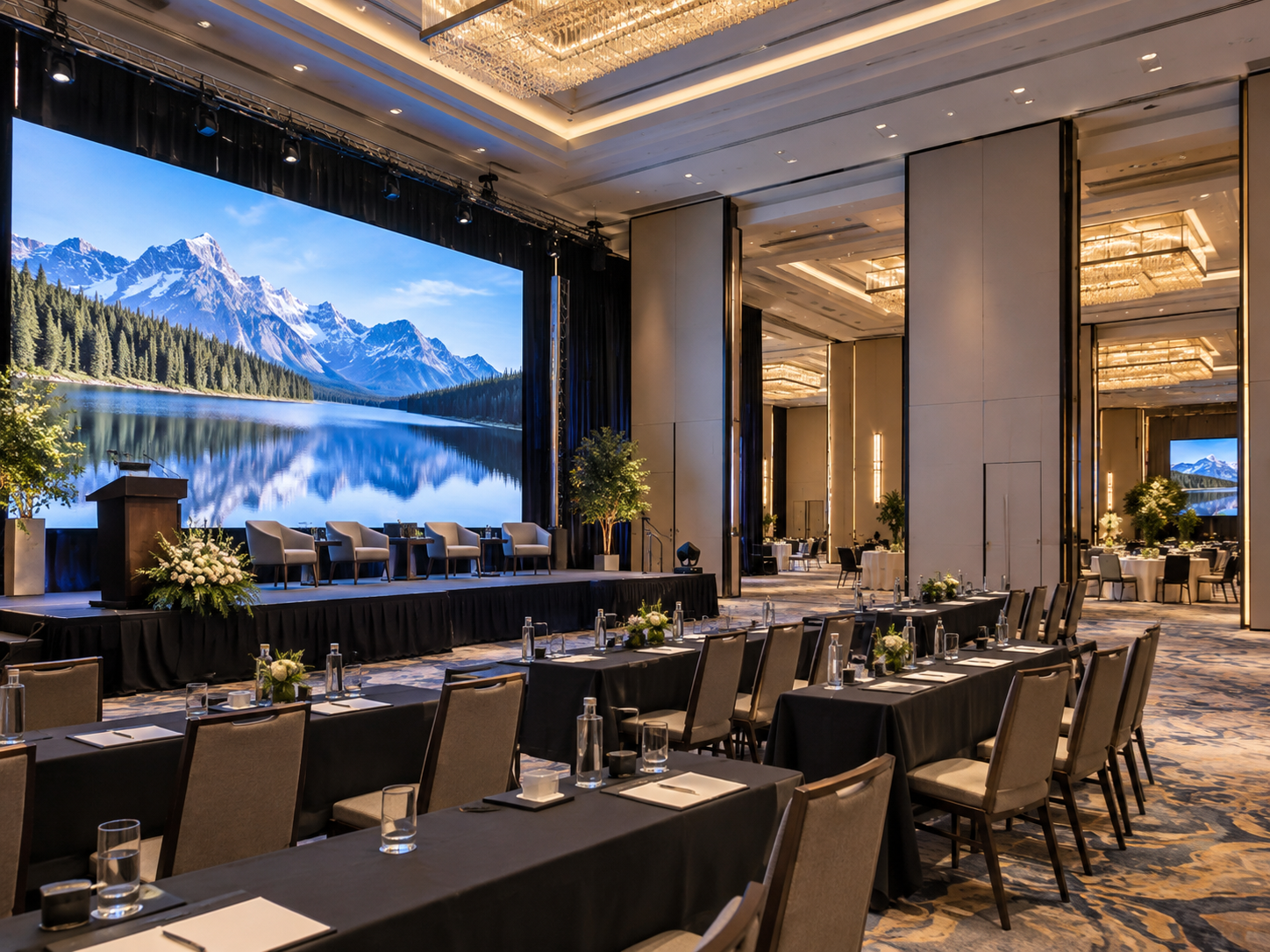
Una sala da ballo di un albergo raramente mantiene la stessa configurazione per l'intera giornata. Una conferenza mattutina potrebbe occupare l'intero spazio, il pranzo potrebbe essere seguito da due sessioni parallele dietro una parete mobile, e un evento serale potrebbe riaprire lo stesso spazio come un'unica sala da ballo.
Il display stesso potrebbe rimanere nello stesso edificio, ma la situazione operativa che lo circonda cambia ogni volta. Per questo motivo i team degli alberghi dovrebbero valutare Fornitores parietum video LED in base al funzionamento reale della sala da ballo: come cambiano le configurazioni della stanza, chi gestisce la prossima sorgente, cosa deve ricordare l'operatore e quanto velocemente la struttura deve essere pronta per la prenotazione successiva.
Per questo tipo di progetto, la domanda utile non è semplicemente: «Quale parete LED dobbiamo installare?». È invece: «Come possiamo evitare che ogni cambio di configurazione diventi una nuova configurazione AV da zero?»
The practical goal is simple: when a ballroom changes from one familiar state to another, the AV team should already know which room is active, who provides the source and what the finished setup should look like.
The Real Project Starts With a Day in the Ballroom
A ballroom drawing shows walls, doors and partitions. It does not show the pressure of a real event day.
Imagine the morning general session overruns by fifteen minutes. At the same time, banquet staff are waiting to divide the room, two afternoon speakers have arrived with separate presentations, and an outside production team is asking when it can connect equipment for the evening function. The screen is only one part of that change.
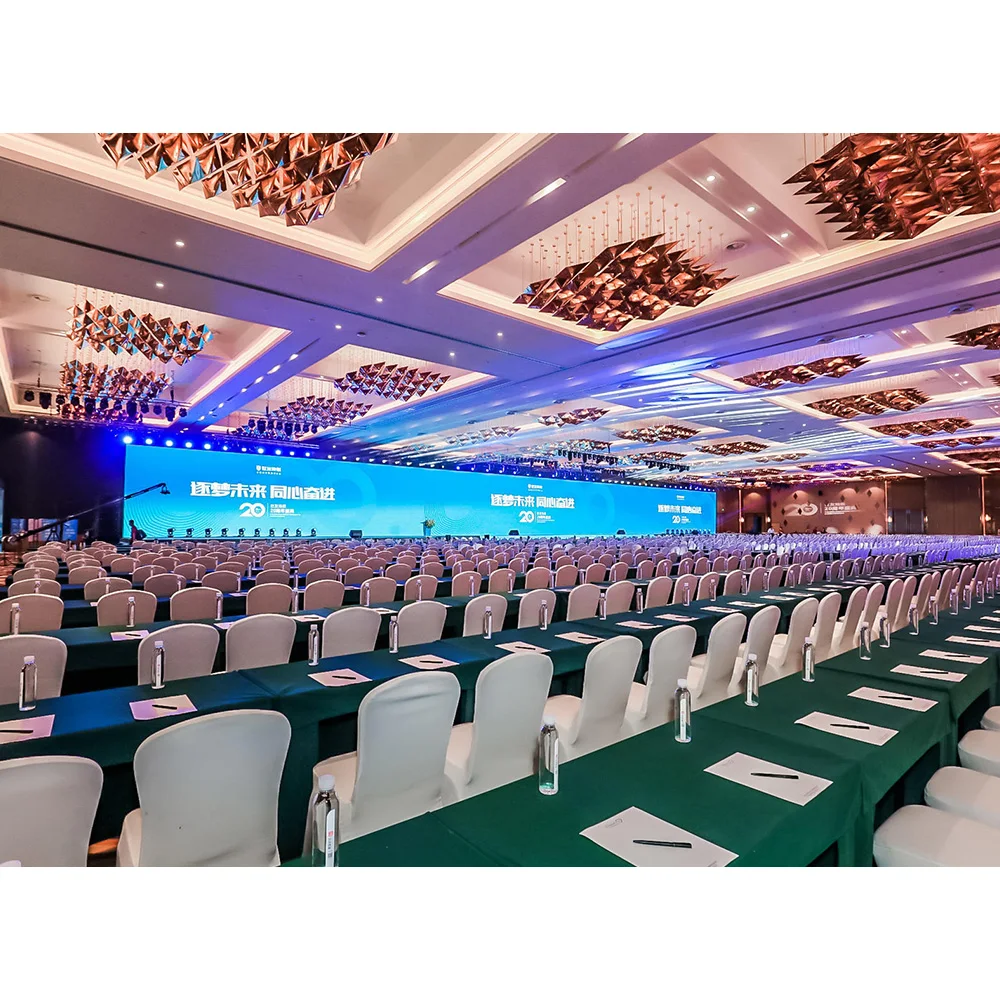
Hoc est cur contextus projectus plus quam dimensiones display includere debet. Hospitium et AV turma debent describere configurationes ambientes quas revera vendunt, eventus qui his configurationibus communiter insunt, qui eas operantur, et tempus quod inter occupationes disponibile est.
A ballroom with one permanent in-house technician has a different handover problem from a hotel that regularly hosts external production companies. Likewise, an overnight room reset gives the team more freedom than a short conference changeover.
Those differences should influence the operating plan before anyone starts discussing how many presets would be convenient.
Treat Combined and Divided Rooms as Different Operating Situations
Suppose the ballroom is sold as Room A+B when open and as Room A et Room B when divided. It is tempting to think of the divided condition as the same system with a partition in the middle.
Operationally, it may be very different.
Cum aula magna coniungitur
Forsitan eadem turma unum ordinem, unum medium praesentationis et unum dominum eventus administrat. Dispositio ostensionis aestimari potest ut effectus unius aulae.
Cum aula magna dividitur
Utraque pars forsan habet oratores diversos, fontes contenti diversos et personas diversas quae mutationes postulant. Una aula etiam manere potest activa dum altera paratur.
Haec distinctio videtur manifesta, sed ibi multa vitanda mala incipiunt. Si status operativus numquam clare definitus est, technici tandem die ipso decidunt ubi quisque fons ponendus sit, quid tuto mutari possit et quae praecedentia instituta revocanda sint.
Projectum fortius describit effectum intentum pro quolibet communi statu aulae, sine fictione quod certus processus aut moderator id ipsum automato praebet.
Instead of writing “one-touch split-room preset” into an early brief, describe the actual requirement: when the partition closes, Room A should operate with its intended event source while Room B can be prepared independently for another session.
The AV integrator can then determine how the selected control architecture should achieve that result. This prevents an operational requirement from being mistaken for a feature that has already been confirmed.
Preset Layouts Should Remove Repeated Decisions, Not Create More of Them
Presets are useful because hotel events repeat. They become less useful when every slight variation receives its own name and the operator has to remember which of twenty nearly identical choices belongs to today's booking.
A better approach is to standardize the states that happen often enough to deserve a shared operating reference.
For one hotel, that might be a full-ballroom conference state, a two-room breakout state and an external-production handover state. Another venue may need a different set. The point is not the number. The point is that each state should describe a situation the staff actually recognize.
The preset name should make sense to the next operator
Labels such as “Preset 03,” “Client Setup” or “PM Mode” are easy to understand while the person who created them is standing at the console. Six months later, or during a shift change, they are much less useful.
Names tied to the actual ballroom condition are easier to hand over: “Combined Ballroom – Main Session” or “Room A / Room B – Separate Events,” for example.
Source ownership matters as much as the screen layout
A room can look physically identical on two different days while the responsibility behind it changes completely.
Hotel AV fortasse possidet fontem praesentationis pro conferentia hebdomadaria. Eadem aula convivialis fortasse traditur societati productionis externae pro festo vespertino sequenti. Ergo status aulae et dominus fontis separatim annotandi sunt.
Praedefinitum revocatum adhuc inspectionem humanam postulat
Operator non debet actionem ipsam controllem ut probationem accipere quod aula parata est. Verificatio utilis multo simplicior est: an contentum intentum in aula intenta visibile est, et an persona responsabilis pro evento sequenti ordinem acceptat?
Bonum praedefinitum minuit opus memoriam. Non tollit tamen responsabilitatem de examinando eventu finali.
Quid vere aulas conviviales lente mutare facit
Frequenter schermum accusant cum mutatio nimis diu durat, sed mora fortasse coepit antequam quisquam display tactum est.
The banquet team closes the partition, yet nobody has confirmed which presentation belongs to Room B. An external crew arrives with a source that was not part of the original handover. The afternoon technician calls a room by a different name from the morning technician. Someone changes an active path without realizing another event is still using it.
These are coordination problems. The practical way to shorten the changeover is to remove as many decisions as possible from the turnaround window.
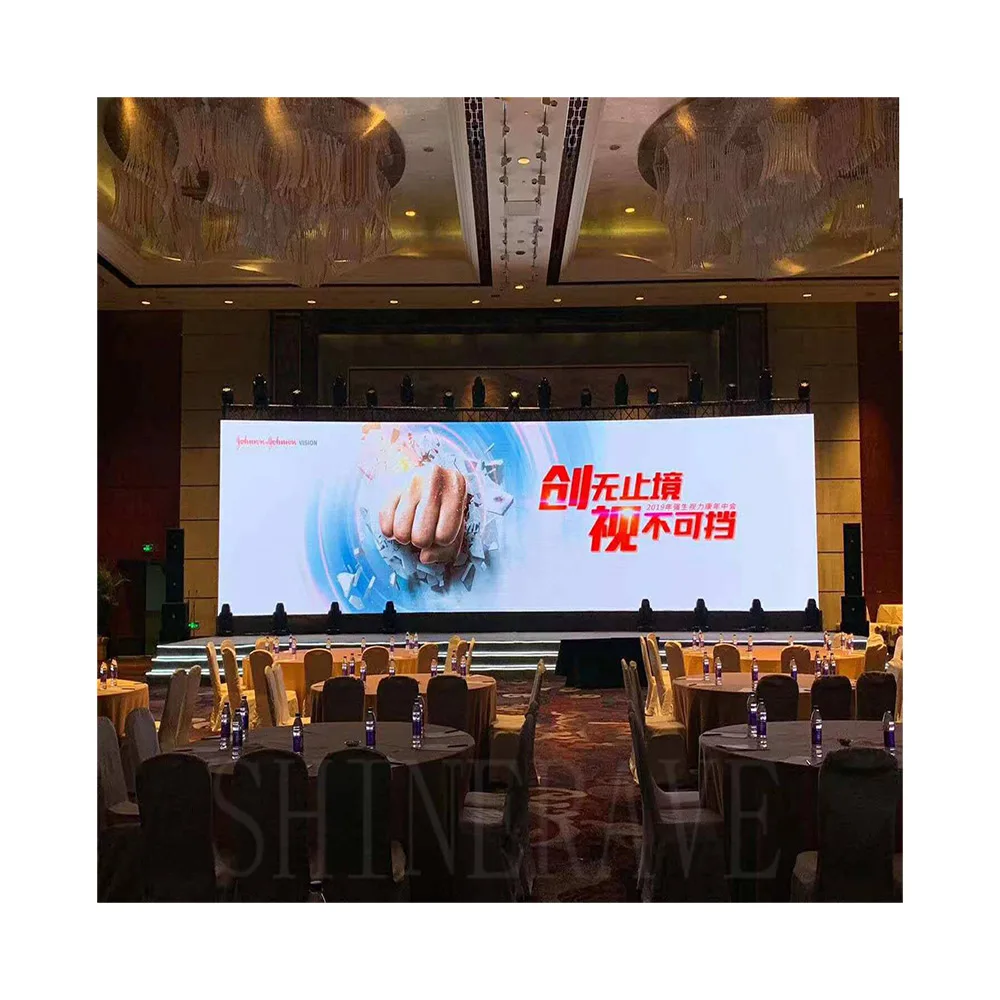
Tue aulam quae adhuc vivit
Situatio maxime exigens saepe non est plena restitutio ballroom. Est autem partialis.
Sala A fortasse adhuc habet auditorem dum personale convertit Salam B ad proximum actum. In tali casu, "celeritas mutationis" etiam significat vitandum inutiles mutationes in actu currente. Turma veniens debet scire quid parare possit sine perturbatione fontis, status monstrandi, aut fluxus operativi operatoris ex altera parte partitus.
Antecipare necessitates raras eventuum
Si turma productiva externa necesse habet connectere instrumenta insolita, haec conversatio ante aperitionem ianuarum fieri debet, et potissimum ante initium repositionis salae. Fenestra mutationis tempus inopportune est ut discas quod suppositiones turmae venientis de proprietate fontis non congruunt cum consilio hospitis.
Hospitia quae saepe utuntur instrumentis productivis temporariis etiam recensere possunt Ostentatio LED pro eventibus cum necessitas vere eventu impulsu est. Haec est distincta deciso operativa ab specificando installatione fixa in ballroom.
Facilitas servicii quaestio operativa est, non solum quaestio installationis
A hotel display may be physically serviceable and still be difficult to reach in practice because the ballroom is booked continuously.
During project planning, the hotel should identify realistic access windows and who is responsible when technical attention is required. That conversation is more useful than discovering later that the only practical service period conflicts with the venue calendar.
What to Send Before Asking for a Ballroom LED Wall Proposal
An inquiry becomes much more useful when it describes the venue rather than simply asking for “a large LED screen.”
The supplier does not need a fifty-page manual. A ballroom drawing, a list of normal room states and a short explanation of how events are operated can provide the information that actually changes the proposal.
la sala da ballo funziona come A+B per le sessioni generali e come A / B per gli incontri paralleli. L'audiovisivo dell'hotel controlla normalmente entrambe le sale, ma società esterne di produzione assumono spesso il controllo per gli eventi serali. Il tempo di riadattamento è solitamente breve, quindi gli stati divisi e uniti devono essere semplici da ripristinare.
Questo comunica al fornitore molto di più rispetto a «Abbiamo bisogno di un wall LED flessibile per hotel».
Dove il supporto della fabbrica si inserisce nel progetto.
Il supporto della fabbrica diventa più utile una volta chiarito il flusso operativo della sala da ballo.
La prima discussione riguarda solitamente la corrispondenza della categoria. Un wall permanente destinato alle normali prenotazioni della sala da ballo non ha gli stessi requisiti operativi di un sistema che verrà spostato, ricostruito o schierato ripetutamente per produzioni temporanee.
Quando la location necessita effettivamente del secondo modello, il Conductio Muri LED categoria potest separatim considerari, non ut alternativa generica ad installationem fixam tractari.
Schema ballroom deinde coordinare possunt dispositionem inter hotel, integratorem AV et fornitem display. Schema non necesse est architecturam controlis definire. Officium eorum est statum physicum aedium, positiones display et restrictiones servitii omnibus in opere laborantibus manifestare.
Coordinatio controlis eodem principio sequi debet quod pro praedefinitionibus usurpatur: primum descriptio effectus. Si hotel duo divisos locos indiget, qui independenter operentur et postea ad unum ambientes presentationis combinatos revertantur, haec conditio clara esse debet antequam turma operis determinet quomodo systema electum id consequatur.
Planificatio servitii etiam hic pertinet. Hotels restrictiones accessus et periodos manutentionis realistas identificare debent dum planus ballroom adhuc coordinatur, non postquam installatio iam cum completo calendario eventuum certat.
Keep the responsibility boundary clear
The display factory supports the LED display portion of the project. The hotel defines how the ballroom is sold and operated, while the AV or system integration team coordinates the control environment and source-routing design required for those operating states.
A Simple Changeover Map Is Usually Enough
Hotel teams do not need another long technical checklist. For the room states that occur repeatedly, a short handover note can preserve the information most likely to be forgotten during a busy event day.
The benefit of this approach is not paperwork. It is predictability. The next technician does not have to reconstruct the logic of the last event, and the hotel does not have to depend on one person remembering how a particular ballroom state was built months earlier.
Quaestiones Frequenter Rogatae
How should an LED wall plan change when a ballroom is divided?
Define the divided state separately: which display serves each room, who owns each source and what should be visible before the rooms are handed over. The exact switching method should then be confirmed against the actual control-system design.
What should be included in preset layouts for common event states?
Focus on the room condition, display assignment, expected source owner and final verification result. Presets are most useful for situations the hotel repeats regularly, not every possible room combination.
What usually slows down hotel ballroom event changeovers?
Delays often come from unclear room states, late source decisions, inconsistent labels and weak handovers. Moving those decisions earlier leaves the actual turnaround window for changing and checking the room rather than resolving responsibility.
What should hotel teams send to LED video wall suppliers?
Send the ballroom plan, normal partition states, required screen size, recurring event types, source list, operator workflow, typical changeover window, quantity, power standard, installation country and target timeline.
Plan the Ballroom Workflow Before Finalizing the LED Wall
For a divisible hotel ballroom project, send the room plan together with the normal partition states and a short explanation of how the venue changes between events. Include screen size, event types, source list, operator workflow, changeover window, quantity, power standard, installation country and project timeline.
Id donat ad team proiectu un fundamento plus claru pro discutere directione de monstratio apta, coordinatio de dispositione, requisita de controllo, et planificatio de servitio, sine reducere proiectum ad quotatione genericu de schermo.