EN
EN


Before a show opens and cameras roll, budgets usually meet reality at the quotation stage. For that reason, led screen rental pricing needs a clear structure, not guesswork. Meanwhile, the biggest cost swings often come from small line items that hide in plain sight. As a result, a quote comparison method matters as much as the screen itself.
What a “Complete” Rental Quote Should Include
At first glance, two quotes can look similar because both list a screen size. However, a screen size alone rarely describes what arrives on site. In practice, a complete rental quote should read like a build sheet and a logistics plan combined.
Start with the display system, not just dimensions
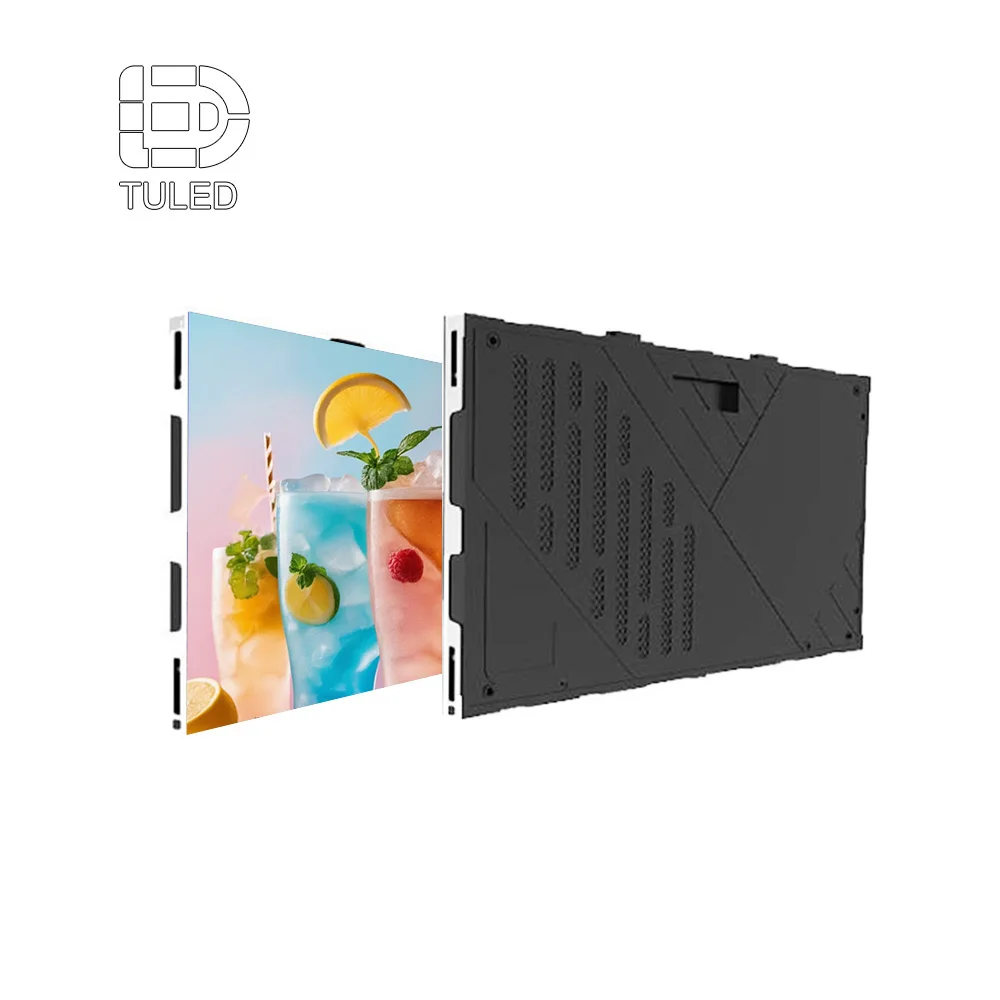
First, the display system should be defined by cabinet type, module size, and service access. For example, a touring-style cabinet with fast locks and corner protection behaves very differently than a fixed-install cabinet. In addition, the quote should state whether front service, rear service, or dual-service is available, because that affects both labor time and placement.
Next, pixel pitch needs to be written as a number with a unit, not as a vague “HD.” In other words, “P2.6” communicates viewing distance expectations, while “high resolution” does not. Also, refresh rate and grayscale depth should appear in the technical block, because broadcast workflows and camera shutters can expose flicker problems quickly.
Confirm brightness, environment rating, and viewing conditions
Meanwhile, brightness should match the venue’s ambient light. An indoor ballroom and an open-air plaza push very different luminance needs. Therefore, the quote should state brightness in nits and clarify whether the configuration targets daylight, dusk, or nighttime.
Additionally, outdoor use should always specify an IP rating and weather strategy. For instance, “weatherproof” is not a substitute for a stated IP65-class approach to water and dust. Similarly, wind exposure affects whether ground stacking needs ballast, outriggers, or additional structure.
List the control chain and signal path explicitly
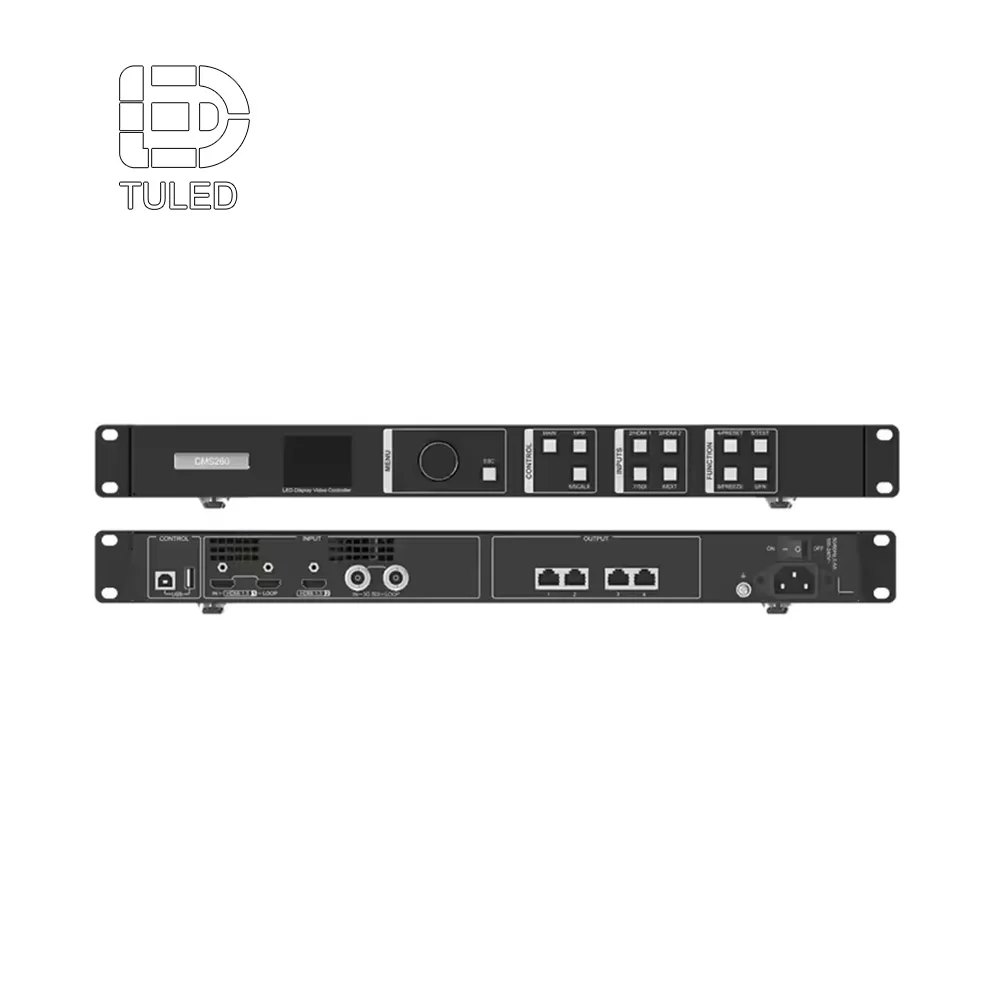
At the same time, a screen is only as stable as its control chain. So, a proper quote should list the sending system, receiving cards, processor, scaler, and input formats. Moreover, cable lengths and connector types should be written down, because signal conversion can quietly add cost.
Finally, power is not a footnote. A professional quotation includes power distribution, cable runs, and an estimated consumption range. Consequently, the power plan should align with venue access, generator strategy, and safety requirements.
A Practical Framework for Comparing Quotes Side by Side
Instead of comparing totals, it helps to compare structure. In particular, a quote becomes “comparable” only after each vendor describes the same scope. So, the goal is to create an apples-to-apples grid and then evaluate value.
Step 1: Standardize the scope into five blocks
First, break every quotation into five blocks:
Display hardware: cabinets, spare modules, rigging bars, base plates, touring frames
Processing and control: video processor, sending system, backup strategy, media server needs
Power and safety: distro, cabling, grounding, safety accessories, load calculations
Labor and time: install hours, rehearsal time, show call, strike time, travel time
Logistics: freight, cases, loading method, access restrictions, permits if applicable
Next, assign each line item to a block and flag anything that has no home. In many cases, “miscellaneous” is where uncertainty sits. Therefore, anything unlabeled deserves a follow-up clarification before numbers get trusted.
Step 2: Convert “packages” into measurable specs
Meanwhile, many quotes use bundles like “standard package” or “full service.” However, bundles are only useful once they are unpacked into measurable specs. So, each quote should be rewritten into consistent terms like:
Screen resolution target (based on pixel pitch and total pixels)
Brightness target and dimming method
Maximum hanging or stacking height, if relevant
Expected viewing distance range
Input needs (HDMI, SDI, fiber, NDI via conversion, etc.)
Redundancy level (single path, dual sending, dual power, spare modules)
After that, the comparison becomes clearer because the technical promises match the real workflow. In other words, the team can see whether two quotes are truly offering the same performance.
Step 3: Normalize time assumptions
At the same time, labor is often priced through assumptions. So, the timeline needs to be normalized. For example, one quote might assume a four-hour install, while another assumes a full day. As a result, the cheaper total can simply be an under-scoped time plan.
Therefore, it helps to define a standard event timeline and map each quote onto it:
Load-in window
Build and test window
Rehearsal window
Show duration
Strike and load-out window
Once timing is aligned, labor numbers become meaningful rather than confusing.
Step 4: Use a “risk premium” lens for unclear items
Finally, unclear items should be treated as a risk premium, not a rounding error. For that reason, any “TBD” line item should be estimated conservatively. In addition, anything charged “as incurred” should be capped or at least defined.
The Hidden Fees That Most Often Surprise Budgets
Hidden fees are rarely “secret.” Instead, they tend to be implied, optional, or written in small print. So, the easiest way to avoid them is to name them early and require clarity in writing.
Logistics and freight: the quiet multiplier
First, transport is usually more than a delivery fee. In practice, freight can include:
Liftgate requirements
Inside delivery or long pushes
Waiting time at docks
After-hours receiving charges
Return freight scheduling complexity
Meanwhile, venue access rules can create extra labor or special equipment needs. For example, a strict loading bay schedule can force more crew on a shorter window. Therefore, quotes should list access assumptions and identify what changes if access changes.
Additionally, packaging affects freight cost and speed. Touring cases, dollies, and protective frames can raise shipping weight. However, those cases also reduce damage risk and speed up build time. So, logistics should be evaluated as an efficiency tool, not just a cost.
Rigging, truss, and structure: scope boundaries matter
Next, structure is a common boundary issue. One quote may include only the screen and assume a separate rigging vendor. Another may include truss, motors, and hardware. As a result, totals can look far apart while scopes are incomparable.
Therefore, the quote should clearly state which of these are included:
Ground support and base plates
Hanging bars, shackles, and safety steels
Truss spans and towers
Motor points, chain motors, and control
Engineering documents, if required by venue rules
Similarly, outdoor builds often need ballast plans, wind strategy, and perimeter control. So, structure needs a safety-first definition, not a vague label.
Power distribution, cabling, and compliance
Meanwhile, power is often treated like a site-provided utility, but that assumption varies by venue. For instance, some sites provide only wall outlets, while others provide camlock tie-ins. Consequently, power distribution can become a last-minute rental add-on.
So, a good quote states:
Expected voltage and phase
Distro type and breaker strategy
Cable lengths and connector types
Grounding approach
Backup power assumptions, if any
In addition, cable management matters. Clean cable routing and labeled runs save time and prevent failures. Therefore, cabling should be part of scope, not an afterthought.
Video processing, scaling, and format conversion
At the same time, signal conversion can quietly grow. For example, a workflow might need SDI, HDMI, or fiber depending on distance. Meanwhile, live cameras often need a switcher and a processor that handles scaling and frame sync.
So, a quote should clarify:
Processor model class and capabilities
Input count and format support
Output mapping method (single canvas vs multiple regions)
Genlock needs for broadcast workflows
Backup input strategy
Additionally, content playback might require a media server for complex shows. Therefore, “content playback included” should be specified as a hardware-and-operator plan, not a promise.
On-site technicians, overtime rules, and “minimum calls”
Next, labor terms can hide real costs. Many crews price with minimum hours per tech, then add overtime after a threshold. Consequently, a delayed rehearsal or extended strike can change totals.
So, clarity should cover:
Minimum hours per technician
Overtime triggers and rates
Travel days and per diem rules
Night work premiums, if relevant
Who handles content changes during show time
Moreover, quotes should state whether a tech stays on site for the entire event or only for install/strike. That difference changes both reliability and cost.
Spares, damage waivers, and “consumables”
Finally, risk coverage can appear as a damage waiver, insurance, or “consumables” fee. Yet, spares are not a luxury in touring environments. Instead, spare modules, spare power supplies, and spare receiving cards are practical uptime tools.
Therefore, a healthy quote defines:
Spare module percentage or count
Spare power and data parts
On-site repair capability
Replacement policy if a cabinet fails
In short, the cost of spares should be compared to the cost of downtime, especially on show-critical builds.
Choosing the Right Screen Type for the Scene
Even the best quote comparison cannot fix a wrong screen choice. So, selecting the right display style comes first, and then pricing becomes meaningful.
Indoor close-viewing builds
First, indoor conference rooms, studios, and exhibition halls often involve close viewing. Therefore, smaller pixel pitch options tend to be prioritized because fine text and sharp graphics matter.
Meanwhile, indoor environments also reduce brightness needs, which can help power planning. In addition, quieter operation and clean aesthetics become important. So, slim cabinets and tidy cable routing often bring more value than peak brightness.
In this category, the term led display screen rental usually refers to fine-pitch systems with stable color calibration and high refresh behavior. As a result, the quote should highlight calibration standards and test practices, not just size.
Outdoor, daylight, and weather exposure
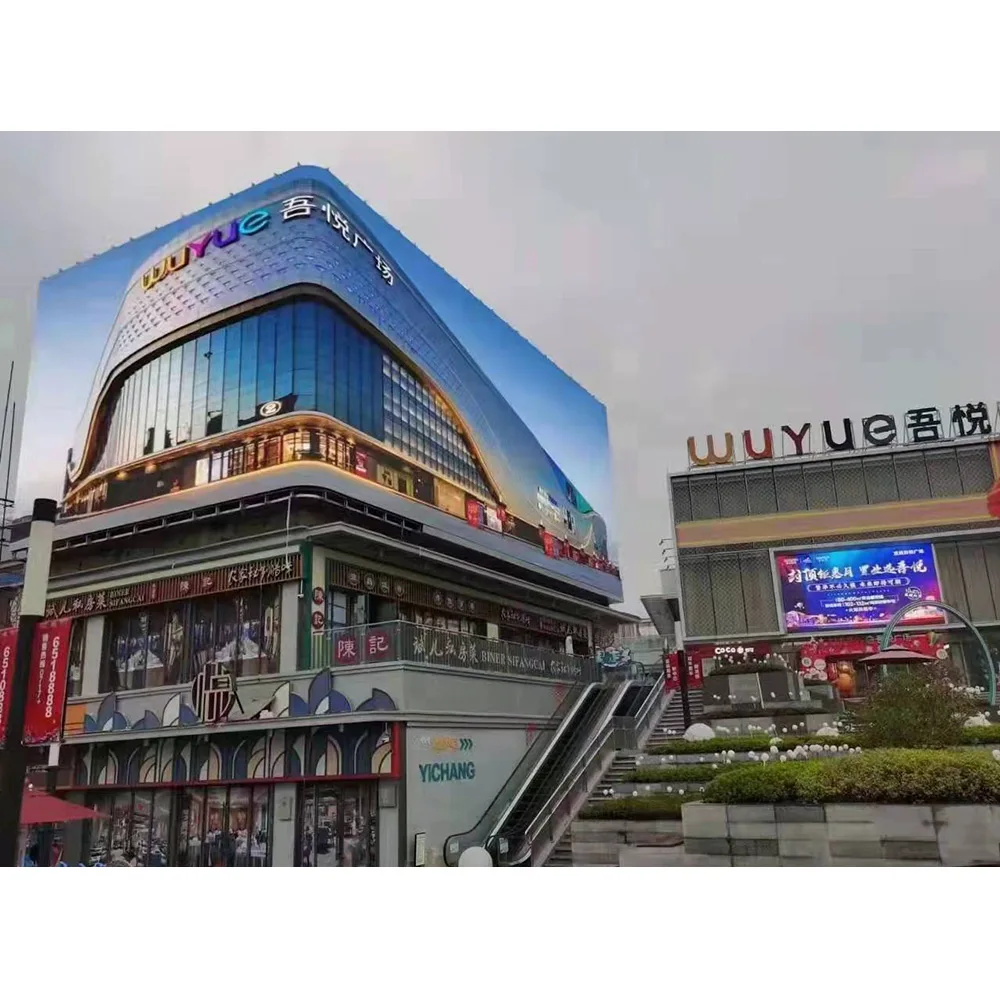
Next, open-air events demand different priorities. Brightness, weather resistance, and structural safety move to the front. Therefore, outdoor led screen rental solutions should be evaluated around daylight readability, IP-rated protection, and wind strategy.
Additionally, outdoor builds often face longer cable runs. So, the signal chain may need fiber extension or stronger distribution planning. Meanwhile, power draws can rise, which can influence generator sizing or venue tie-in choices.
In practice, outdoor quotes should show a complete environmental plan rather than a simple equipment list. Consequently, comparisons become easier and surprises shrink.
Touring, fast builds, and modular rental cabinets
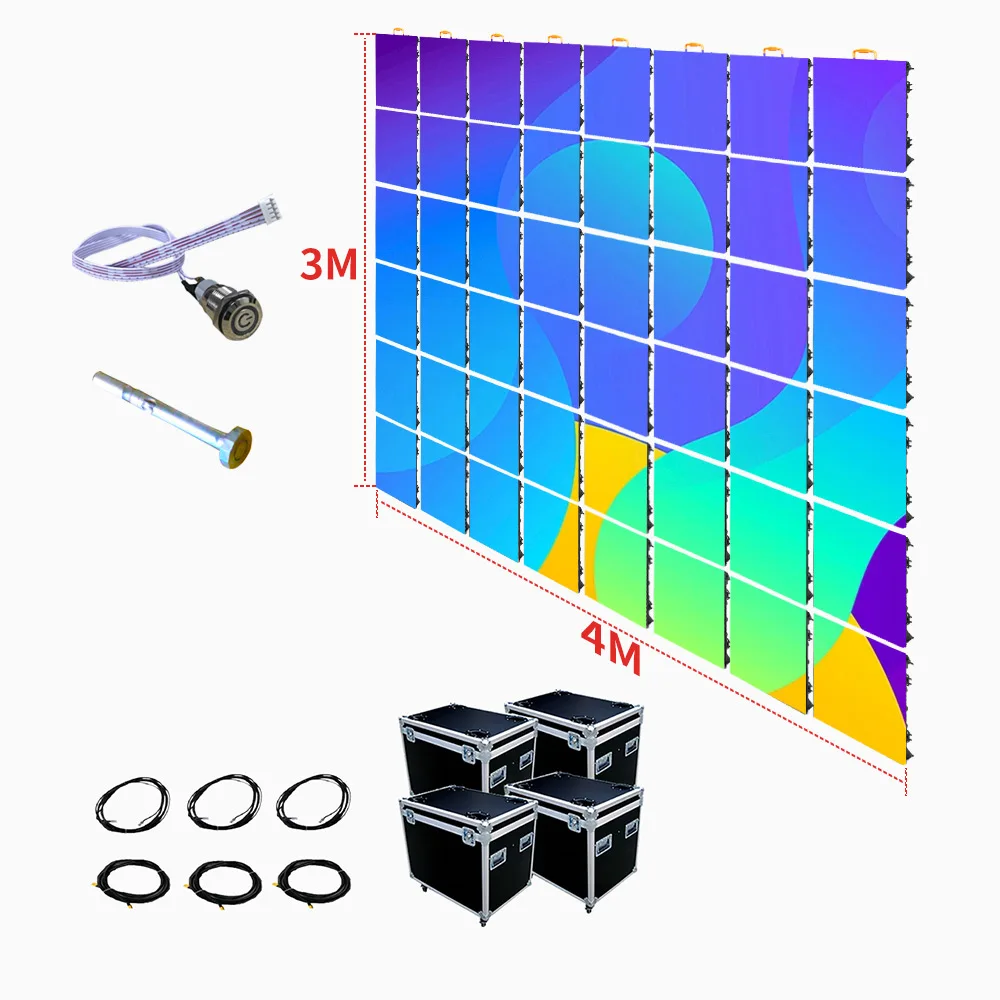
Meanwhile, touring stages and multi-day festivals often favor modular rental cabinets with fast locks. That style supports quick assembly, reliable panel alignment, and rapid swaps if a module fails. In other words, a led rental screen approach values speed and uptime as much as picture quality.
Also, cabinet dimensions often matter more than people expect. For example, 500×1000mm systems can reduce seams and speed vertical builds, while 500×500mm can fit tighter shapes. Therefore, the quote should state cabinet size and expected build rate.
In this context, rental led display screen setups usually include hanging bars, ground beams, and efficient flight cases. As a result, logistics and structure should be priced as part of the system, not as optional extras.
Mobile and pop-up roadshows
At the same time, roadshows and multi-location activations place a premium on mobility. A mobile led screen rental plan typically includes faster deployment, predictable footprint, and simplified power. Therefore, the quote should define setup time assumptions and crew needs clearly.
Additionally, mobile deployments often mix screen types. For instance, a main wall may pair with smaller signage screens for schedules and sponsor loops. So, the best quotes describe the full display ecosystem, not only the centerpiece.
LED poster displays as a practical add-on
Finally, freestanding poster displays can solve several problems at once. They bring messaging to entrances, hallways, sponsor zones, and registration areas. Meanwhile, they avoid complex rigging and can run loops with simple control options.

For example, a poster display can handle wayfinding and timetable graphics while the main wall focuses on live content. In addition, a poster unit can be linked with other units for wider canvases when space allows. Therefore, the quote can treat poster screens as flexible “coverage” tools rather than single-purpose signage.
Pairing and System Design That Prevents Surprise Charges
A screen rarely works alone. So, pairing the display with the right accessories is one of the best ways to prevent last-minute add-ons. In other words, stable system design is also cost control.
Build the input plan before pricing the processor
First, the input plan should be defined: live cameras, presentation laptops, playback servers, or remote feeds. Next, list the formats and distances involved. Then, the processor and conversion plan can be chosen correctly.
Meanwhile, a processor quote should align with the show’s complexity. For example, a simple keynote may need scaling and a few inputs. However, a festival with cameras and graphics may need more robust switching and mapping.
Therefore, the quote should state the exact devices included in the control chain. Otherwise, conversion boxes and extra inputs appear as surprise fees later.
Treat cable lengths and routing as part of the build
Next, cable runs are not generic. Distance changes what equipment is needed, especially outdoors. Meanwhile, the venue layout shapes routing, crossing protection, and safety taping requirements.
So, quotes should include approximate cable lengths, cable type, and protection needs. In addition, labeling and redundancy matter for troubleshooting. Consequently, the “cable plan” is an uptime feature, not just a commodity.
Plan spares as an uptime strategy, not an upsell
Meanwhile, spare modules and spare power parts are common sense in show-critical work. A “no spares” quote can look cheaper, but it increases risk. Therefore, spares should be compared by quantity and by replacement method.
Also, service access affects the value of spares. If front service is available, repairs can happen without moving the screen. However, if only rear service exists, access constraints can increase labor. So, service style and spares should be priced together.
Use portable displays to reduce labor pressure
In addition, portable screens can reduce labor pressure during busy changeovers. A poster unit rolls into place quickly and can run pre-approved loops. Therefore, it can carry “always-on” content while the main wall changes.

For example, sponsor branding, event reminders, and safety notices can stay active without touching the main wall timeline. As a result, fewer last-minute content changes hit the show-critical system.
Match mounting style to venue limits
Finally, mounting style can change pricing quickly. Ground stacking can be simpler, but it needs footprint space and safety planning. Hanging can save footprint, yet it requires rigging points, motors, and certified hardware.
So, the quote should state the mounting assumption early. If the plan includes options, then both options should be priced in a controlled way. Otherwise, switching from ground to hang late in planning often produces the sharpest budget surprise.

Quote Scenarios That Make Comparisons Easier
Examples help because they force quotes to describe real scope. So, here are practical scenarios that show what should be included and what tends to get missed.
Scenario 1: Corporate conference keynote wall
First, a keynote wall usually needs clean text, stable camera behavior, and a predictable rehearsal window. Therefore, a quote should include:
Fine pixel pitch appropriate for close viewing
Processor with scaling for multiple laptops
A test pattern and calibration plan
Content ingest time and mapping time
A clear tech call schedule
Meanwhile, hidden costs often appear in extended rehearsal time or late presentation changes. So, the quote should define what counts as “content support” and what counts as overtime.
Also, pairing the main wall with poster signage can keep wayfinding and sponsor loops out of the keynote system. Therefore, the show wall stays simpler while the venue messaging stays active.
Scenario 2: Outdoor festival IMAG and sponsor graphics
Next, outdoor festival setups prioritize brightness, structure, and uptime. Therefore, the quote should clearly include:
Brightness target suitable for daylight
Weather and dust strategy
A structure plan with wind assumptions
Spare modules and rapid swap plan
Signal extension plan for long distances
Meanwhile, common hidden fees include extra ballast, extra structure time, or added power distribution. So, it helps to require a stated power plan and a stated structure plan from the start.
To keep scope clear, it can help to reference a dedicated page for outdoor use. For instance, outdoor LED screen rental categories can serve as a scope vocabulary for daylight and weather exposure.
Scenario 3: Pop-up roadshow across multiple venues
Meanwhile, roadshows are a different type of pressure. Speed, repeatability, and predictable footprints matter most. Therefore, a mobile led screen rental quote should define:
Setup time assumptions
Transport and loading approach
Crew size per site
Standard content format and playback method
A checklist for each venue stop
Additionally, venue power varies across stops. So, the quote should include a flexible distro plan and cable set that fits common site conditions.
In these builds, a rental led screen system that travels well is often worth more than a system with slightly better specs on paper. As a result, flight cases, dollies, and simplified rigging can be the difference between stable days and chaotic ones.
Scenario 4: Exhibition booth with a curved backdrop
Finally, curved screens raise both creative value and engineering needs. Curves enhance immersion and make booths visible from multiple angles. However, they also increase the importance of cabinet compatibility, curve locks, and alignment discipline.
Therefore, quotes for curved builds should include:
Allowed concave/convex curve increments
Extra structure needs, if any
Mapping time for non-flat canvases
A detailed build plan and test window

Meanwhile, hidden costs often appear in extra mapping time and extra labor for alignment. So, the quote should explicitly budget for content testing and curve calibration.
Techniques That Keep the Rental Smooth on Event Days
Even with a clean quote, execution choices can add cost. So, a few practical techniques reduce stress and reduce time drift.
Lock the content spec early
First, content specs should be locked early: resolution, aspect ratio, frame rate, and codecs. Meanwhile, “last-minute export changes” are a common cause of overtime because they require remapping or re-scaling.
Therefore, it helps to standardize deliverables:
A primary show file in the screen’s native canvas size
A backup file in a common standard (like 1080p)
A test pattern set for color and geometry checks
A naming convention that prevents loading mistakes
As a result, fewer minutes get lost on site, and labor stays inside the planned call.
Use a pre-flight checklist for signal and power
Next, a pre-flight checklist avoids troubleshooting loops. For example, a quick routine can check:
Input detection and format match
Processor output mapping
Sending system status
Cabinet receive status and module health
Power distribution and breaker headroom
Meanwhile, documenting this checklist makes handoffs cleaner across shifts. So, the build stays consistent even when crews change.
Treat brightness as a design variable, not a fixed setting
At the same time, brightness is not “set and forget.” Daylight changes quickly, and camera exposure changes with lighting cues. Therefore, dimming curves and brightness presets should be prepared.
Additionally, color temperature should match the camera plan. So, a quick calibration pass often improves on-camera results and reduces rework during rehearsal.
Separate “always-on signage” from “show canvas” when possible
Finally, dividing responsibilities keeps systems stable. Poster screens or small side walls can carry schedules, sponsor loops, or safety notes. Meanwhile, the main wall can focus on live content without extra interruptions.
This approach often reduces the number of changes requested during show time. Consequently, tech call time stays controlled and surprise overtime becomes less likely.
FAQ: LED Screen Rental Quote Comparison and Fee Control
1) What makes two screen quotes truly comparable?
First, comparability requires identical scope blocks: hardware, processing, power, labor, and logistics. Meanwhile, size-only comparisons usually miss structure and labor assumptions. Therefore, a standardized checklist is the fastest path to clarity.
2) Which technical specs matter most for live cameras?
Next, refresh rate, grayscale depth, and stable processing matter most on camera. In addition, a consistent calibration approach helps avoid color shifts. So, the quote should list the control chain, not only the panels.
3) When does outdoor pricing change the most?
Meanwhile, outdoor totals often change with structure and power. For example, wind strategy and ballast can add labor and hardware. Therefore, outdoor quotes should state environmental assumptions explicitly.
4) Why do transport costs vary so widely?
First, venue access and receiving rules drive transport complexity. In addition, packaging choice changes weight and handling time. So, freight should be defined by method, timing, and access assumptions.
5) How should spare parts be handled in quotes?
Next, spares should be treated as uptime insurance. Meanwhile, the right spare count depends on screen size and show criticality. Therefore, comparing spare modules and spare power/data parts is more useful than comparing vague “support included” promises.
6) Is a “package price” a problem?
Not necessarily. However, packages must be unpacked into measurable items to avoid ambiguity. Therefore, every package should map to a clear spec and a clear time plan.
7) What role does pixel pitch play in budget control?
Pixel pitch affects both hardware cost and content clarity. Meanwhile, overly fine pitch can raise price without adding visible value at longer distances. Therefore, selecting pitch based on viewing distance keeps budgets aligned with real needs.
8) How can signage be handled without complicating the main wall?
A practical approach uses independent poster screens or small side displays for always-on loops. Meanwhile, the main wall stays focused on live content. Therefore, the system runs with fewer interruptions and less overtime risk.
9) What is the simplest way to reduce last-minute add-ons?
First, define the signal path, power plan, and structure plan in writing. Next, lock content specs early. As a result, fewer “emergency rentals” appear on site.
10) Where can product categories be referenced to align scope language?
Meanwhile, using consistent product-category language helps. For example, LED display screen rental pages can help standardize terms for indoor/outdoor use and event scenarios.
Summary and Three Practical Next Steps
Overall, quote comparison is easiest when every line item is grouped into the same five blocks. Meanwhile, hidden fees tend to cluster around logistics, structure, power, processing, and labor rules. Therefore, the best plan is to define scope in writing, match specs to the venue, and treat uptime as part of the package. For reference and category alignment, led screen rental pages can act as a consistent vocabulary when comparing systems.
Actionable next steps
First, rewrite each quote into the same five blocks, then compare block by block.
Next, lock the timeline assumptions (install, rehearsal, show, strike) before approving totals.
Finally, confirm structure, power distribution, and processing in writing to prevent add-on fees