EN

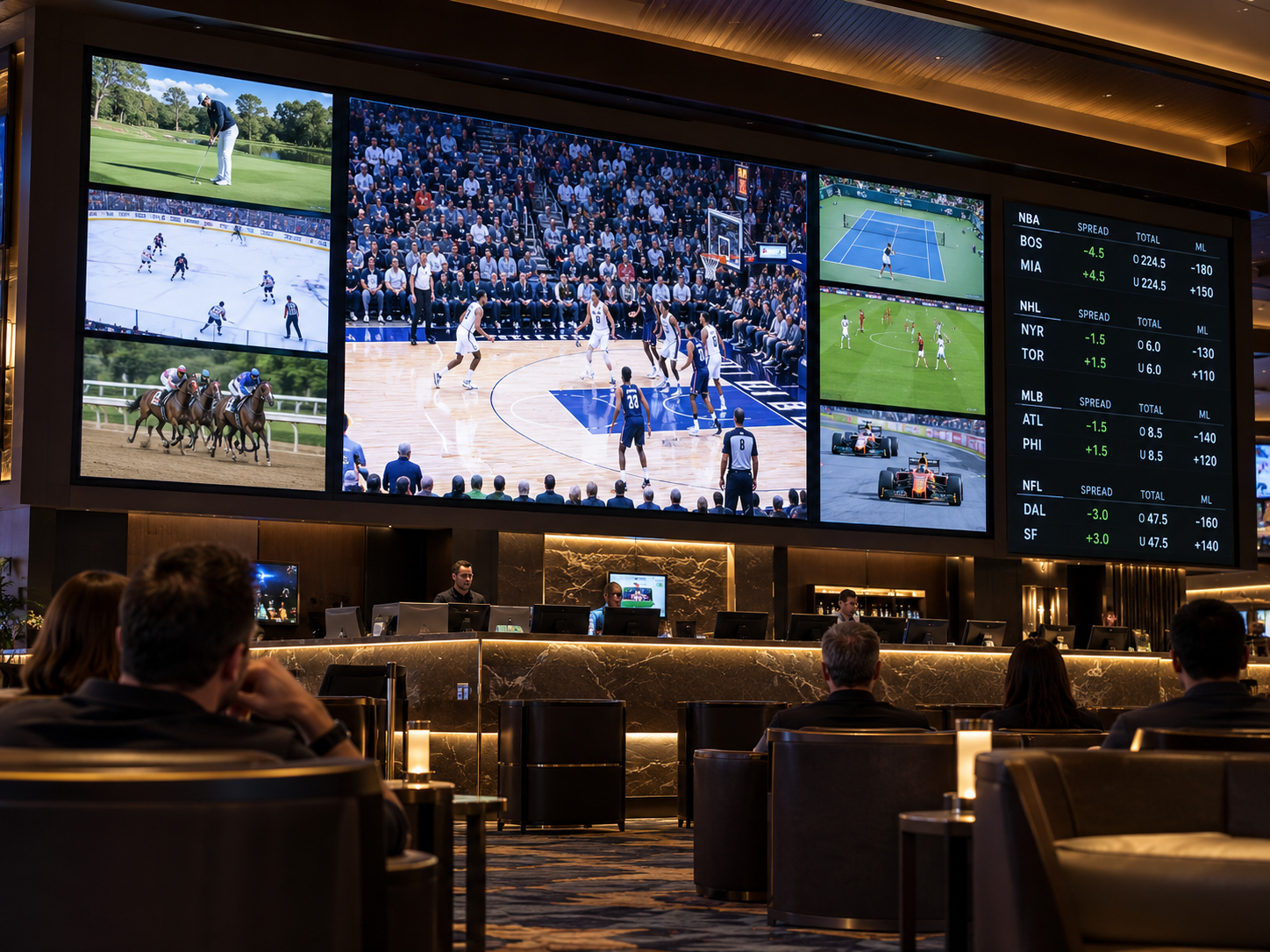
Saturday evening is where a sportsbook wall plan gets tested. A featured game is approaching its final minutes, three secondary events are still active, live odds need to remain visible and promotional content is already occupying part of the display. Then another event suddenly becomes more important to the room.
The problem is no longer how many sources the wall can show. The real questions are: which event gets more space, which information cannot disappear, what can give up space first, and who is allowed to change the layout?
Those questions should shape the conversation with video wall suppliers. A sportsbook display is not simply a large surface filled with as many windows as possible. It is an operating environment where live sports, odds, statistics and promotional sources compete for limited visual attention throughout the day.
A useful wall plan therefore begins with the people watching it and the decisions staff will make when the schedule changes. This guide stays focused on that operating problem: odds readability, multi-zone layout and source priority in casino sportsbooks.
The Same Wall Looks Different From Every Part of the Sportsbook
A sportsbook floor plan can make the display look like one destination at the front of the room. In practice, the audience is spread across several viewing conditions.
Guests sitting closest to the wall may follow one game for an extended period and repeatedly move their attention between the event and its betting information. People farther back may be standing, walking or checking several events quickly. At the operator position, staff are not consuming the wall in the same way as guests at all: they need to understand which source belongs in each area and what can be changed when the normal schedule stops making sense.
For that reason, an Indoor LED Display used in a sportsbook should be discussed together with the room drawing and the intended viewing zones. Screen dimensions alone do not show whether the content will remain useful from the actual positions that matter.
The operator desk adds another layer. A wall may be easy to understand from a nearby workstation but confusing from the middle of the sportsbook. That difference is why content approval should not be based only on a desktop preview.
Start there. Once that answer is clear, screen area and content hierarchy become easier to discuss. Starting with the maximum possible number of windows usually reverses the logic.
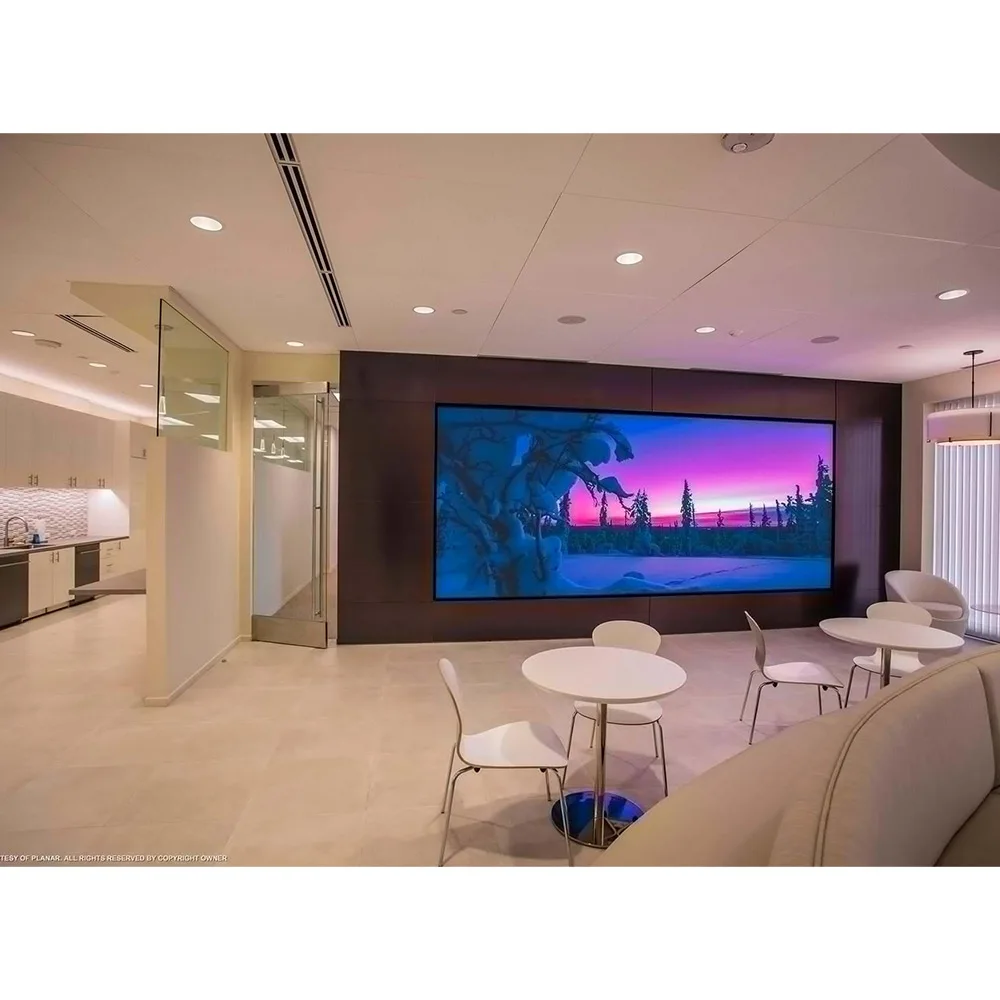
Why the physical room matters before content zones are fixed
Indoor LED walls are viewed as part of the room rather than as isolated products. Seating depth, wall position and circulation areas change how easily viewers can interpret information across the display. For sportsbook projects, those physical conditions should be mapped before live odds and event zones are finalized.
View Indoor LED DisplayOdds Readability Is Not the Same as Watching the Game
Live sports footage can remain understandable even when a viewer cannot see every small detail. Movement, team colours, camera framing and the score context still communicate what is happening.
Odds are less forgiving. They depend on names, numbers, labels, status and the relationship between several small pieces of information. A viewer who can technically see the text may still struggle to use it if the content is too dense or poorly grouped.
That makes odds readability a content-and-distance problem rather than a simple question of whether text appears on the screen.
Three questions reveal more than “Can you read it?”
This is where a layout that looks sophisticated on a workstation can fail on the sportsbook floor. Designers often have the advantage of knowing where everything is. A guest entering the room does not.
The practical test is not to ask whether every text element can be made equally prominent. It is to decide which information deserves the strongest hierarchy at each viewing distance.
Closer seating may reasonably support more detailed markets and statistics. Farther viewing zones often benefit from stronger event identification and less competition from secondary information. That does not mean creating separate walls for each audience. It means designing the content hierarchy with the room in mind.
Do not solve density by shrinking everything
When the wall feels crowded, reducing every element equally can preserve the amount of content while destroying its usefulness. A better response is often to decide what matters most, simplify the lower-priority information and preserve the relationship between each event and its relevant data.
A Busy Sportsbook Exposes the Weakness of an Equal-Window Layout
Imagine one wall has six competing demands during a busy period:
- one marquee game attracting most of the room's attention;
- three secondary live events that still need coverage;
- a live odds and data area;
- promotional content already scheduled on the wall.
Giving all six items equal area may look orderly, but it ignores what is happening in the room. The main event is under-sized, important betting information competes with promotional material, and the wall has no obvious hierarchy.
A better multi-zone layout treats those content types as roles that can change rather than as permanent equal boxes.
The important point is not that every sportsbook should make the same choice. A property may have different event priorities, betting workflows or customer behaviour. The value comes from agreeing on the decision before a busy session forces staff to make it on the spot.
The main event does not need to be permanently large
A main-event zone is useful because it gives attention somewhere to go. That does not mean one source should dominate the wall all day.
During a normal schedule, several events may deserve comparable treatment. When one event enters a decisive period, the layout can shift. Later, the wall can return to a more balanced state.
This is why a sportsbook should not approve only one polished layout. It should review several operating states.
A useful layout review includes at least:
Normal event schedule
Marquee-event emphasis
Odds-heavy content state
Operator override or source-loss state

Treat the LED wall as a flexible content canvas
Sportsbook planning is less about filling every available area and more about preserving useful hierarchy as event priorities change. The display configuration should give the AV and operations teams an appropriate canvas for the layouts they have already defined.
Explore LED Wall PanelSource Priority Is an Operations Rule Before It Is a Control Function
A sportsbook only discovers whether its source-priority logic works when several things need attention at the same time.
Suppose the featured game is already enlarged. Another event enters overtime. The odds area still needs to remain usable. Promotional content is running in another part of the display. Which source wins?
The answer should not be hidden inside the equipment. Source priority is first a business and operations decision. The technology carries out that decision after the project team defines it.
Protect what cannot disappear
Identify the content that must remain available during live operation. If odds or required event information are core to the sportsbook experience, those areas should not disappear accidentally because another source becomes visually more exciting.
Define what can shrink before it disappears
Secondary events often do not need an all-or-nothing rule. Reducing their prominence can make space for the marquee event while keeping the wider schedule visible.
Define the operator override
Staff may need to promote an unexpected event immediately. The project should identify who can make that change and whether the override affects one zone or an entire wall state.
Define how normal operation resumes
An override without a return rule can leave the wall in yesterday's emergency layout. Decide whether the operator restores the scheduled state manually or follows an agreed operating procedure after the event.
A lost source creates a layout problem as well as a signal problem
When a source disappears, technical troubleshooting is only part of the immediate response. The empty area still occupies valuable wall space.
The team should already know what belongs there while the original feed is unavailable. Depending on the operating plan, the fallback may be another live event, an approved odds/data state or another predefined source.
The useful question is not “How flexible is the wall?”
Ask instead: “When the normal layout no longer fits what is happening, can the operator reach the next useful state quickly and predictably?” That is the operational value of flexibility.
Give the Supplier a Sportsbook Brief, Not Just a Screen Size
A project inquiry becomes much more useful when the supplier can understand how the room and content interact. Sending only wall dimensions and quantity leaves the most important sportsbook decisions invisible.
The brief does not need to become a long technical document. It should provide enough context to understand the physical wall, the audience and the content states.
- Room layout — screen location, seating, standing areas, circulation routes and operator position.
- Screen size — intended dimensions or the available wall area.
- Viewing zones — nearest seats, primary viewing area and important farther positions.
- Source list — event feeds, odds/data sources, statistics and promotional content expected in operation.
- Content priority — what stays, what can shrink and what can temporarily disappear.
- Operator workflow — who changes layouts and how frequently the room changes state.
- Quantity and power standard — number of display areas and applicable project power information.
- Installation country and timeline — location context and planned project schedule.
One content screenshot can be more useful than another page of specifications
If odds readability is part of the project risk, send representative content rather than asking the supplier to judge readability from wall dimensions alone.
A normal operating layout and a marquee-event layout are especially useful because they show how much information the wall is expected to carry before and after priorities change.
This does not lock the project into a final graphic design. It gives the project team a realistic basis for discussing content density, zone relationships and how much visual information is competing for the same area.
What the Factory Discussion Should Resolve
Once the sportsbook team has defined the viewing zones and content priorities, the factory discussion can move beyond a generic product enquiry.
When reviewing the project with LED video wall suppliers, use the room drawing and proposed content states together. The objective is to confirm that the physical display arrangement gives the AV and operations teams a practical canvas for the intended wall behaviour.
Drawings are useful when they clarify where the display sits in the room, how the planned wall area relates to the viewing zones and whether assumptions between the supplier, integrator and site team match.
The control and integration discussion should stay connected to the operating workflow. The sportsbook should define what the content priority means. The technical system then needs to support that intended workflow without turning every routine change into a complex manual rebuild.
Service responsibility should also be clear before installation. If a source fails to reach the intended zone later, troubleshooting is faster when the project already understands the boundary between the display system, signal/control integration, content configuration and site operation.
Review normal operation, a marquee event, an odds-heavy state and an override condition. The difficult layout usually reveals more than the presentation layout.
The room drawing, source list and content-priority brief help prevent different parties from imagining different sportsbook workflows while discussing the same wall.
Use Live Scenarios to Test the Layout Before Opening Day
The strongest layout review is not a slideshow of possible designs. It is a short set of operating situations that force the team to make priority decisions.
| Scenario | Wall Response | Priority Logic |
|---|---|---|
| Normal schedule | Keep a clear main event, secondary coverage and usable odds/data area while promotional content occupies available lower-priority space. | Maintain breadth without making every source look equally important. |
| Marquee event | Increase the featured event's prominence and reorganize lower-priority areas around it. | Release promotional or lower-priority space before removing information the sportsbook needs guests to use. |
| Source loss | Replace or repurpose the affected zone with an agreed fallback source or wall state. | Do not force operators to invent a replacement layout while also investigating the lost feed. |
| Urgent override | Promote an authorized source or switch to an alternate operating state. | Let defined operational authority override the normal schedule, then return the wall to an agreed state afterward. |
This exercise often reveals problems that are invisible on a static drawing. For example, a layout may technically support many content areas but require too many manual changes to move from normal operation to a marquee-event state.
That is a workflow problem, not simply a display problem.
The goal is not to predict every unusual event. It is to make the common high-pressure situations predictable enough that operators can react without rebuilding the wall logic from scratch.
What a Useful Sportsbook Wall Decision Looks Like
By the time the layout moves into detailed project discussion, the team should be able to describe the wall in operational language rather than only physical dimensions.
“The primary seating area must be able to associate each featured event with its betting information quickly. During a normal schedule we need one clear focal event plus several secondary games. When a marquee event becomes dominant, promotional content can release space first, secondary games can reduce in prominence, and essential odds remain protected. Authorized staff need a quick override path and an agreed fallback when a source is lost.”
That statement is much more useful than asking for a wall that can “show multiple sources.”
It tells the project team what success looks like, gives the integrator a workflow to discuss and gives the display supplier the context needed to review the physical wall against the intended use.
Frequently Asked Questions
What makes odds readability different from general video content?
How should a sportsbook LED wall be divided into content zones?
How should source priority be defined for live sports operations?
What should be sent to video wall suppliers before layout planning?
Send one room plan and two operating states before finalizing the wall
A useful starting package is a room layout with seating and viewing zones, the intended screen size, a normal sportsbook content layout and a second layout showing what should happen during a marquee event.
Include the source list, content priorities, operator workflow, quantity, power standard, installation country and timeline. This gives the project discussion enough context to review the wall around real sportsbook operation rather than only its physical dimensions.