EN
EN

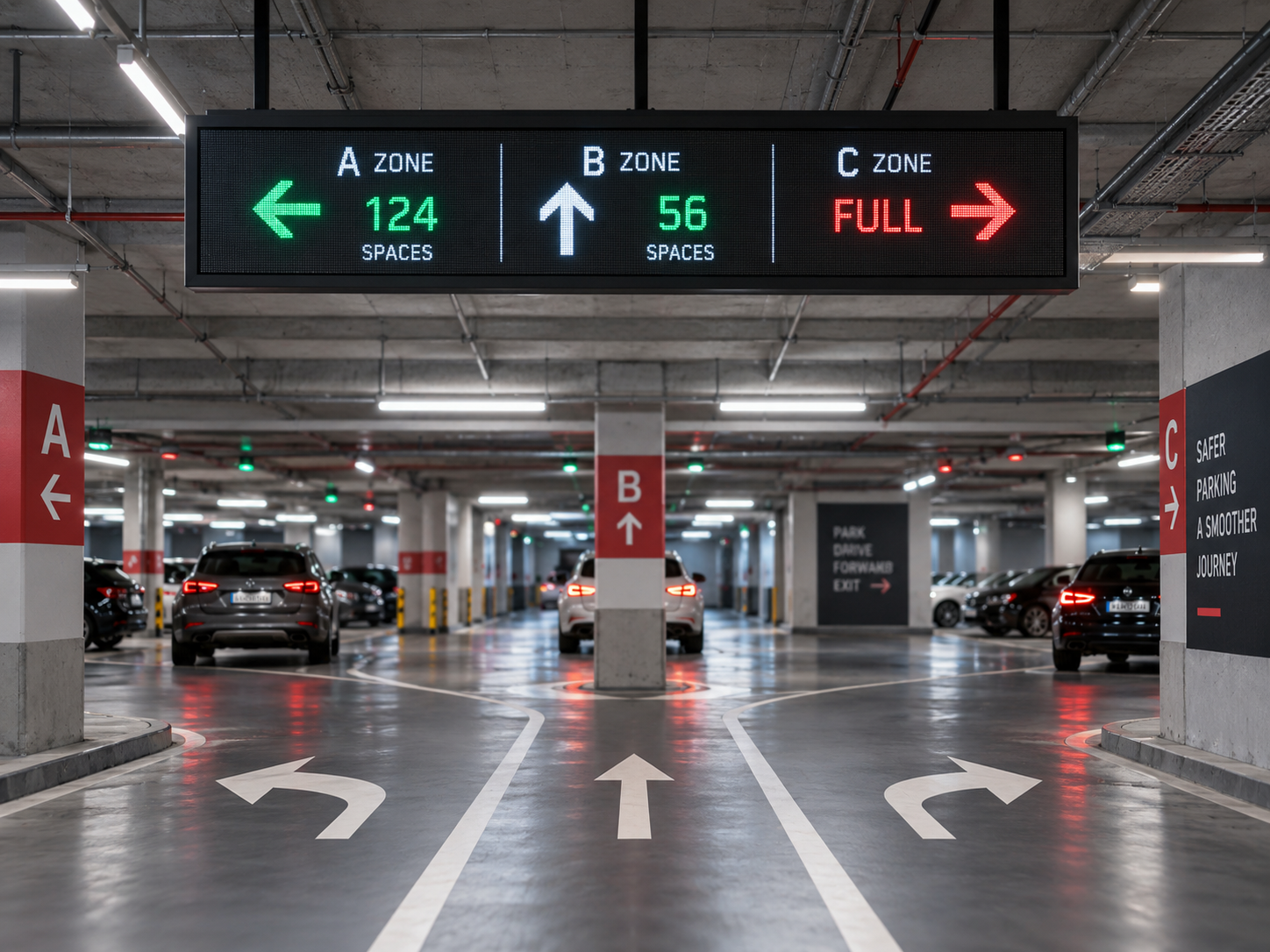
A driver approaching a split inside a car park does not need to understand the entire occupancy database. The immediate question is much simpler: which direction should I take, and is useful parking information still available for that route?
That is the real design problem behind parking guidance signs. A parking system may track individual spaces, zones, floors or entrances, but the roadside display has only a short period in which to turn changing occupancy data into a decision that makes sense from a moving vehicle.
For project teams evaluating LED sign boards for parking guidance, the screen itself is only one part of the specification. Lane geometry, sign position, viewing approach, message hierarchy, data ownership and fallback states all affect what should appear on the display.
The practical goal is not to show as much information as possible. It is to make the next parking decision clear without implying certainty that the upstream system does not have.
Start With the Parking Decision, Not the Screen
A parking guidance project can look simple on a sign schedule: several LED signs, several zone names and an occupancy feed. The difficult part appears when those elements meet the actual road layout.
Imagine a driver descending a ramp and approaching a junction. Continuing straight leads toward Zone B, while the left lane enters Zone C. A facility-wide space count may be completely accurate, yet it does not answer the decision at that point. What matters is whether the driver can quickly associate each available destination with the correct lane.
That is why the project should be read from the road outward. The lane plan establishes which movements are possible. The sign location establishes where the information can be seen. The parking system establishes which occupancy or status values are available. Only then does the display layout become meaningful.
The project should define which system owns each operational state. In many architectures, the parking platform or integration layer supplies the approved state while the display system handles presentation. A sign should not be assumed to decide independently that a zone is available, full or uncertain unless that behaviour has deliberately been assigned to the display-control layer.
This matters especially at larger sites where the same destination can be approached from several directions. A zone name that is perfectly clear near one entrance may need a different directional relationship at another junction. The sign schedule should therefore be tied to physical decision points rather than created as one generic layout and copied across the car park.
Occupancy Data Has to Become a Driver Message
Raw occupancy data is useful to the parking system. A driver needs something different: a short, understandable message linked to the route ahead.
Suppose the system knows that Zone A has many available spaces, Zone B has only a few and Zone C is full. At a junction where the driver can choose only between B and C, displaying the Zone A figure adds data without helping the immediate decision. The sign becomes busier while the driver's choice remains the same.
A useful message can usually be planned around three questions: which destination can the driver choose from here, what confirmed state is available for that destination, and which physical direction belongs to it?
The display area may need room for destination names, occupancy numbers, arrows and abnormal-state messages, but those zones should be planned around the driver's task rather than filled simply because screen space is available.
The useful question is not “How much parking data can fit on this screen?” It is “What must the driver understand before changing lanes becomes difficult?”
That question removes a surprising amount of unnecessary content. A mock-up can look organised on a desktop while still asking too much of a moving driver. Four destination names, several occupancy figures, multiple arrows and status words may all be individually correct, but the complete message can still be slow to interpret.
LED sign board format for directional parking messages
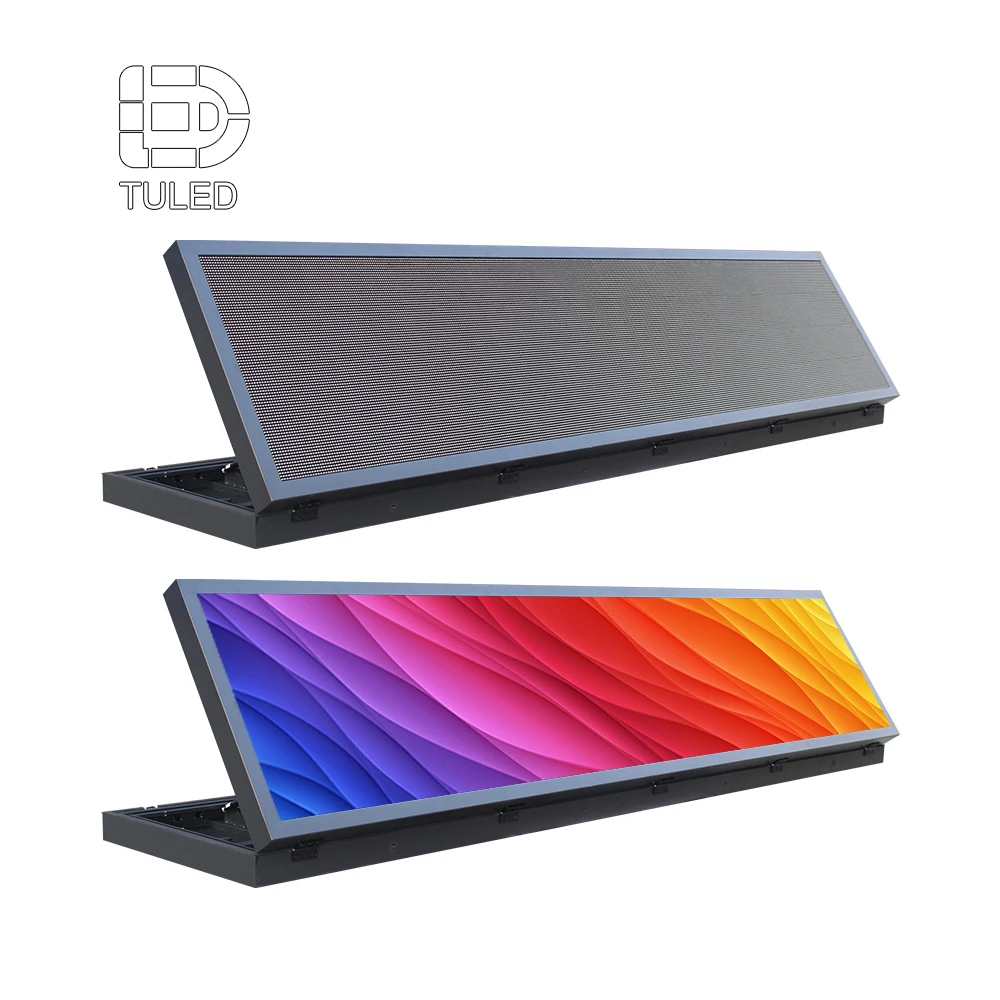
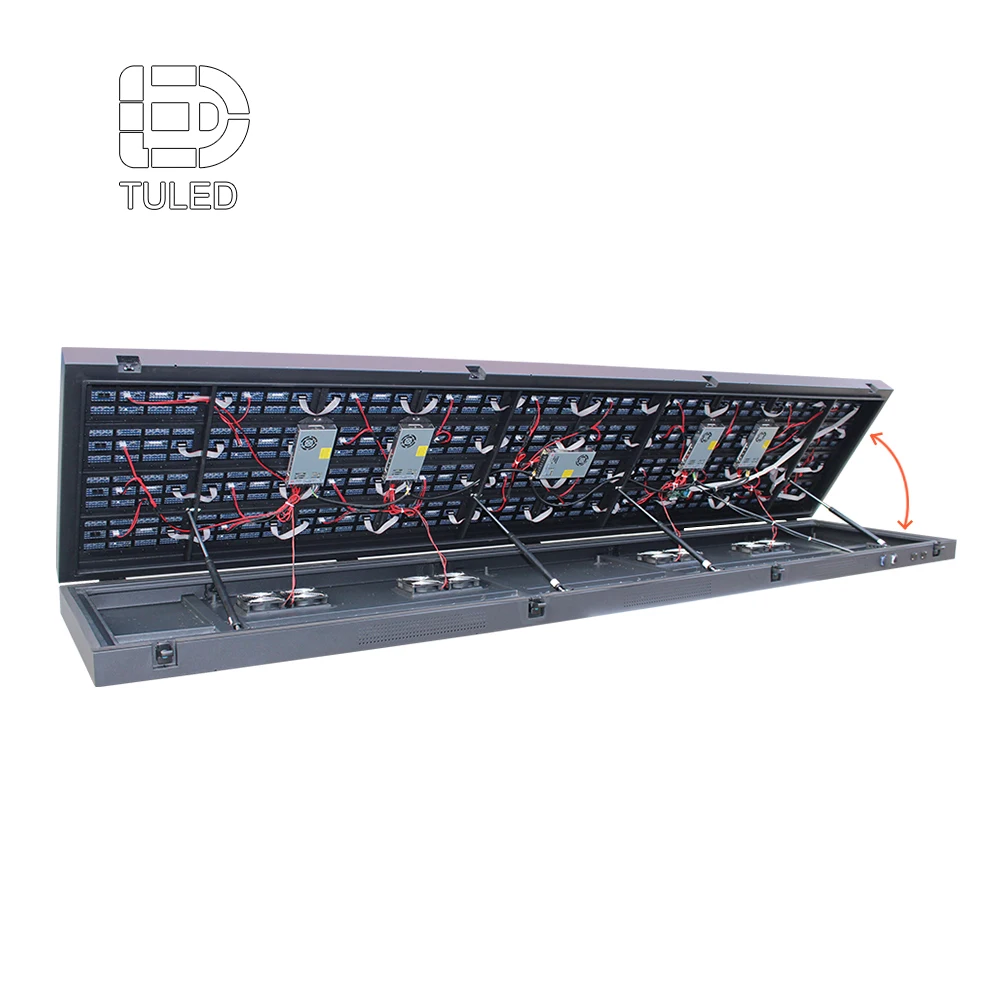
A long-format LED sign board can provide useful space when destination, occupancy status and directional cues need to read as one message. Final dimensions should be checked against the real lane plan and the longest message the project expects to display.
Lane Arrows Have to Match the Junction the Driver Sees
An arrow is useful only when its relationship to the road is obvious. That sounds straightforward on a drawing, but parking environments often include curved approaches, offset ramps, staggered junctions and destinations that appear close together.
A left arrow beside “Zone C” may look perfectly clear when viewed straight-on in a layout file. From an approaching vehicle, however, there may be two possible left movements: an immediate turn into one aisle and a ramp entrance several metres farther ahead. The display has to make sense from the driver's viewpoint, not only from the designer's screen.
Show the choice that exists at this point
A sign should help with the decision that can actually be made at its location. If another parking area becomes available only after a second junction, introducing that direction too early can weaken the relationship between the arrow and the road.
Keep the arrow attached to one message
Destination, occupancy status and direction should read as one piece of information. A driver should not need to work out whether an arrow belongs to the number above it, the zone name beside it or a different line of text.
Think about the approach, not just the mounting point
A sign can physically fit a wall, beam or support and still be poorly located for the driving decision. The project team should consider when the sign first becomes visible, what else competes for attention and how much road remains before a lane change or turn.
This is not a call for one universal parking-arrow layout. Different car parks have different geometry. It is a reason to review the proposed content against the marked lane plan and the actual viewing approach before the final message zones are fixed.
A Fail-Safe Message Should Preserve What Is Still Known
Normal occupancy is only one operating condition. The more revealing question is what happens to the driver message when the occupancy feed is no longer considered reliable by the controlling system.
Continuing to show a precise number can create false confidence. Clearing the entire sign can remove information that may still be useful. The appropriate response depends on which parts of the message remain valid.
For example, the system may temporarily lose a live space count while the destination itself remains open and the route to it remains unchanged. In that situation, the operator may choose to replace the number with an approved fallback status while retaining the zone name or arrow. In a different failure state, even that route information may no longer be appropriate.
Messages such as “SPACE DATA UNAVAILABLE” or “ZONE STATUS UNCONFIRMED” can be considered during project planning, but the wording, trigger condition and operator response should be approved for the actual parking system and operating procedure.
The distinction between partial data and completely unavailable data is important. If information for one destination remains confirmed while another becomes uncertain, the complete sign does not necessarily need to abandon both. Confirmed guidance can remain useful if the controlling system is able to distinguish those states and the message logic has been agreed in advance.
A useful review question is therefore: can the project team explain exactly which upstream condition produces each message shown to the driver? If that relationship is unclear, the fallback content is not yet ready for sign layout approval.
Projects that also need to define data freshness, source validation, recovery behaviour or middleware logic can handle those questions in more depth in the custom LED display board data integration guide. For the parking sign itself, the priority remains simple: show only what the project can currently support as valid guidance.
The Supplier Needs the Driving Context, Not Just a Screen Size
A quotation request that says “10 parking LED signs, please quote” forces too many important assumptions. Even adding a width and height does not explain what the signs actually have to do.
A better inquiry starts with the lane drawing. Mark each proposed sign position and give every sign a simple reference such as S01, S02 and S03. The supplier can then discuss the display while the integrator discusses message logic using the same physical locations.
What makes the first technical discussion useful
Start with the road. Send the lane plan, junctions, ramps, entrances and proposed sign positions. Note the direction from which drivers approach and the approximate viewing distance where it matters to the layout.
Then show the message. Provide representative destination names, occupancy fields, arrows, FULL states and agreed fallback messages. Include the longest realistic destination or fallback wording rather than approving the screen around only the shortest normal message.
Finally, add the project context. Include the available installation area, quantity, occupancy or data source, indoor or outdoor environment, power standard, installation country and project timeline.
- Lane plan Entrances, exits, ramps, decision points and permitted movements.
- Sign locations Proposed positions identified clearly on the drawing.
- Viewing information Approach direction and relevant viewing distance.
- Message states Normal occupancy, FULL state and expected fallback content.
- Available space Confirmed sign size or maximum mounting area.
- Data source Parking controller, occupancy platform or integration layer supplying the information.
- Project context Quantity, environment, power standard, country and timeline.
Those inputs are usually enough to move the discussion away from a generic sign quotation and toward the real parking application. They also give the display supplier something useful to review before dimensions, layout and control details are finalised.
Turn the Message Plan Into the Right Display Requirement
Once the parking decisions and message states are clear, the hardware discussion becomes much more useful. Instead of choosing a display first and forcing the parking information into it later, the project can check whether the proposed screen actually supports the content, viewing conditions and site environment.
Pixel pitch, physical dimensions, brightness, enclosure requirements and control architecture should be reviewed against the actual message and site. The appropriate combination depends on the project rather than on a universal parking-sign formula.
Where Factory Review Adds Value
Once the parking team has mapped the decisions and message states, factory review becomes more useful. At that stage, the question is no longer “What should our parking logic be?” It becomes “Can the proposed display arrangement present the information clearly under the conditions this site actually has?”
The lane drawing gives context for sign orientation and placement. Representative content shows how much message area is needed for destination names, occupancy values and directional cues. Abnormal states reveal whether the same layout still works when a normal number is replaced by a longer fallback message.
That review can prevent a familiar project problem: a sign that is technically the correct width and height but turns out to be awkward once real destinations, arrows and status states are loaded.
LED display board for project-specific parking information layouts
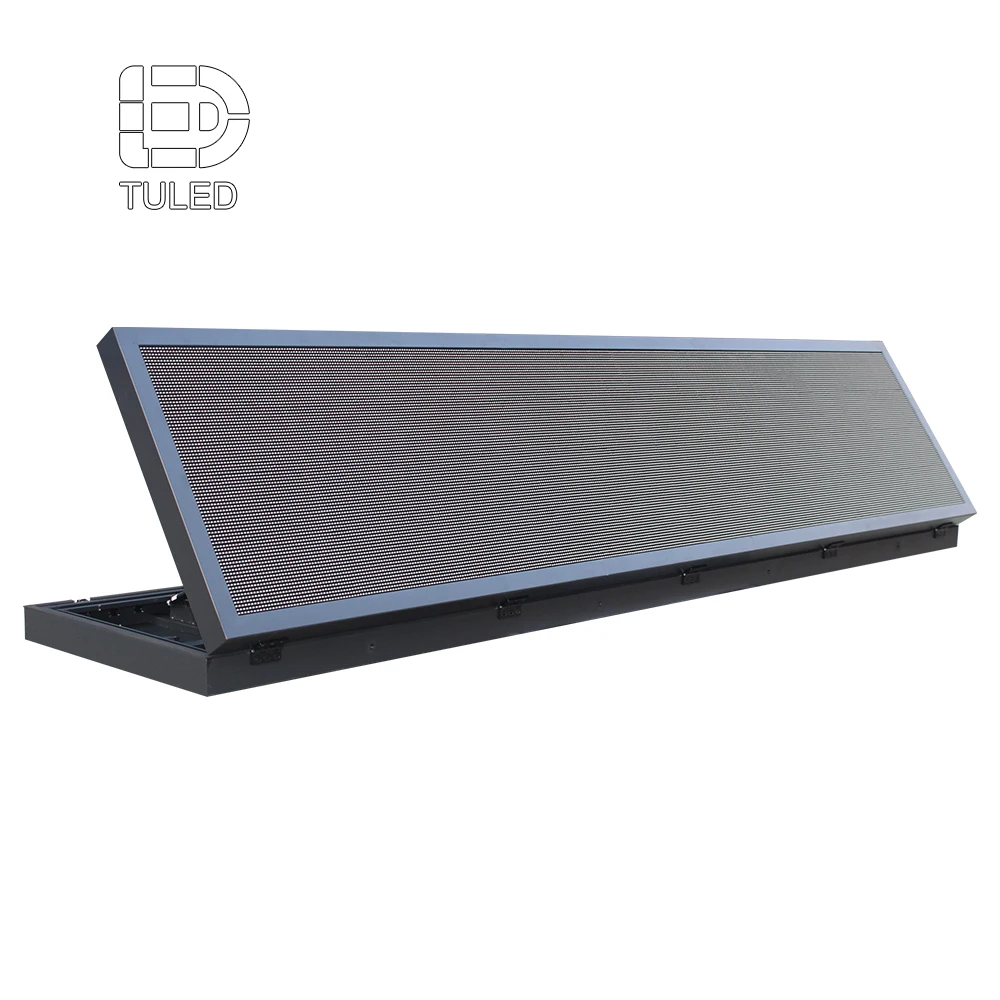
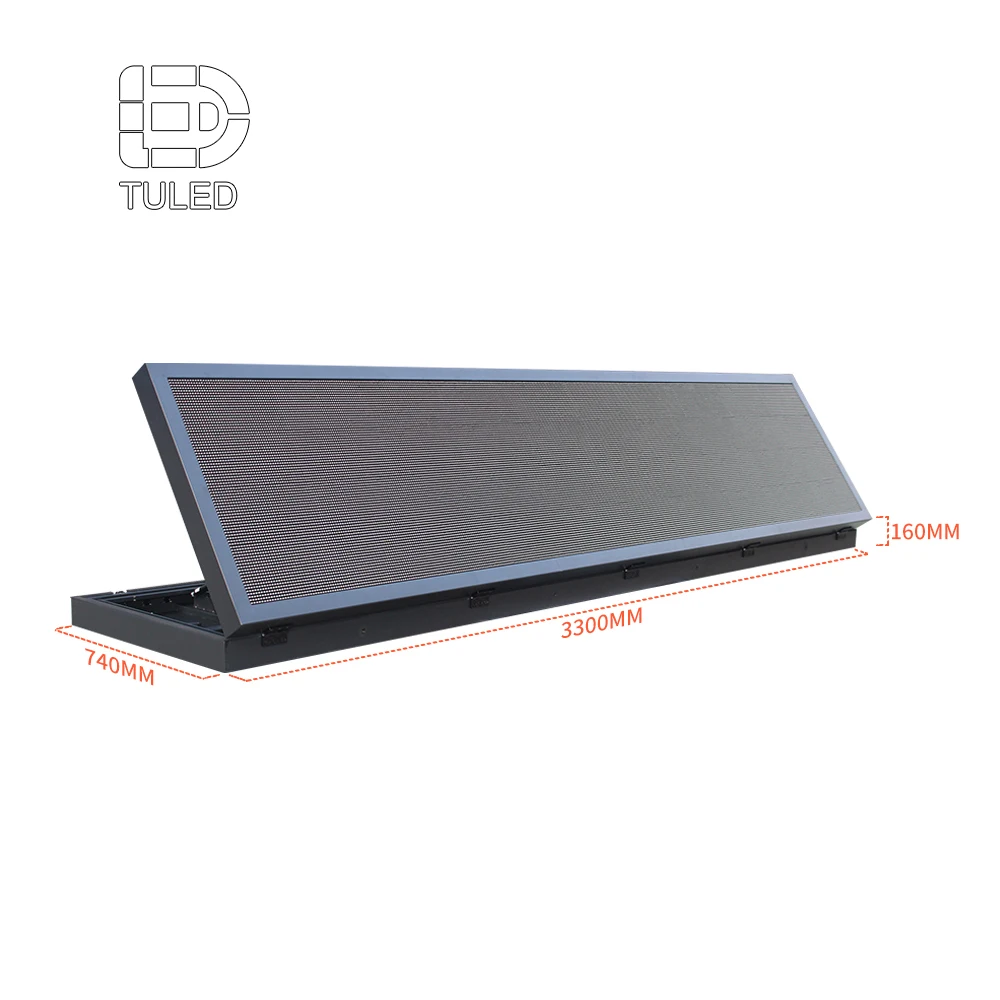
A project-specific LED display board can be reviewed against the complete message set, including destination, occupancy, directional and fail-safe states. That gives the supplier a better basis for discussing layout than a screen size alone.
Drawings can then be used to confirm display orientation, available installation space and how the proposed sign relates to approaching traffic. Message-zone planning can also be reviewed before the content layout is finalised.
The responsibility boundary should remain explicit throughout the project. One defined system or integration layer should own each operational state, while the display workflow presents the approved information in the agreed visual structure. If several functions are combined in one platform, those ownership decisions still need to be clear.
Parking Guidance Decision Table
The following table works as a discussion framework between the operator, system integrator and display team. It does not prescribe one automatic behaviour for every parking system. Its purpose is to make the driver-message objective clear under different data conditions.
| Data condition | Driver-message objective | Message direction | Operator / integrator action |
|---|---|---|---|
| Normal data | Help the driver choose between valid parking destinations. | Show the approved destination, current occupancy or status and the relevant lane direction. | Confirm that the displayed information continues to correspond with the upstream state. |
| Partial data | Keep confirmed guidance useful without making uncertain information look current. | Retain confirmed information where appropriate and handle the uncertain field according to the approved message logic. | Identify the affected data source and decide whether the remaining guidance is still operationally useful. |
| Data unavailable or unconfirmed | Avoid misleading the driver while retaining information that remains independently valid. | Use the approved fail-safe message and retain destination or direction only where the project has confirmed it remains valid. | Investigate the upstream condition and restore normal messaging under the site's operating procedure. |
The important point is not the exact wording in the table. It is that normal, partial-data and unavailable-data states are discussed before the display layout is approved. A sign designed only around the ideal operating screen may become awkward when a longer fallback message is needed later.
FAQ
What should parking guidance LED signs show at a lane decision point?
They should show the information needed for the immediate choice: a relevant parking destination, the approved occupancy count or status, and a directional arrow where required. Information unrelated to that junction can make the message slower to interpret.
What should happen when parking occupancy data becomes unavailable?
The display should follow the project's approved failure logic rather than continue presenting an unverified value as current. If destination or route information remains independently valid, the project may preserve it while replacing the uncertain field with an approved fallback state.
What information should be sent to an LED sign board supplier before quoting?
Send the lane plan, proposed sign locations, available installation area, approach direction, relevant viewing distance, representative message states, longest expected wording, occupancy or data source, quantity, indoor or outdoor environment, power standard, installation country and project timeline.
Turn the Lane Plan Into a Practical Parking Sign Layout
If the parking routes and data source are already defined, the next useful step is to review what each sign actually needs to show. Send the lane drawing, proposed sign positions and representative message states so the display format can be discussed against the real parking scenario rather than a generic screen specification.
Send Parking Guidance Requirements