EN
EN

Custom Size LED Screen: Curved, Corner Irregular Shapes
Many teams start a shape-led display project by asking what is possible. That is not the wrong question, but it is usually the least useful one to ask first. A better starting point is to ask what a custom size led screen should improve commercially. Should it make a facade more visible from two directions, make a showroom feel more immersive, turn a dead corner into a stronger visual landmark, or help an exhibit booth stop looking like a rented rectangle? When shape is chosen only because it looks creative, the project often becomes harder to install, harder to maintain, and harder to use well once normal content replaces the concept rendering.
That is why architects, exhibit builders, creative agencies, and project buyers usually need more than inspiration. They need a way to compare curved, corner, and irregular formats in terms of commercial value, structure, maintenance impact, content fit, and briefing clarity. In other words, they need to know where custom shapes truly create value, what trade-offs hide behind non-standard geometry, and how to turn early interest into a qualified design inquiry instead of a vague price request.
This article is written for that middle stage of the buying process. The reader is already interested in shape possibilities, but still needs practical guidance on feasibility, structure, maintenance, and supplier communication. So instead of turning into a specification dump, the goal here is to make the next decision easier: what to choose, what to question, and what to confirm before a non-standard LED project moves too far forward.
- Where custom shape LED screens create real value
- When a curved LED screen makes sense commercially
- When a corner LED screen creates stronger visibility
- When an irregular shape is worth the extra complexity
- The trade-offs hidden behind irregular shapes
- Which parameters actually change the decision
- How to brief a factory for a non-standard shape project
- What to confirm before comparing quotes or placing an order
- Decision table
- FAQ
Where custom shape LED screens create real value
Custom shape projects create the strongest value when the screen is expected to do more than simply display media. In many commercial interiors and facades, the screen is also being asked to change how the space feels, how people move through it, and how the project is remembered. That is the real value of shape differentiation. A non-standard display is not commercially useful because it is unusual by itself. It becomes useful when it improves visibility, flow, integration, or perceived quality in a way a standard flat wall would not.
For example, in a long showroom or brand hall, a flat screen may still look good, but it often behaves like a framed canvas attached to architecture. A shaped solution can behave differently. A curve can create visual flow. A wrap can soften a hard wall ending. A sculpted perimeter can make the display feel designed into the environment instead of added afterward. That matters commercially because premium environments are often judged by how seamless and intentional they feel.
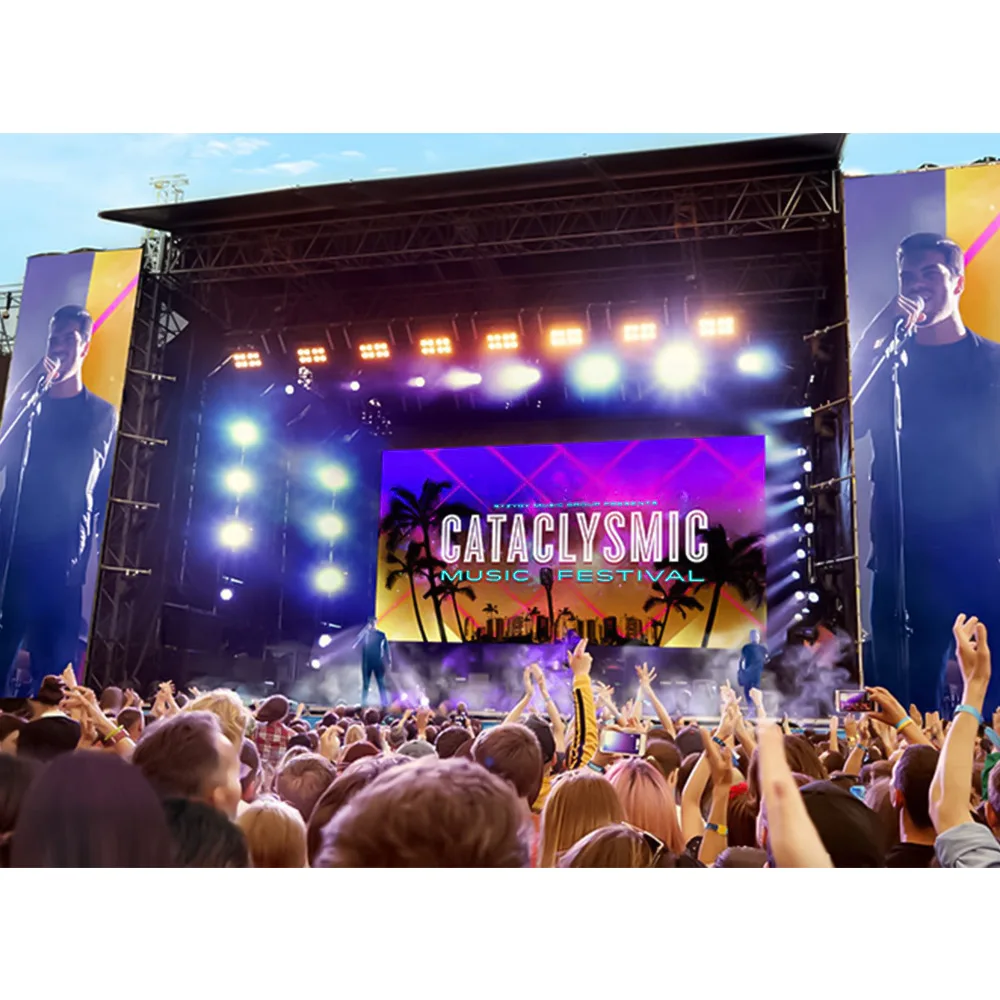
The same logic applies outdoors. A street-facing flat wall may still carry strong media, but a corner format can make the building visible from more than one approach and create a much stronger public identity. In exhibition work, an irregular shape can help a booth stop looking temporary and start looking branded. In retail, the right format can make a product zone feel like an installation instead of a screen package. These are not aesthetic extras. They influence footfall, memory, dwell time, and how professionally the brand appears in the space.
That is why readers exploring small LED pixel screen solutions or other high-definition indoor formats often still need scene-based guidance first. Resolution, brightness, and cabinet quality matter, but the shape decision only becomes good when it supports the environment and the daily use case.
When a curved LED screen makes sense commercially
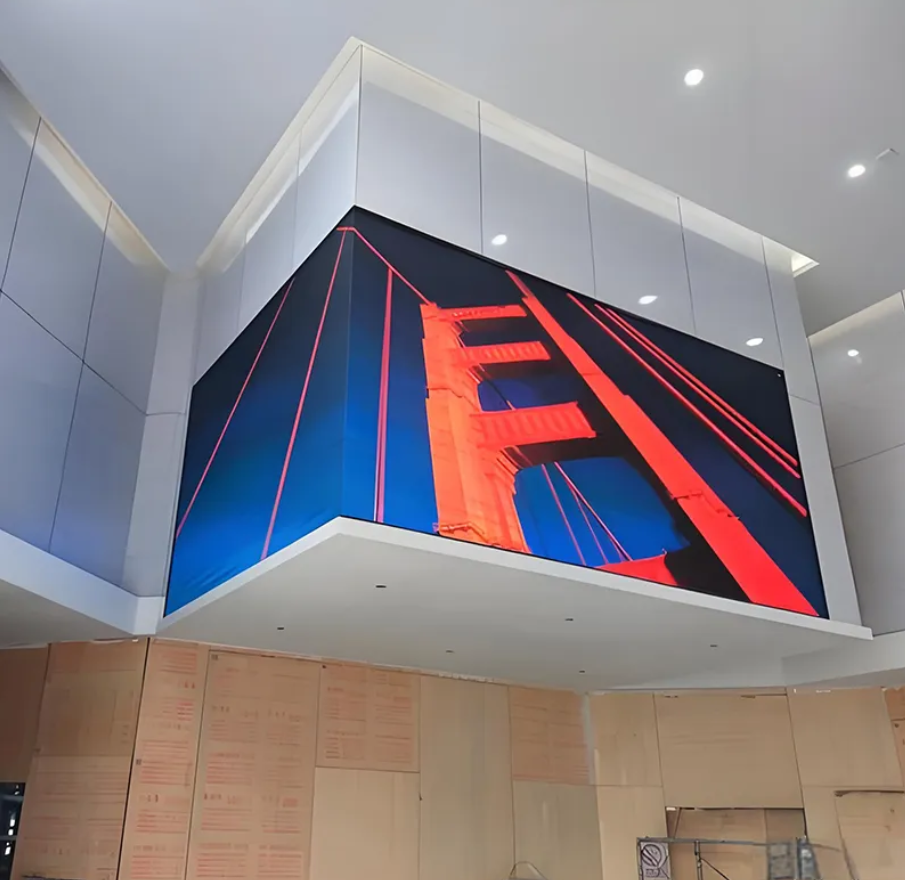
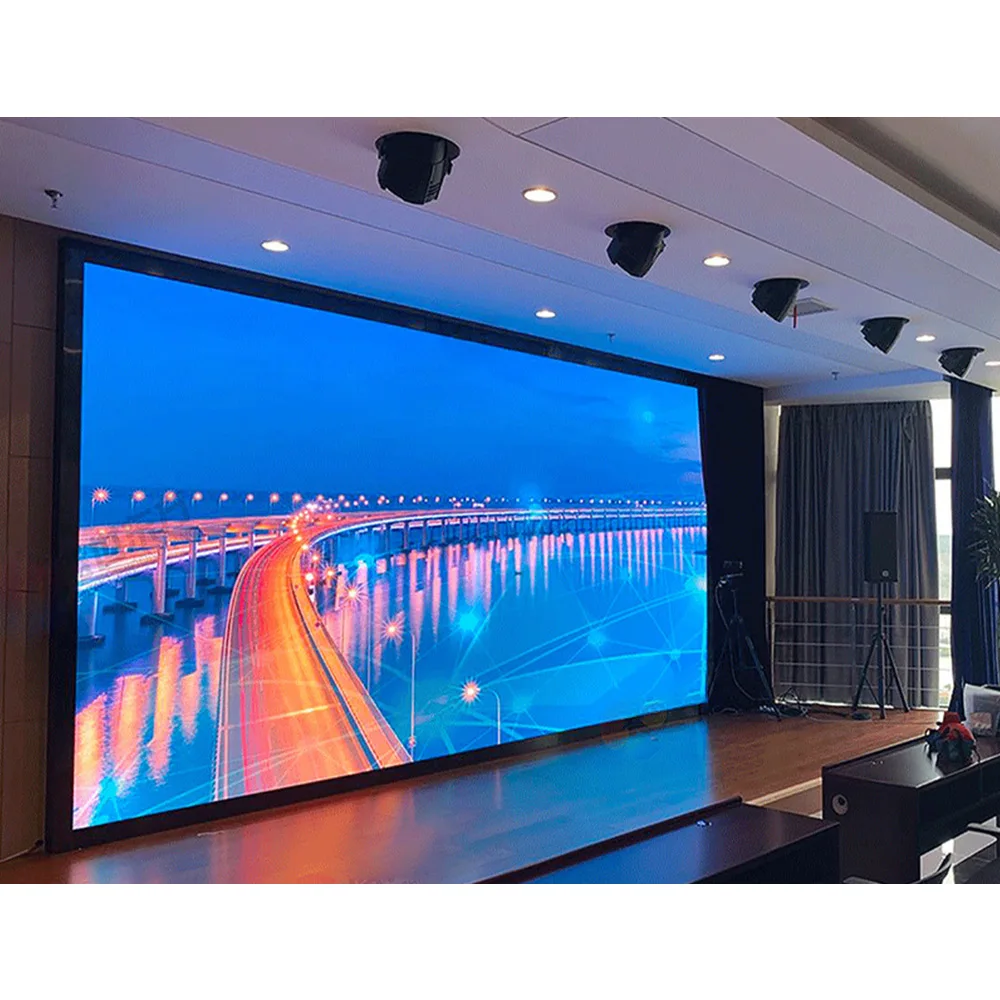
A curved led screen makes the most sense when the project needs flow, panorama, and a more architectural relationship between content and space. In luxury showrooms, museums, brand halls, hospitality settings, and immersive corridors, a flat wall can sometimes feel static even when it is large. A curve changes that impression. It makes the visual field feel more continuous and can guide the viewer along a path instead of asking for one fixed front-facing viewpoint.
Commercially, that matters because curved formats often improve atmosphere rather than just increase surface area. They help a long wall feel less ordinary. They can make cinematic brand content feel calmer and more premium. They can also support higher-value environments where the client is not only buying screen area, but also buying experience quality. In these projects, the curve is useful because it changes how the room is perceived.
However, a curved solution is not automatically better because the drawing looks expensive. It still needs to match the content and the viewing pattern. If the screen will mostly carry small text, rigid comparison layouts, schedules, or heavily structured information, the curve may create more tension than value. That is why shape should be judged against daily use, not only against launch visuals. The question is not whether a curve can be built, but whether the curve supports what will actually be shown most of the time.
Structure also changes quickly once a curve is introduced. A flat display can tolerate certain planning shortcuts more easily. A curve usually cannot. If a supplier mentions custom cabinet design, that matters because the cabinet affects how accurately the radius holds, how the seams align, and how the final wall feels under close viewing. The business result is visual quality and installation control. The projects that need to focus on this are premium interiors, built-in feature walls, and any installation where edge precision is visible at short distance. A buyer should ask the supplier how the radius is controlled across the full wall, how alignment is maintained during installation, and what tolerance is expected at the visible joints.
If brightness is brought into the discussion, it should not be treated as an isolated number. Brightness changes whether the image holds up under daylight, reflections, or atrium lighting. The business result is whether the screen still looks alive in the actual environment. Projects near glazing or high ambient light need to pay closer attention. A buyer should ask what brightness range is recommended for the real site and whether content will still look balanced at lower operating levels during evening use.
For teams still moving from inspiration into technical definition, it is also useful to review how a custom LED display project moves from concept to CAD drawing, because many curve-related delays come from locking the shape before the build logic is actually clear.
When a corner LED screen creates stronger visibility
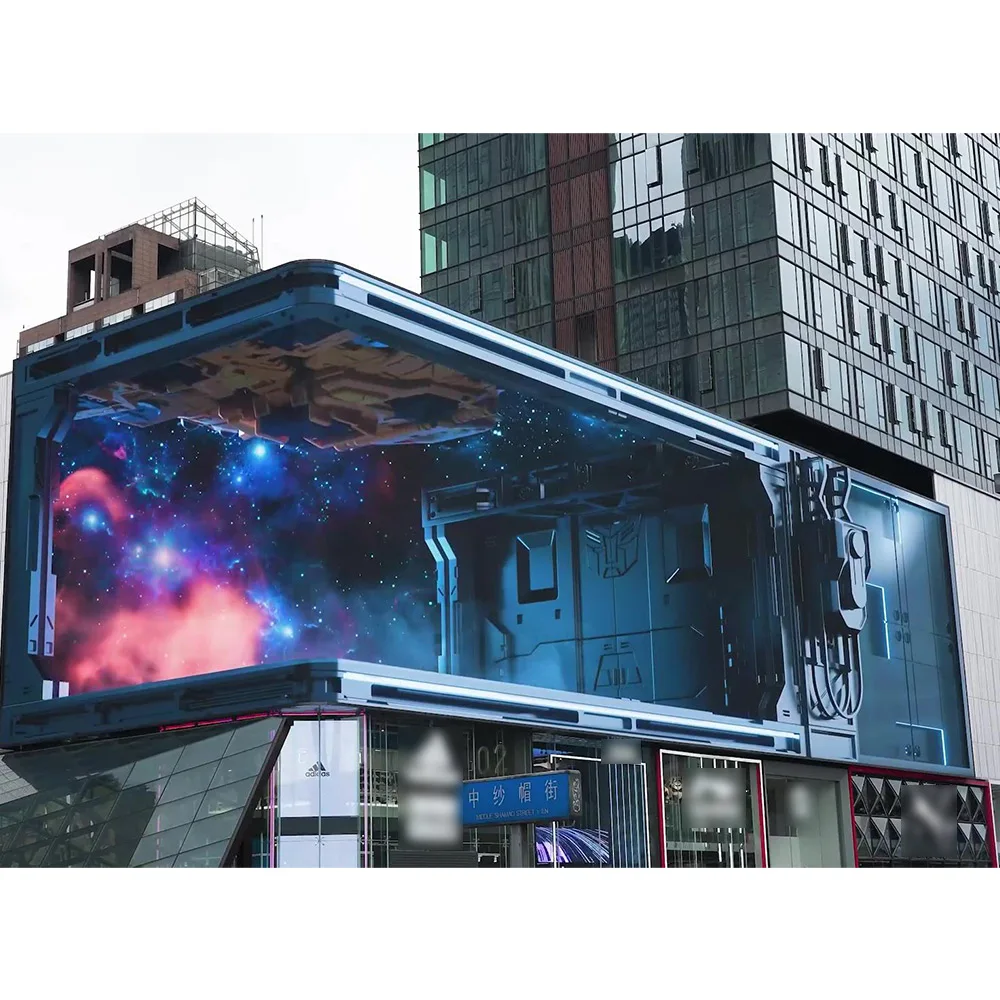
A corner led screen is commercially effective when the site naturally receives traffic and attention from more than one direction. This is common on retail streets, mixed-use developments, entertainment zones, transit-adjacent buildings, and public-facing commercial corners. In those cases, a standard flat facade often leaves the corner itself inactive. A corner display turns that dead seam into the point of maximum visibility.
The value is not just that more people can see the screen. The value is that the building gains a stronger identity. A corner format often creates better photo moments, better urban memory, and a more dynamic approach experience. If the project is competing visually with other storefronts or facades, this can be a real commercial differentiator. The corner stops being a leftover condition and starts becoming the main media opportunity.
Still, not every corner project deserves a corner screen. The added shape only pays off when the content uses the edge meaningfully. If the media behaves like two ordinary flat screens placed side by side, the installation may still be large, but it will not feel as sophisticated as it should. The bend creates value when reveal sequences, motion depth, and content transitions are designed with the geometry in mind.
If refresh rate comes up, it should be explained in business terms. Refresh rate affects how clean the image looks on camera and in recorded content. The business result is better appearance in launch videos, social capture, and filmed promotions. Projects that expect heavy media coverage, live events, or frequent camera exposure should care more. The buyer should ask what refresh level is recommended for the intended shooting conditions and whether the quoted system is already suitable for commercial filming.
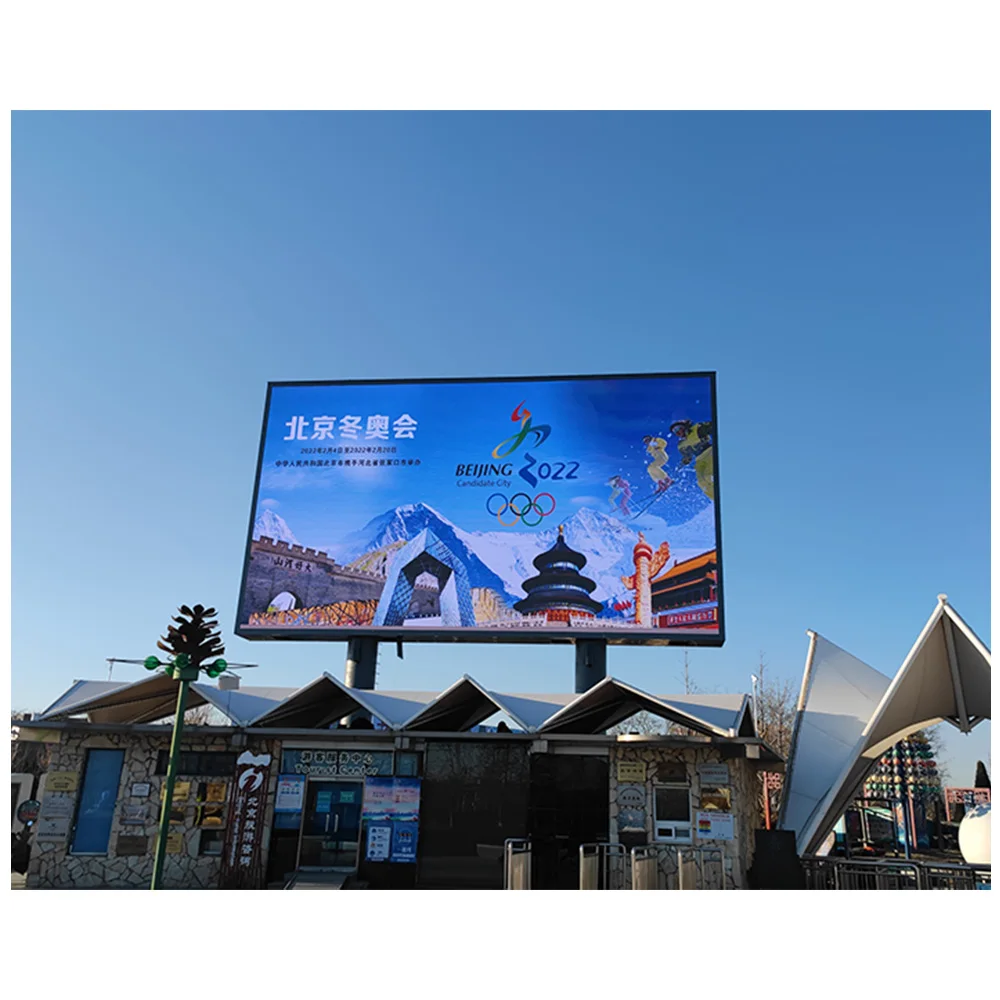
If IP rating is mentioned for an exterior corner, it should not be treated as checkbox language. IP rating influences how confidently the display can operate against weather and environmental exposure. The business result is reliability and lower risk of downtime. Outdoor projects need this more than sheltered interiors. A buyer should ask which parts of the system meet the rating, how the corner detail is protected, and what maintenance routine is expected in the local climate.
Large venue projects also remind buyers that shape is only one part of commercial fit. In spaces where audience scale, viewing distance, and message clarity matter more than sculptural form, application-led solutions like a LED video wall for church can teach the same lesson: the right format is the one that matches the space and viewing behavior first.
When an irregular shape is worth the extra complexity
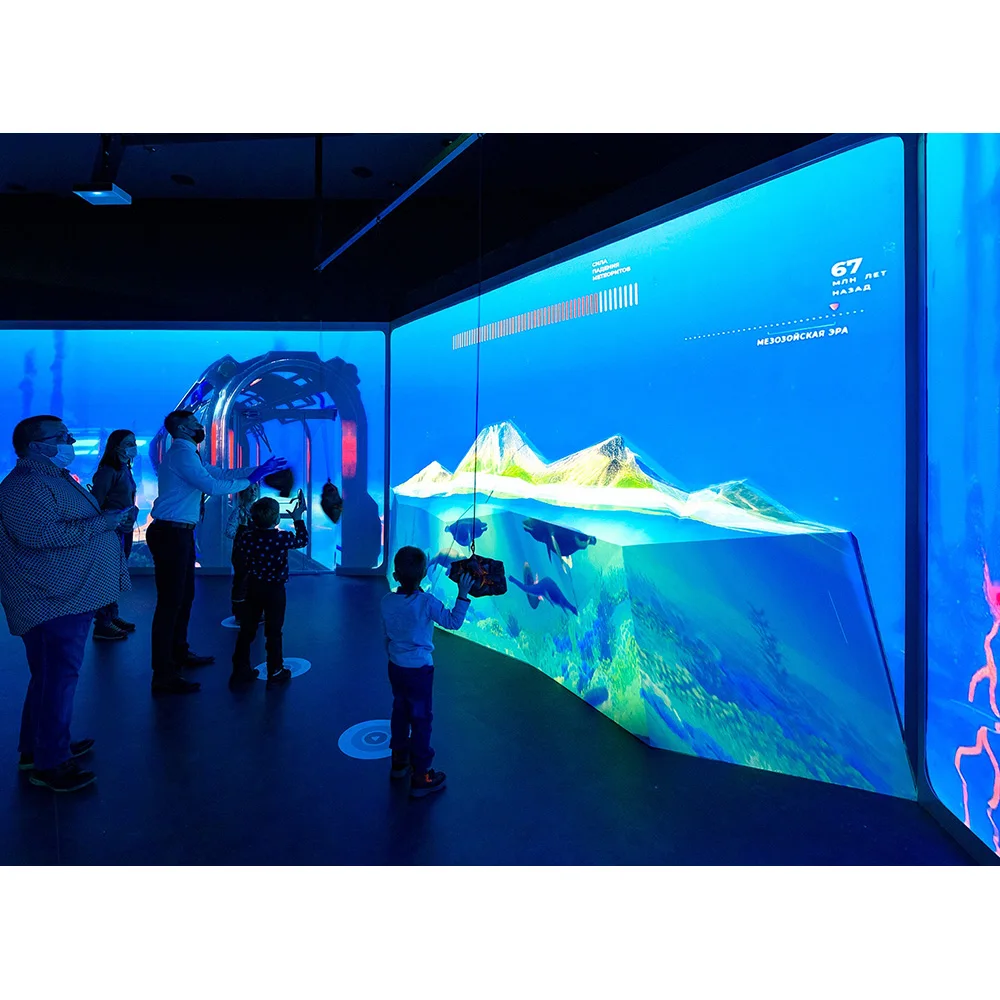
An irregular shape becomes worthwhile when the project needs the screen to behave like part of the architecture, scenic build, or branded object rather than as a standard media wall. This is common in exhibition booths, launch stages, premium retail zones, design-led interiors, and brand showcases where the display is not just carrying content but helping define the physical environment around it.
The reason buyers are drawn to irregular formats is easy to understand. A non-standard outline can make a project feel bespoke and high-value very quickly. It can echo a product silhouette, align with a facade gesture, wrap a difficult wall condition, or turn a temporary booth into something that looks custom-built. Commercially, that can be very useful. It helps a space look less generic and more intentional.
However, this is also the area where the wrong decisions hide most easily. An irregular screen can look striking in concept visuals and still underperform after installation if the shape has no real relationship to the environment. That is because the perimeter becomes part of the message. If the outline feels arbitrary, the result often feels less premium instead of more. The best irregular projects are usually disciplined rather than chaotic. The geometry has a reason, the content has safe areas, and the finishing logic is clean enough to keep the shape elegant after real-world use begins.
Maintenance pressure also rises here. The more unusual the outline becomes, the more carefully the service method should be defined. If cabinet access, replacement route, or perimeter trim is left vague, the project may become expensive to repair later. That is why irregular projects should be evaluated not only by their front view, but also by how calmly they can be maintained once surrounding finishes are complete.
If pixel pitch is discussed, it should immediately be connected to the use case. Pixel pitch affects how refined images, product textures, and typography look at the actual viewing distance. The business result is content comfort and perceived quality. Showrooms, galleries, and close-view branded interiors need to care more than long-distance outdoor media sites. A buyer should ask what viewing distance the recommendation is based on and whether the chosen pitch still supports comfortable detail across the custom shape.
The trade-offs hidden behind irregular shapes
Buyers often start with inspiration images, but irregular projects are won or lost in the trade-offs those images do not show. The first trade-off is usually between visual freedom and structural discipline. A more unusual outline may look more distinctive, but it also creates more pressure on cabinet layout, support design, alignment, trimming, and replacement access. This does not mean irregular work is a bad idea. It means the design conversation has to mature earlier.
The second trade-off is between custom identity and content flexibility. A standard rectangle is forgiving. It can run many kinds of media with relatively little adaptation. A shaped screen is less forgiving because the edge itself becomes active. That can be excellent for immersive visuals, controlled brand motion, and scenic storytelling. It can be limiting for content that changes often, uses many templates, or depends heavily on small text and tightly structured layouts.
The third trade-off is between impact and maintainability. In some cases, the most visually dramatic outline is not the most practical one to own. If replacement requires taking apart built finishes, if the perimeter trim is too delicate for repeated service, or if the access method was never designed around the final architecture, the project may look premium on day one and feel frustrating six months later. Readers at the evaluation stage usually care about this point more than they first expect, because it changes long-term operating confidence.
If power or heat are mentioned, they should never be dropped into the article as raw technical terms. Power affects operating cost and upstream planning. Heat affects how comfortable the surrounding environment remains and whether the build-up needs additional ventilation thinking. The business result is stable operation and cleaner coordination with the site. High-duty commercial installations, enclosed scenic structures, and tight architectural builds need to care more. A buyer should ask how the quoted system affects power planning, whether heat needs special treatment in the enclosure, and what operating assumptions the supplier used.
If the control system is raised, the discussion should stay outcome-based. The control system affects how easily the screen can be mapped, managed, and updated once content starts changing. The business result is smoother operation and fewer surprises during commissioning. Projects with unusual geometry or multiple media zones need to focus more on this. The buyer should ask how the shape will be mapped, what content workflow is recommended, and whether the chosen control setup is already proven for non-standard layouts.
Which parameters actually change the decision
In custom projects, parameters should act as evidence for decision-making, not as the main story. That is why the most useful way to discuss them is to ask what business result they influence, which projects genuinely need them, and what a buyer should confirm before moving forward. Once those three questions are answered, parameter talk becomes practical instead of decorative.
Pixel pitch
It influences detail, texture, and reading comfort at the real viewing distance. Close-view showrooms, exhibit environments, and premium interiors should care most. Ask what viewing distance the recommendation assumes and what trade-off exists between refinement and budget.
Brightness
It influences whether the image stays convincing under daylight, reflections, or bright ambient conditions. Glass-heavy and public-facing projects need to focus more. Ask what brightness range fits the actual environment, not just the maximum number available.
Refresh rate
It influences camera performance and how clean motion appears in filmed use. Launch spaces, live events, and media-heavy installations should care more. Ask whether the quoted system is suitable for filming and what shooting scenarios it supports.
Custom cabinet
It influences alignment, radius accuracy, perimeter control, and service practicality. Curved and irregular projects need this most. Ask how the cabinet supports the target geometry and what installation tolerance is expected.
IP rating
It influences weather resilience and reliability in exposed conditions. Exterior facades and semi-exposed corners should care most. Ask which parts of the system meet the rating and how the edge details are protected.
Control system
It influences mapping accuracy, commissioning smoothness, and content management for unusual shapes. Complex media layouts need more attention here. Ask how the shape will be mapped and what content workflow the supplier recommends.
For many fixed architectural installations, it is also useful to understand how modular cabinet logic affects fixed-wall performance, because a clean-looking custom project is rarely just about the face of the display. It is usually about how the build holds together behind the scenes.
How to brief a factory for a non-standard shape project
A weak custom inquiry usually sounds like this: “Need quote for curved LED screen, please advise.” A useful inquiry sounds very different. It explains the type of space, the role of the screen, the likely viewing pattern, the shape direction, and the site restrictions that will affect structure and service. That difference matters because a factory can only make a serious recommendation when the project is described as a real environment instead of a vague product category.
The fastest way to improve a brief is to start with the scene. Is it a premium showroom, a mall corner, a glass storefront, a launch set, a lobby wall, or an exhibition booth? Then explain what the screen needs to do. Should it create flow, hold two sightlines, preserve transparency, become part of a scenic installation, or turn a blank wall into a focal point? Those answers help the supplier understand whether the project really needs a curved led screen, a corner led screen, an irregular shape solution, or a lighter alternative.
After that, basic geometry matters more than generic adjectives. Estimated width, height, wall condition, radius idea, edge exposure, and surrounding materials are all useful. Service direction must also be stated early. If rear access is blocked, if the screen will sit inside finished millwork, or if maintenance can only happen from the front, that should be clear from the first serious discussion. Otherwise, two quotations may appear similar while assuming completely different realities.
The best factory briefs also mention content expectations. Will the wall mainly run immersive visuals, advertising loops, product storytelling, or structured information? This helps the supplier think more practically about pitch, brightness, mapping, and control, but always in service of the project outcome rather than as standalone claims.
- Project type: showroom, retail facade, lobby, exhibition, launch stage, or glass storefront
- Estimated dimensions and shape direction
- Main viewing angles and likely viewing distance
- Primary content style
- Front service or rear service restriction
- Nearby materials such as glass, cladding, steel, or joinery
- Expectation for edge quality, built-in effect, or exposed trim
- Target timeline and any site installation limits
Once those basics are prepared, the discussion becomes far more productive. Instead of collecting generic prices, the buyer starts receiving actual solution logic. For many teams, the next useful step after that is either a structured design inquiry or direct contact through the project consultation page.
What to confirm before comparing quotes or placing an order
Before comparing price, the buyer should confirm whether the suppliers are solving the same problem in the same way. This sounds obvious, but it is where many custom projects lose control. One quote may assume standard service access. Another may assume a special custom cabinet. One may account for complex edge finishing. Another may not. One may understand the actual site exposure. Another may still be pricing against a simplified concept. Until these assumptions are aligned, price comparison is not reliable.
The second control point is content fit. The team should confirm that the chosen shape works with what the screen will run most often, not only with one hero animation. This is especially important with irregular shape projects, because the shape itself changes where text, logos, and motion can sit comfortably. If the content plan is still vague, the project should not pretend that shape decisions are already final.
The third control point is maintenance clarity. Buyers should confirm how modules are accessed, how the system is replaced or serviced, and what happens when one section needs work after surrounding finishes are complete. This is often where a factory-type supplier becomes more efficient to consult, because the conversation can stay connected across structure, cabinet logic, and manufacturing feasibility instead of stopping at surface-level styling.
Finally, the buyer should confirm commissioning and content mapping expectations. A non-standard project usually needs more than product delivery. It needs a reliable path from design idea to mapped, usable, daily operation. That is the difference between receiving hardware and receiving a workable solution.
Four things to align before making a final comparison
- Are all suppliers pricing the same service direction and structural assumption?
- Does the chosen shape still work with normal daily content, not only presentation visuals?
- Is the visible edge and trim condition clearly defined?
- Is the mapping and commissioning workflow understood for the actual shape?
Decision table
| Format | Best commercial use case | Main hidden trade-off | What buyers should confirm early | Typical fit |
|---|---|---|---|---|
| Curved led screen | Improving flow, panorama, and perceived quality in premium interiors | Content becomes less forgiving if daily use is text-heavy or rigid | Radius control, seam quality, service access, and viewing comfort | Showrooms, museums, brand halls, hospitality walls |
| Corner led screen | Creating visibility and memory from multiple approach directions | The corner adds less value if the content ignores the bend | Exterior protection, camera use, content strategy around the edge | Retail facades, urban corners, commercial streets, mixed-use buildings |
| Irregular shape | Integrating media into architecture or scenic design | Higher pressure on service, finishing, and content discipline | Perimeter logic, maintenance route, mapping method, trim quality | Exhibits, launch stages, feature walls, branded interiors |
| High-brightness outdoor display | Supporting visibility in exposed outdoor commercial environments | Outdoor reliability becomes as important as visual impact | Brightness, IP protection, maintenance route, and installation condition | Advertising sites, public-facing exteriors, roadside and facade media |
The real purpose of this comparison is not to make one shape look superior. It is to help the buyer choose the format that fits the commercial task, the space, and the long-term operating reality most cleanly.
Extended Reading
Custom LED Display: From Concept to CAD Drawing in 7 Steps
A useful follow-up for teams who want to reduce revisions between early inspiration and final engineering.
LED Wall Supplier: Modular Cabinets for Fixed Walls
Helpful for understanding why cabinet logic matters so much on built-in architectural installations.
LED Display Screen Supplier: 12 Questions to Vet a Factory
A practical companion piece for buyers who want better questions before quote comparison starts.