EN
EN

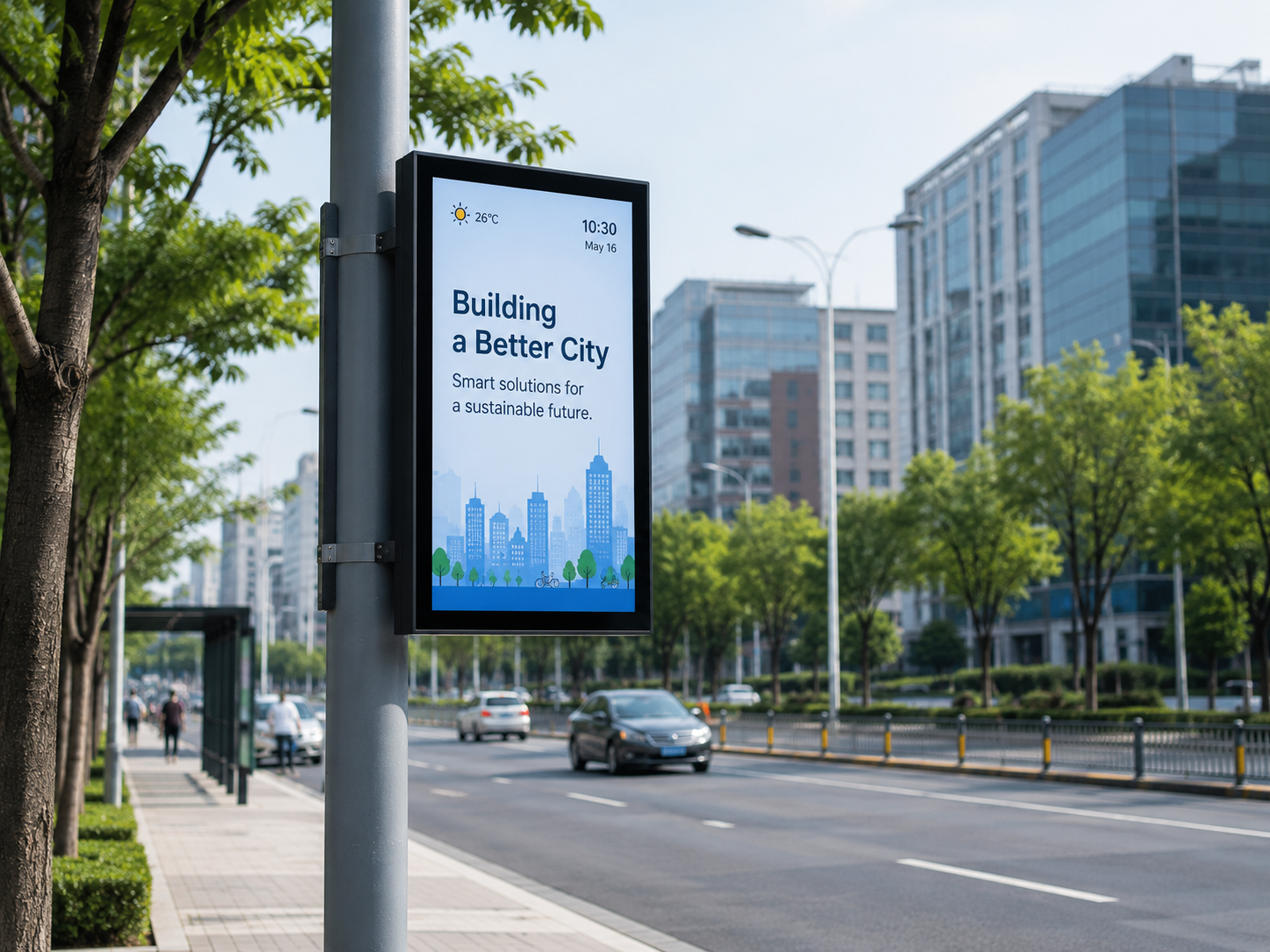
A street pole LED display should be selected as a complete roadside system, not as an LED cabinet added to an existing light pole. Screen size, pole condition, wind exposure, viewing direction, brightness, power routing and remote control all affect the final configuration.
This guide helps municipal contractors, outdoor media operators, smart-city integrators and project buyers decide whether they need one or two display faces, what must be checked before choosing screen size, and which details belong in a reliable supplier quotation.
Start with the useful road approach, verify the pole and mounting position, set the physical display area, and then select pixel pitch, cabinet construction, brightness and network control. This order produces a screen that is easier to read, safer to engineer and simpler to maintain.
How to Choose a Single- or Double-Sided Street Pole LED Display
Single-sided and double-sided screens may use similar LED modules, but they create different structural loads, electrical requirements and operating workflows. Face count should follow the communication value of each road direction rather than the assumption that two screens are always better.
One face for one valuable approach
A single face is normally the cleaner choice when traffic mainly approaches from one direction, the opposite view is blocked, or the screen is installed beside a one-way road.
It usually reduces weight, power demand, controller outputs and service points. The structural review must still account for the cabinet projecting away from the pole centreline.
Two faces for two useful viewing directions
A double-sided unit can serve opposing traffic flows, a road median or two sides of an intersection. Each face may need its own content and brightness schedule.
The frame should be designed as one coordinated assembly with sufficient space for drainage, ventilation, cabling and service access.
| Decision point | Single-sided | Double-sided | Approval question |
|---|---|---|---|
| Road coverage | One selected approach | Two opposing or angled approaches | Can every face be usefully read? |
| Installed load | Normally lower, with one-sided offset | Higher cabinet and frame load | Does the calculation include the complete assembly? |
| Brightness | One face policy may be enough | Different sunlight on each face | Can brightness be controlled independently? |
| Maintenance | One primary display surface | Two faces and a central cavity | Can technicians reach every service point safely? |
Use two faces only when both road directions provide measurable communication value. When the second approach is blocked, sharply angled or visible for only a moment, one correctly oriented face often creates a better project with less structural and maintenance complexity.
Check Pole Capacity and Wind Load Before Confirming Screen Size
A pole-mounted screen applies more than vertical weight. Wind acts on the front, rear and side surfaces, while the distance between the cabinet and the pole creates additional bending and possible torsion through the brackets.
Pole diameter alone does not establish capacity
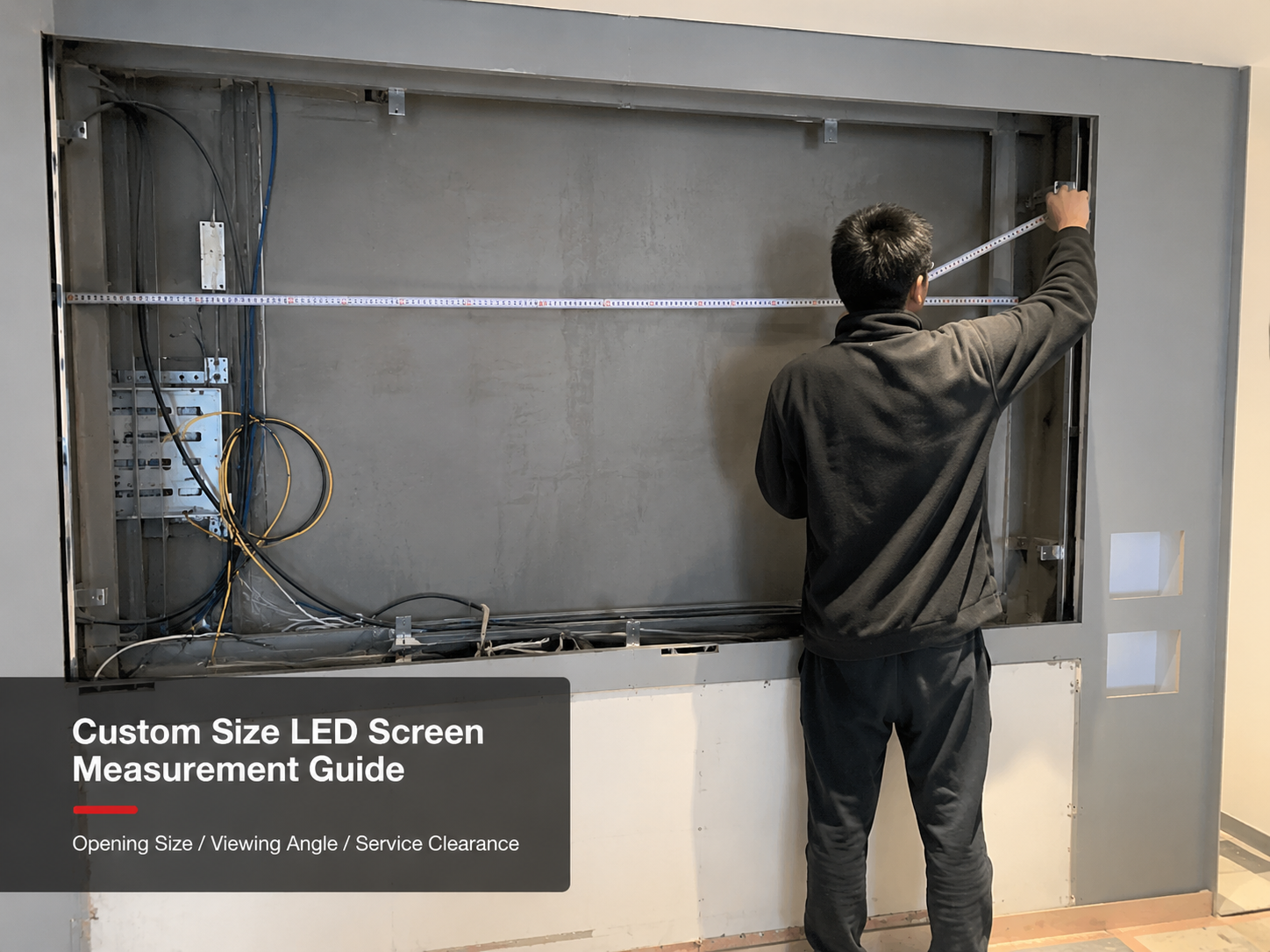
Two poles with a similar outside diameter can have different wall thicknesses, materials, taper, base connections and foundation conditions. Corrosion, dents, modified access doors or undocumented repairs can also reduce the available structural reserve.
Where an existing pole will be reused, collect measured information rather than relying on a photograph or an approximate diameter. The responsible structural party should review the complete proposed assembly using the applicable local wind and construction requirements.
Use the total installed dimensions
The active LED area does not represent the full surface exposed to wind. Cabinet side walls, rear covers, decorative shells, external control boxes, antennas and the spacing between two faces can all affect projected area.
The structural drawing should show total depth, installed weight and the centre of gravity. A visually compact screen can still create a demanding load when it is mounted high or sits far from the pole axis.
Do not treat an unverified existing pole as free supporting structure. When wall thickness, material, base details or condition cannot be confirmed, the next step is a structural survey—not a larger cabinet quotation.
Include maintenance access in the frame decision
A front-service cabinet can help where rear space is restricted, but technicians still need a safe working position in front of the display. Rear-service construction needs enough clearance for doors, modules, power supplies and controllers.
Maintenance access should be fixed before the supporting frame is approved. Adding a wider central gap, lifting point or service platform later changes weight, wind area and the centre of gravity.
Choose Physical Screen Size Before Choosing Pixel Pitch
The best screen size follows the useful reading zone of the road. A display can be visible from a distance but readable only during the final part of the approach, especially where trees, signs, road curves or parked vehicles interrupt the sight line.
Measure where the message becomes readable
Take photographs from the actual traffic or pedestrian approaches rather than only from the base of the pole. Mark where the screen first becomes visible, where the main message becomes readable and where the viewing angle becomes too sharp.
- Main and secondary road directions
- Typical lane position and traffic movement
- Nearest and common viewing distance
- Clear sight-line length before vehicles pass the pole
- Trees, buildings, signs and traffic equipment
- Morning and afternoon sunlight direction
- Pedestrian viewing areas close to the screen
- Permitted mounting height and local content restrictions
Match message complexity to viewing time
Use this selection order
- List the real content: notices, advertising, route information, alerts, images or video.
- Estimate the physical character and icon sizes required from the main approach.
- Set a preliminary active width, height and aspect ratio.
- Check the proposed area against pole and wind limits.
- Select a pixel pitch that supports the approved content at the common distance.
- Test representative content using the proposed resolution before production.
| Project condition | Better direction | Why | Avoid |
|---|---|---|---|
| Long vehicle approach | Larger physical message area with simple content | Drivers need fast recognition | Fine pitch inside an undersized screen |
| Close pedestrian use | Finer detail with controlled brightness | Short distance reveals image quality | Maximum daylight output at night |
| Curved road | Improve screen orientation first | A better angle extends reading time | Increasing size without checking angle |
| No rear access | Review front-service construction | Future repair must remain practical | Solving maintenance after production |
Ask the supplier to show the resulting screen resolution, cabinet layout and sample content together. The correct pitch supports the approved physical message size and viewing distance without adding unnecessary resolution.
Is 6,000 Nits Necessary for a Street Pole LED Screen?
High peak brightness can be useful for a screen facing strong direct sunlight, but 6,000 nits should not become a default requirement for every location. Face direction, shading, viewing angle, content contrast and the nighttime environment all affect the useful operating level.
Separate peak capability from normal operation
Peak output provides headroom for the most difficult daylight period. It does not mean the display should operate at maximum brightness throughout the day.
Excessive continuous brightness increases power use, internal heat and nighttime glare without necessarily making the message easier to understand.
| Location | Brightness direction | Control | Confirm |
|---|---|---|---|
| Open road with direct sun | Stronger daylight headroom may be justified | Automatic dimming plus time limits | Most difficult sun period |
| Shaded city street | Contrast may matter more than peak output | Day, dusk and night profiles | Building shade and reflections |
| Residential or pedestrian zone | Comfortable low-output performance | Strict nighttime ceiling | Nearby windows and street lighting |
| Double-sided screen | Evaluate each face separately | Independent schedules where needed | Sunlight direction on both faces |
Define brightness as an operating policy
A useful specification includes peak capability, normal daytime range, evening limit, nighttime ceiling, dimming method, sensor location and fallback behaviour after a sensor fault.
Content also matters. A clean, high-contrast message may remain more readable than a crowded design operating at a higher output.
Review outdoor protection at installed interfaces
Cabinet protection is only one part of the completed system. Field cable glands, external connectors, controller enclosures, cabinet joints, pole openings and service doors can become the weak points after installation.
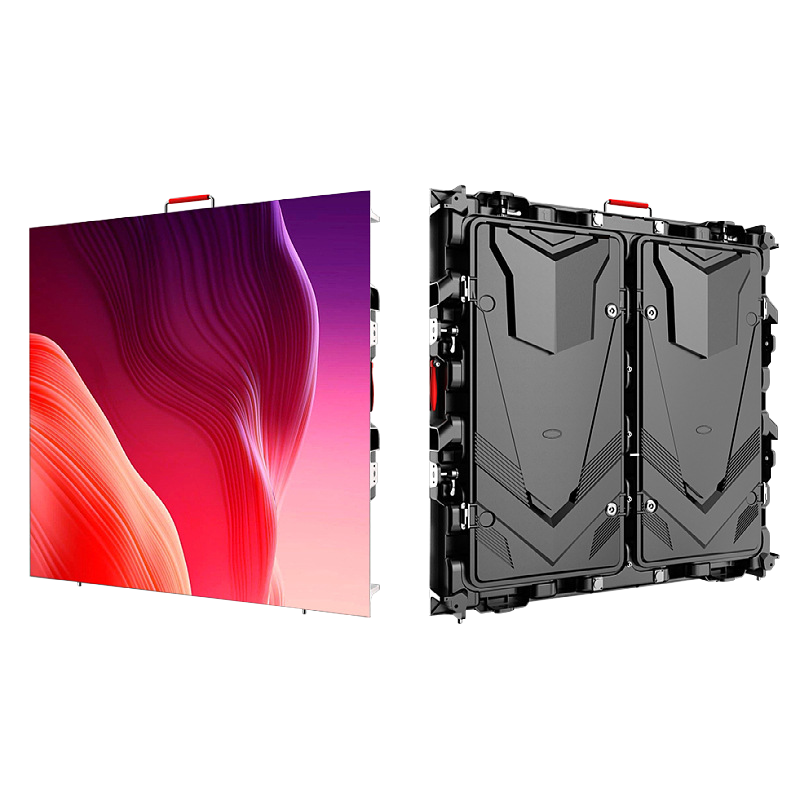
Review the cabinet as part of the pole assembly
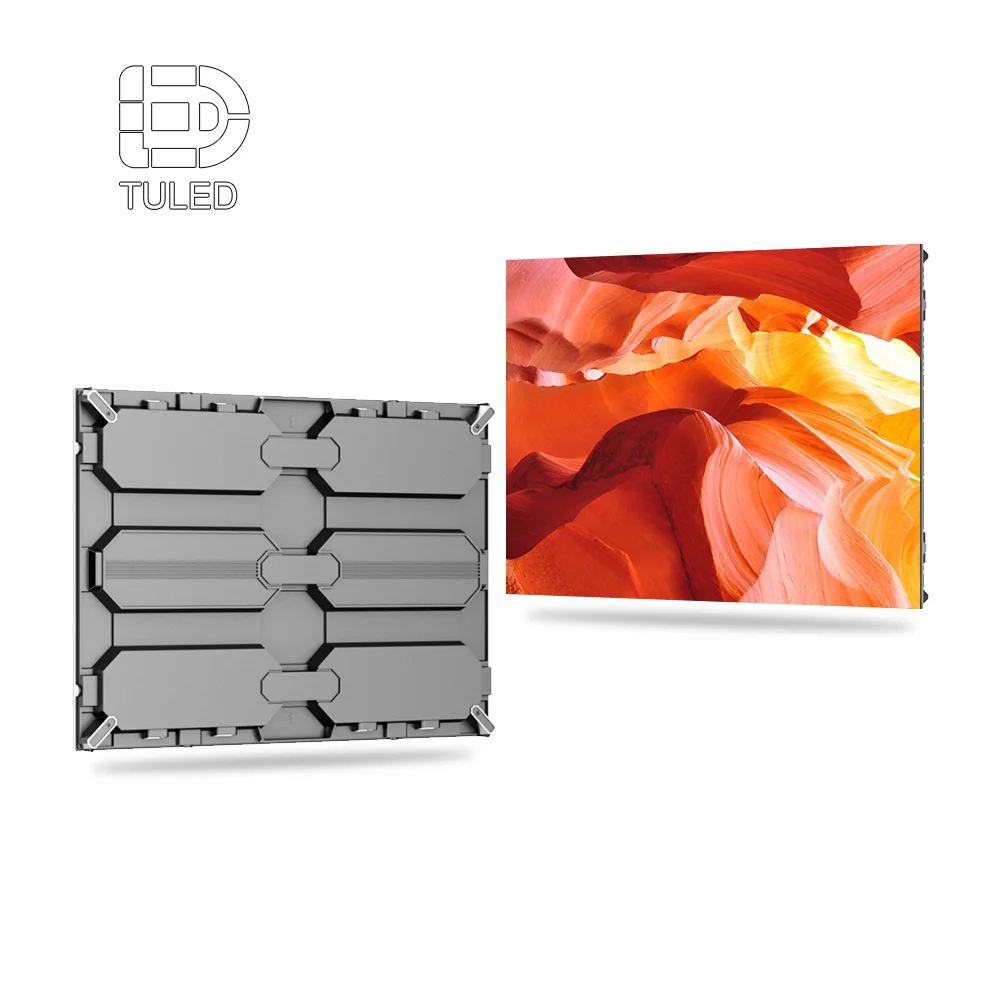
A fixed outdoor cabinet can support discussions about rear construction, depth, joining points and maintenance direction. It should not be treated as an automatic street-pole recommendation.
- ✓Confirm total configured weight rather than an empty-cabinet figure.
- ✓Confirm protection for the selected assembly and field interfaces.
- ✓Check whether front or rear service matches the maintenance route.
- ✓Verify brightness, pitch and module layout for the viewing distance.
- ✓Return final cabinet dimensions to the structural review.
Choose 4G, 5G or Fiber for Remote Street Screen Control
Network choice should follow the number of sites, update frequency, available infrastructure and required recovery method. Every screen should continue an approved local playlist when the connection is interrupted.
Often practical where screens are spread across a city and wired communication is unavailable.
Confirm coverage, data allowance, antenna position, SIM management and remote restart.
Can support faster transfers where stable local coverage exists.
Check real coverage at the mounting height and define fallback behaviour.
Fits corridors where communication ducts already exist and fixed connectivity is required.
Include protected routes, termination points and recovery after a damaged link.
Manage every screen face as an identifiable asset
A city network becomes difficult to maintain when displays are known only by a general location name. Assign identifiers during production and use the same codes on drawings, packaging, controllers, the publishing platform and spare-parts records.
Monitor double-sided screens face by face
A shared controller does not always provide enough operational detail. Face A may be online while Face B has a power, module or brightness problem. The platform should identify the affected face without requiring an inspection of both sides.
- Current online or offline status
- Latest successful content update
- Active schedule and playback group
- Brightness or sensor status where supported
- Power and temperature alarms supported by the selected controller
- Configuration backup and replacement history
Plan compatible spare parts before the network grows
“One spare module” is not a complete spare-parts plan. Record module type, receiving-card configuration, power-supply model, hub board, cabinet position and any calibration requirements.
For a larger deployment, grouping compatible sites reduces emergency stock and prevents a spare part from appearing physically correct while remaining electrically or visually incompatible.
What to Send a Supplier Before Requesting a Quote
A useful quotation begins with site information. Without it, a supplier can only price a generic display while leaving the pole, frame, electrical work, network and maintenance assumptions unresolved.
Prepare these three information groups
| Quotation item | Supplier should state | Why it matters | Red flag |
|---|---|---|---|
| Display configuration | Active size, cabinet layout, pixel pitch, resolution and face count | Confirms what is being purchased | Only a square-metre price |
| Structural input | Total weight, outer dimensions, depth and mounting details | Supports local engineering review | Only module or empty-cabinet weight |
| Outdoor performance | Brightness control, protection boundary and heat-management method | Connects the product to the site | Generic “waterproof outdoor” claim |
| Control system | Network hardware, offline playback and grouping capability | Determines daily operation | No plan for network interruption |
| Maintenance | Service direction, replaceable parts and recommended spares | Reduces lifecycle uncertainty | No service route or compatibility list |
| Scope boundary | Factory supply, structure, cabling, installation and commissioning responsibilities | Prevents missing work and cost | “Complete solution” without a scope list |
Street pole screens make sense when:
The project needs distributed public information or outdoor media, has clear road approaches, can verify the supporting structure and has a realistic maintenance and network plan.
Use another installation method when:
The pole cannot be verified, neither road direction offers useful reading time, maintenance would require repeated unsafe lane occupation, or the required screen exceeds the practical structural limit.
Send the site conditions before choosing the final cabinet
Include pole dimensions, installation height, site photographs, intended display size, single- or double-sided requirement, viewing distance, local wind criteria, screen quantity and preferred control method.
Street Pole LED Display FAQ
Is a double-sided street pole LED display always better?
No. Two faces are useful only when both approaches have a clear viewing zone and enough reading time. The second face also adds weight, power, heat, cabling, control points and maintenance work.
Can an existing streetlight pole carry an LED screen?
It cannot be confirmed from appearance or diameter alone. The review needs pole material, wall information, taper, height, base condition, existing equipment, screen weight, wind area, offset and local design requirements.
Does every outdoor pole screen need 6,000 nits?
No. Strong daylight capability may be useful for direct-sun locations, but normal output should follow sunlight, screen direction, surrounding light and the nighttime environment.
Which network is best for multiple street pole screens?
4G is often practical for distributed locations, fiber fits corridors with planned communication infrastructure, and 5G can support heavier updates where coverage is reliable. The screen should retain approved local playback during a network interruption.