EN
EN

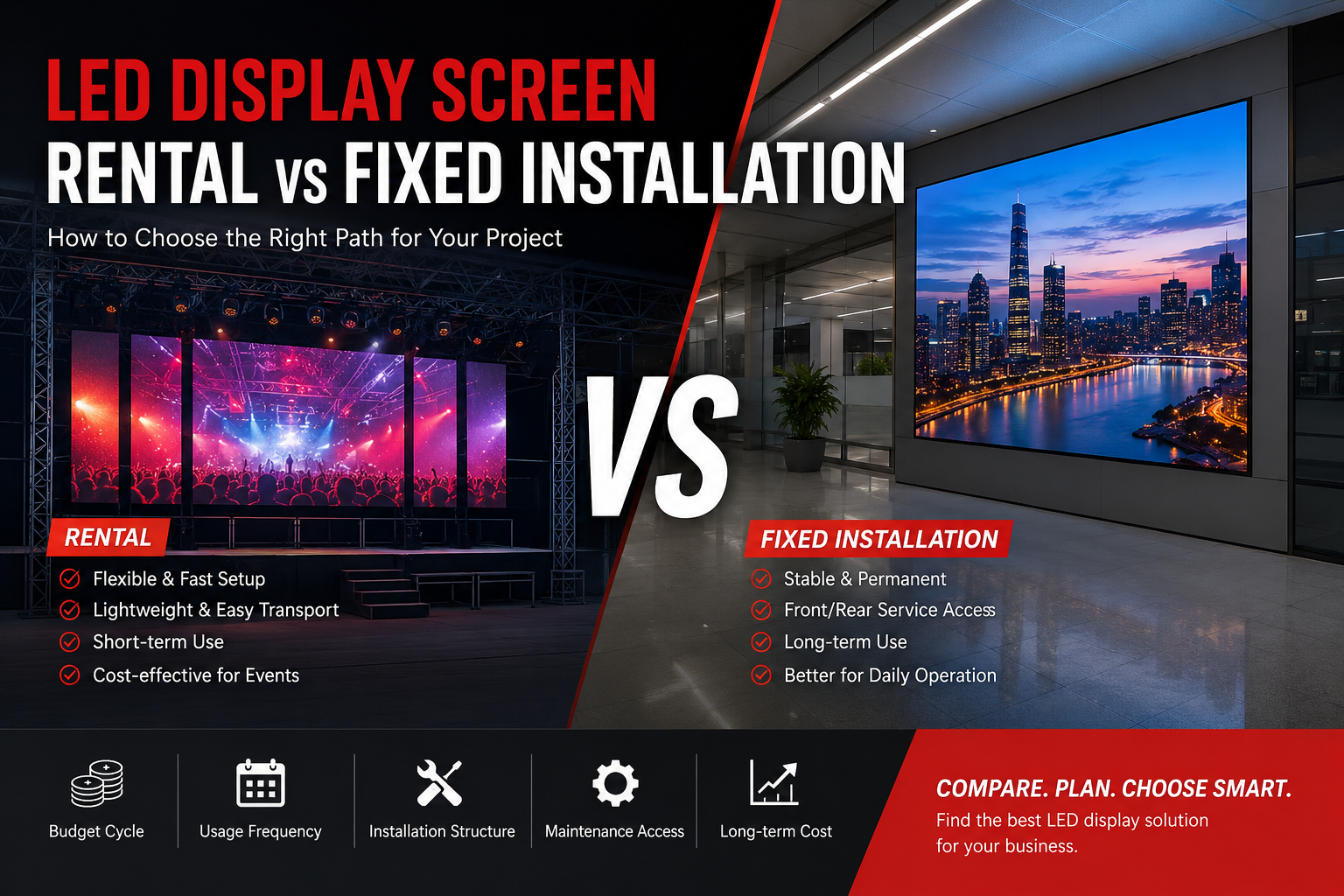
大規模イベント用のビジュアルウォールを必要とするプロジェクトは、一見単純に思えるかもしれません:画面サイズを選択し、価格を問い合わせ、納期を確認するだけです。しかし、実際の意思決定はそれより深く及びます。一時的なイベント、毎月開催されるロードショー、恒久的なショールーム——これらはいずれも設置開始後に異なるコストを生じさせます。したがって、レンタルと固定設置のどちらを選ぶかという判断は、使用頻度、予算サイクル、キャビネット構造、保守アクセス性、および今後のコンテンツ計画を出発点として行うべきです。イベント向けのソリューションと長期運用向けのサイトを比較検討するチームにとって、このガイドは最終的な見積もり依頼前に最適な選択肢を判断するための指針となります。 lEDディスプレイ画面 イベント向けソリューションまたは長期運用向けサイトのどちらを選ぶかを検討するチームにとって、このガイドは最終的な見積もり依頼前に最適な選択肢を判断するための指針となります。
レンタル向けと固定設置向けが混同される理由
一見すると、レンタル用スクリーンと固定設置用スクリーンは、同じ動画、ブランドメッセージ、ステージ背景を表示する場合があります。しかし、スクリーンの裏側で行われる作業は異なります。レンタル向けプロジェクトでは、迅速な設置、安全な輸送、柔軟なサイズ対応、およびイベント後のスムーズな撤去が重視されます。
一方、固定設置向けは建物や会場環境の一部となります。安定したフレーム、すっきりとした配線、保守作業への容易なアクセス、そして長期的なコンテンツ運用計画が必要です。したがって、最適な選択は、キャビネット価格やピクセルピッチだけでは決まりません。
多くの実際のプロジェクトにおいて、誤った選択は単純な価格照会から始まっています。低価格のレンタル料金が、繰り返される物流費や人件費によって結果的に高額になることがあります。一方、固定設置向けシステムは初期費用が高く見えるものの、毎週同じスクリーンを運用する場合、長期的には時間の節約につながります。
比較・保存用:最初の判断フィルター
| 判断のポイント | レンタル向けルート | 固定設置向けルート | なぜ重要なのか |
|---|---|---|---|
| 予算サイクル | イベントベースの支出 | 長期プロジェクト支出 | これはキャッシュフローおよび所有権に関する負担を決定します。 |
| 使用頻度 | 偶発的な利用に適しています | 定期的な利用に適しています | 繰り返しのレンタルは、人件費、輸送費、試験費用を増加させます。 |
| 設置構造 | クイックロック、フライトケース、ハンギングバー | 固定フレーム、清潔な配線、アクセスルート | 構造は設置速度および保守方法を変化させます。 |
| メンテナンス | 迅速なイベント復旧 | 計画された前面または背面へのアクセス | 今後の修理費用は、アクセス設計に依存します。 |
誤った選択が隠れたコストを生む場合
最初の見積もりは、全体像を示しているとは限りません。例えば、スクリーンを購入しないためにレンタル料金が一見低く見える場合があります。しかし、繰り返される配送、設置、撤去、技術者によるサポート、会場での待機時間などが、年間コストの大きな部分を占める可能性があります。
一方、固定設置の場合、フレーム、電源ルート、制御システム、および試運転が初期段階で含まれるため、一見費用が高くなるように見えます。しかし、一度スクリーンを設置すれば、各イベントごとに同じビジュアルウォールを再構築する必要はなくなります。
したがって、コストはライフサイクル全体で測定すべきです。1日のカンファレンスと常設のショールームでは、同じ見積もりロジックを適用すべきではありません。より適切な問いかけは、「今後12~24か月間に、このスクリーンを何回使用するか?」です。
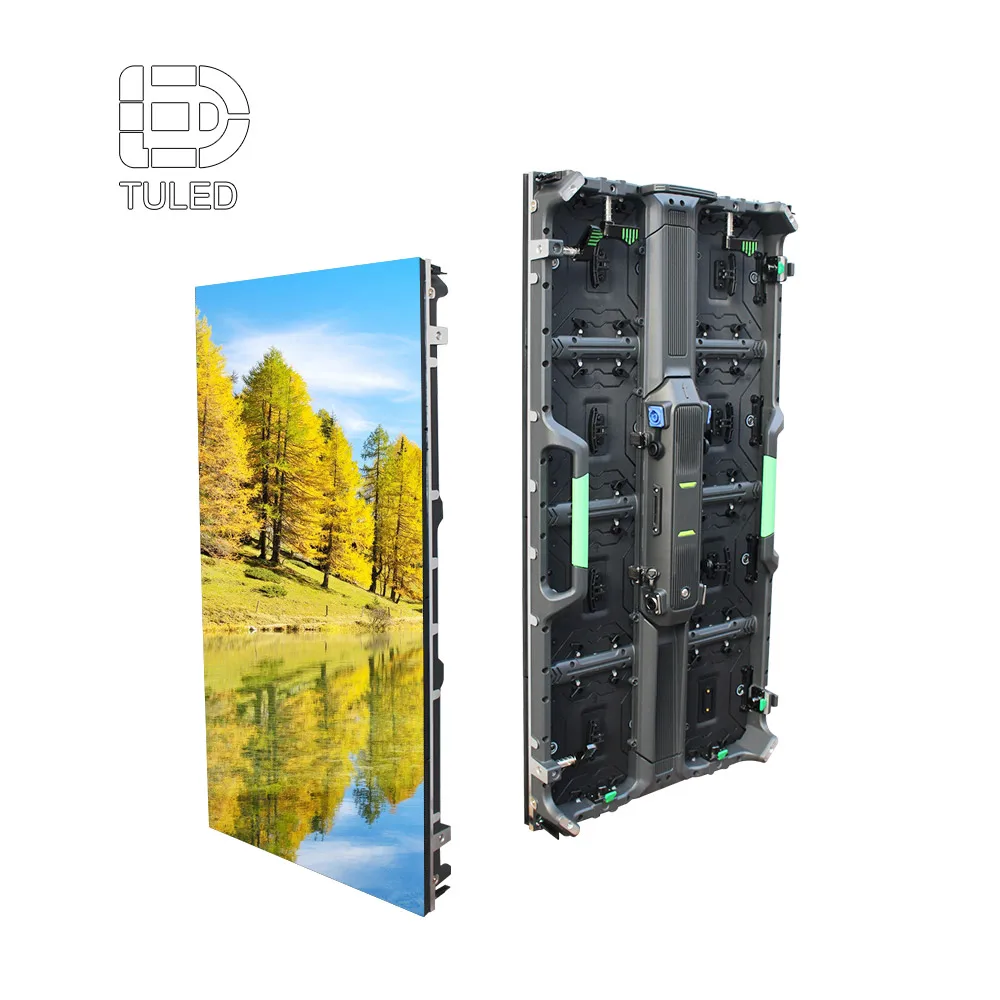
柔軟なイベント設営向けレンタルLEDディスプレイ
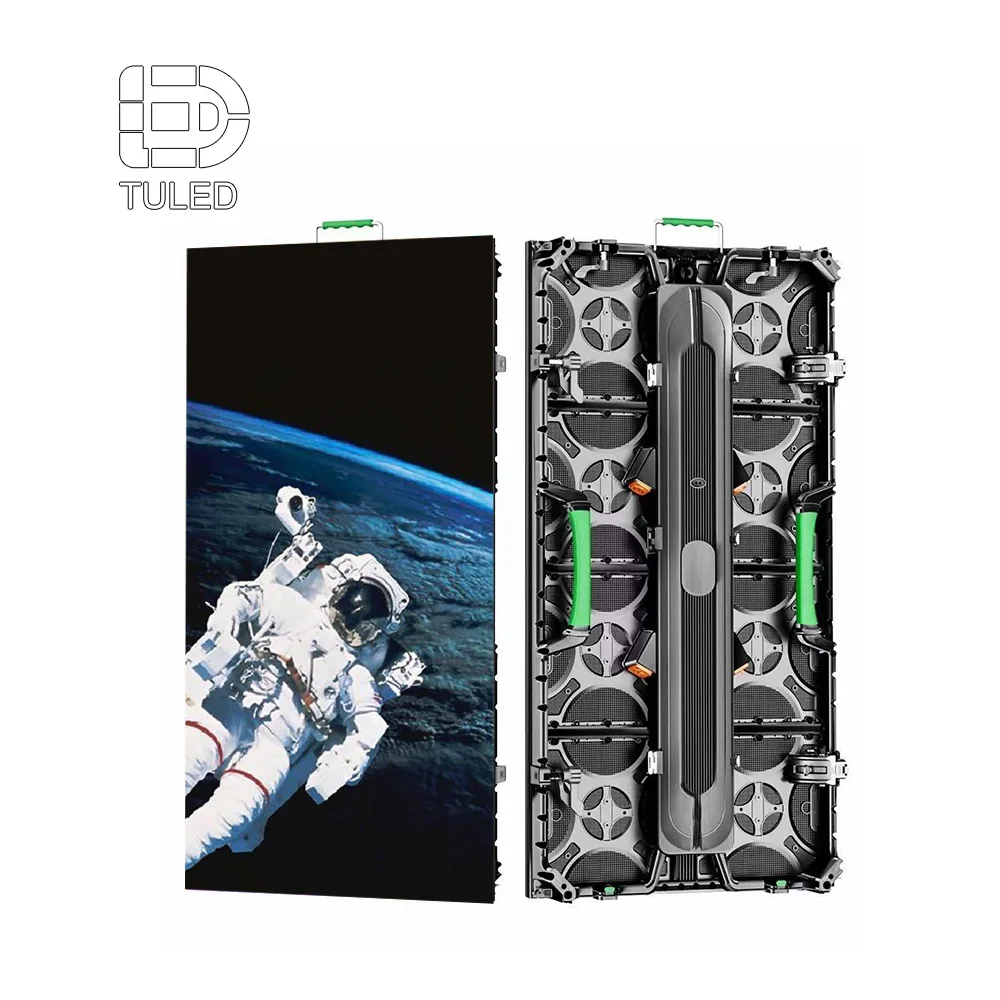
このキャビネットビューは、一時的なイベントにおける設置速度、取り扱い性、背面へのアクセス性、および保守作業を比較する際に役立ちます。
レンタル用LEDディスプレイを表示月間使用回数が何回以上であれば、レンタルではなく購入すべきか?
使用頻度は、最初の実用的な判断基準です。画面が必要になるのが年に1~2回程度であれば、通常はレンタルの方がプロジェクトを軽く保つことができます。キャビネットの保管、予備部品の保護、イベント後の保守管理などを行う必要がなくなります。
しかし、同じ画面を毎月必要とする場合、レンタルか購入かの判断はそれほど明確ではなくなります。輸送費、設置・撤去作業、技術者の人件費、および繰り返しのテスト費用を年間コストに加算する必要があります。その結果、固定設置の方が合理的になる可能性があります。
多くの場合、月間使用回数が4回以上となると、固定設置の見積もりを検討すべきタイミングです。画面はもはや稀なイベント向けのツールではなく、日常的な運用の一部となります。そのため、即応性や保守アクセス性が、柔軟性よりも重要になってきます。
損益分岐点チェックリスト:使用頻度
| 月間使用回数 | より適切な第一選択肢 | 理由 |
|---|---|---|
| 0~1回 | レンタルが最初 | 所有すると、機器の遊休化や保管の負担が生じる可能性があります。 |
| 2~3回 | 両者を比較 | 立地の安定性と人件費が重要になり始めます。 |
| 4~8回 | 固定価格での見積もりを推奨 | 繰り返しの設置作業に要する時間コストは、予想以上に高額になることがあります。 |
| 週単位または日単位 | まず固定設置 | いつでも稼働可能な状態、配線の整った清潔な環境、および計画的なアクセスが極めて重要になります。 |
レンタル用スクリーンと固定式スクリーンの構造は異なります
レンタル用キャビネットは、移動を前提として設計されています。そのため、軽量なキャビネットフレーム、クイックロック、ハンドル、保護コーナー、フライトケース、ハンギングバー、スタッキング構造などがよく採用されます。これらの細部設計により、設置時間が短縮され、イベントチームがレイアウトを迅速に調整できるようになります。
固定式システムは、安定した外観を実現することを目的として設計されています。通常、より頑丈な壁面フレーム、隠蔽配線ルート、保守点検用アクセス口、長期的な換気対策が必要となります。キャビネット自体は輸送を必要としない場合がありますが、数年間にわたり平面性・清潔性・保守性を維持する必要があります。
その結果、キャビネットの重量、ロック機構の設計、アクセス方向、フレームの奥行きといった仕様は、単なる空欄項目として扱ってはなりません。これらはすべて、人件費、安全性、ブランドイメージの統一性、および将来的なメンテナンスに影響を与えます。
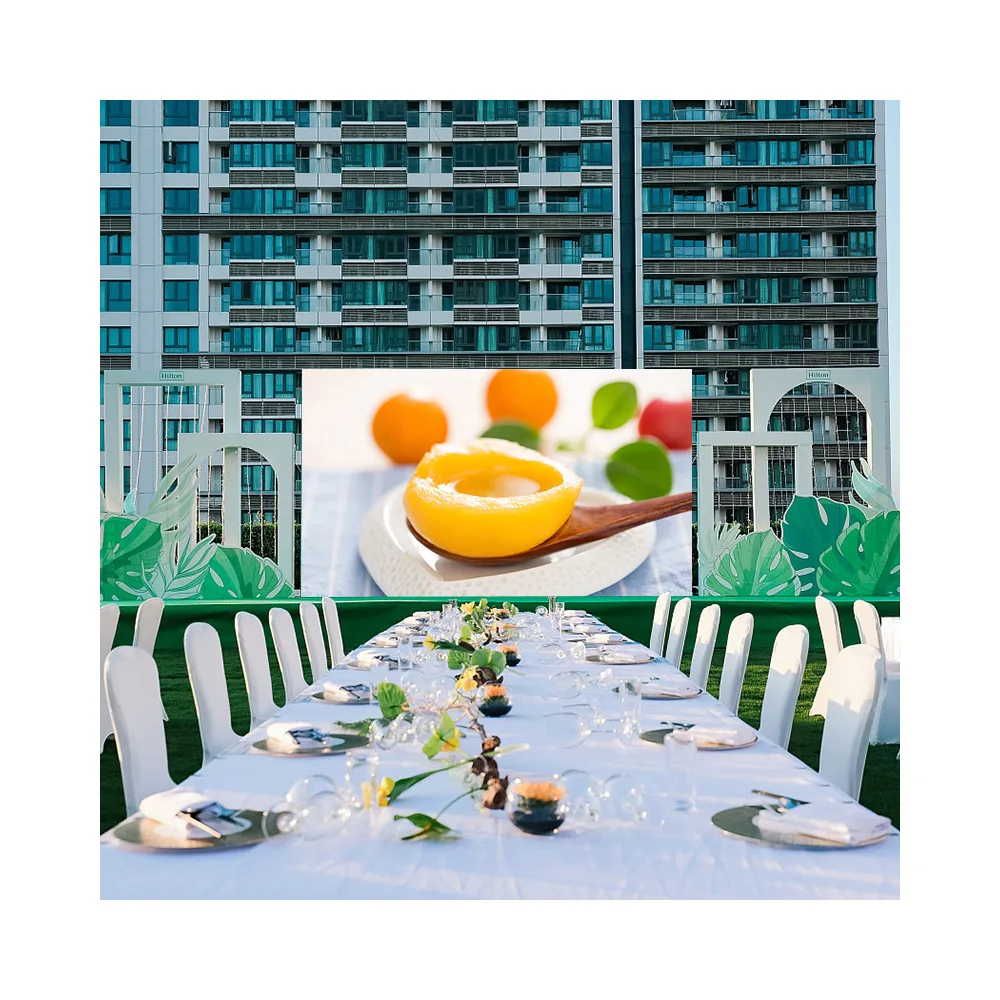
一時的なイベントシーン向けLEDレンタルスクリーン
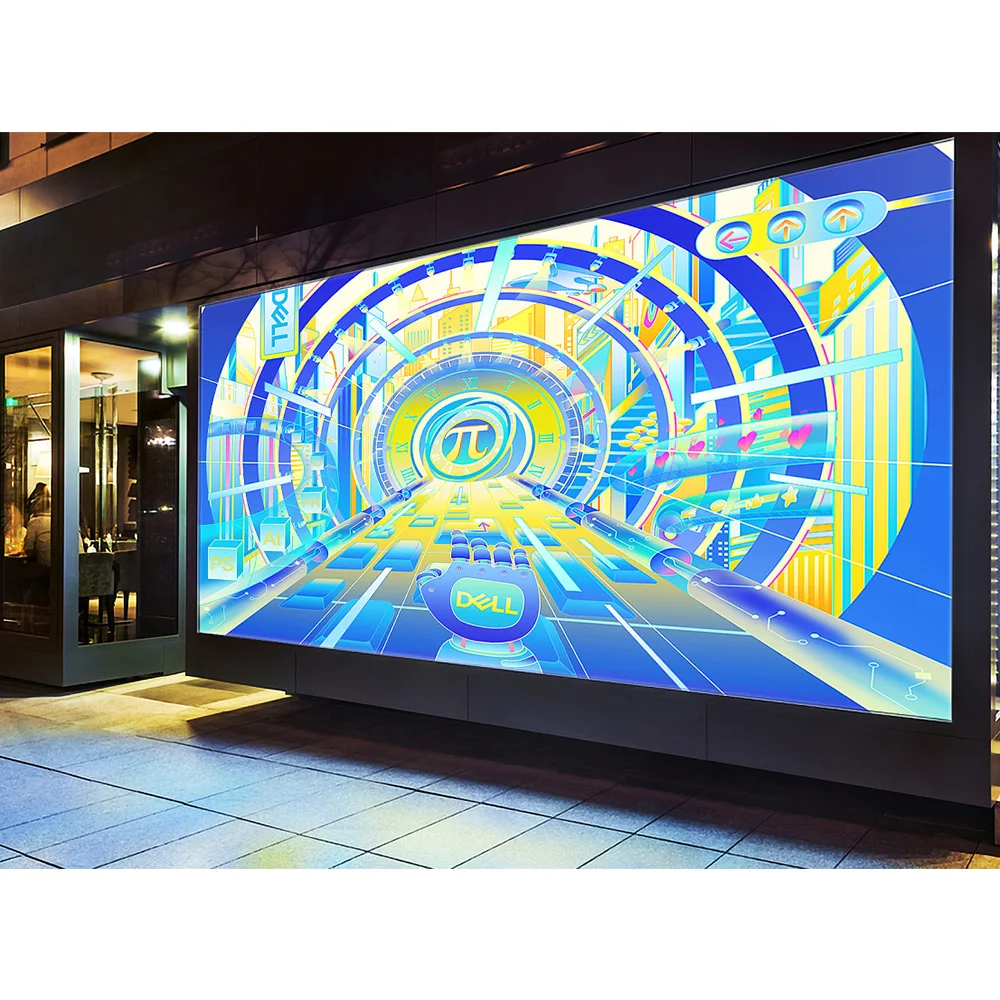
このシーンは、スクリーンのサイズ、設置場所、スケジュール、映像コンテンツが活動ごとに変化する可能性があるイベント企画に適しています。
LEDレンタルスクリーンを確認する構造比較表
| 構造項目 | レンタルの意味 | 固定の意味 | 見積もりへの影響 |
|---|---|---|---|
| キャビネット重量 | 作業員の作業速度およびリギング荷重に影響します。 | 壁フレームおよびサポートの強度に影響します。 | 重量は、人件費、安全性、および設置コストに影響します。 |
| ファストロック | 組立および解体を迅速化します。 | 永続的な設置後は重要度が低下します。 | ロックの品質は、イベント設営の信頼性に影響します。 |
| 玄関 | 迅速な修理に役立ちます。 | 壁面取り付けプロジェクトでは、しばしば必須です。 | アクセスルートを設けることで、将来的な保守コストを削減できます。 |
| フライトケース | 輸送中のキャビネットを保護します。 | 通常、設置後は必要ありません。 | 梱包材はレンタル計画に含める必要があります。 |
| 取り付けフレーム | 一時的なトラス、ハンギングバー、またはスタッキングフレーム。 | 永久設置用の鋼構造または壁面取付け構造。 | フレーム設計は安全性および外観に影響を与えます。 |
保守:迅速復旧または計画的アクセス
保守計画は、ディスプレイの発注前に立案する必要があります。レンタルの場合、主な課題は迅速復旧です。スペアモジュール、スペアケーブル、バックアッププロセッサ、および現地でのテスト時間を確保することで、イベントのスケジュールを守ることができます。
固定設置の場合、主な課題はアクセス性です。ディスプレイが壁面に設置される場合、前面サービスにより修理時間が短縮される可能性があります。背面に通路がある場合は、背面サービスが有効に機能することがあります。したがって、現場のレイアウトに基づいてキャビネットを選定する必要があります。
さらに、保守メンテナンスは映像品質に影響を与えます。容易にサービス対応できないスクリーンでは、小さな不具合が長期間目に付き続けてしまう可能性があります。このため、サービス設計は単なる技術的詳細ではなく、ブランドのプレゼンテーションおよび運用価値を守る役割も果たします。
CTA:ご開催予定のイベント頻度と開催場所をお知らせください。レンタルまたは固定設置のどちらが適しているか、当社よりご提案いたします。
実用的なご提案を行うには、スクリーンサイズ、会場の種類、設置方法、視聴距離、および想定される使用スケジュールが必要です。
お問い合わせ長期コストの判断方法
長期コストには、スクリーン本体だけでなく、その他多くの要素が含まれます。レンタルの場合のコストには、繰り返し発生する輸送費、会場への搬入・搬出費用、設置作業の人件費、撤収作業、技術サポート、およびスケジュールリスクなどが含まれます。これらの項目は単体では金額が小さく見えるかもしれませんが、複数回のイベントを重ねると、全体として大きな負担となります。
固定設置の場合のコストには、購入費用、フレーム設計、電源配線、制御システム、設置作業の人件費、スペアパーツ、および保守計画が含まれます。ただし、設置完了後は、週1回あるいは毎日の使用にも即応可能な状態でスクリーンを常時待機させることができます。
したがって、適切な比較は12か月および24か月を対象とする必要があります。レンタル総額が固定設置コストに近づいた場合、所有の検討をより重点的に行うべきです。イベント計画が不確実な場合は、レンタルによって柔軟性を確保できます。
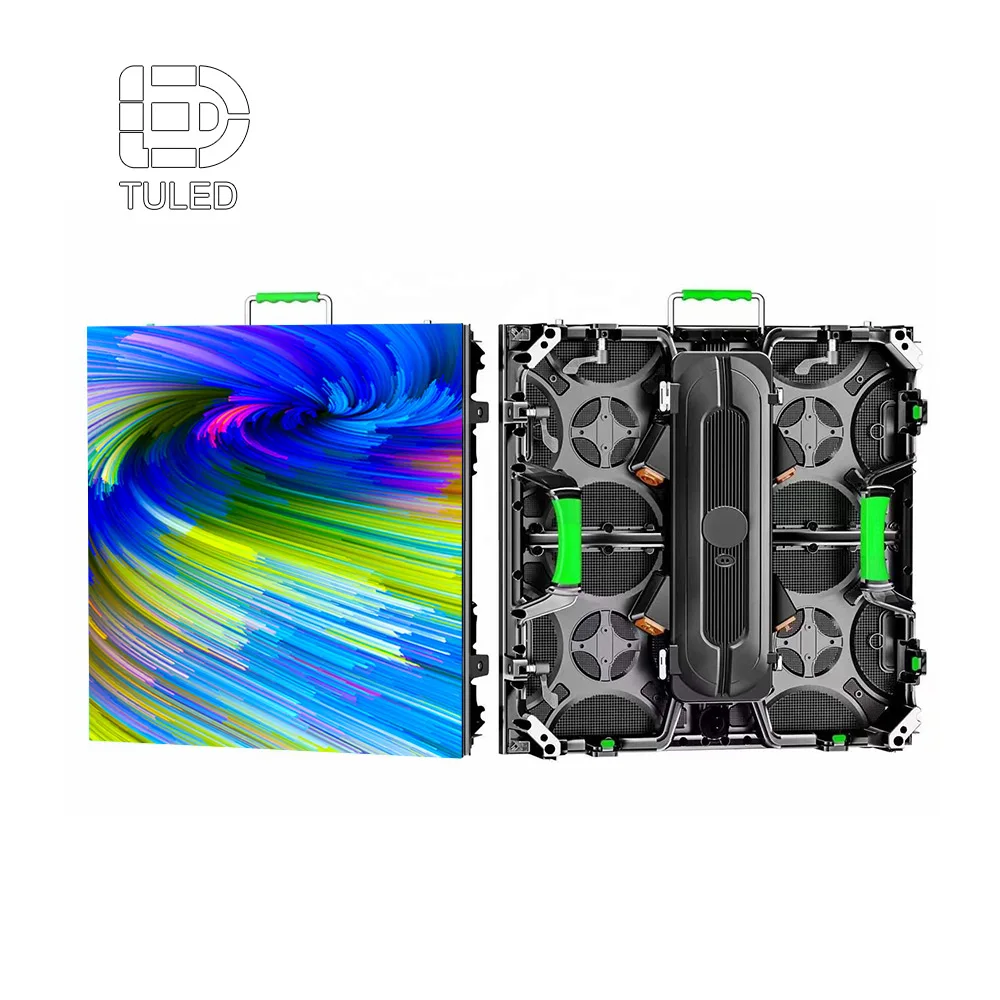
反復可能なイベント企画向けレンタル・スクリーン・ソリューション
キャビネット構造により、取扱コスト、サービスの利便性、スペアパーツの入手性、および今後のレンタル頻度を比較できます。
レンタル・ソリューションを確認する長期コスト算出式
| 費用項目 | レンタル算出 | 固定算出 |
|---|---|---|
| スクリーン使用 | イベント発生率 × イベント回数 | 1件のプロジェクト費用を長期使用にわたり按分 |
| 労働 | 毎回の設置および撤去。 | まず設置作業員、その後サービス作業員。 |
| 交通 | 各イベントごとに繰り返される移動。 | 通常は1回の配送(再配置が発生した場合を除く)。 |
| 収納 | 多くの場合、レンタルサービスのルートで対応される。 | スペアパーツおよびアクセサリーは安全な保管が必要。 |
| ダウンタイム | 設置が遅延した場合、イベントスケジュールにリスクが生じる。 | アクセスが不十分な場合、運用にリスクが生じる。 |
製品導入経路:レンタル、準固定、または固定設置
一時的なイベントでは、通常、レンタル経路から開始すべきである。この場合、ディスプレイは会場間で移動する必要があるほか、異なるステージサイズや異なるコンテンツ形式に対応する必要がある。したがって、柔軟性は直接的な価値を持つ。
安定した屋内設置場所は、固定された設置経路から始める必要があります。本プロジェクトでは、配線の整理、映像品質の安定性、前面サービス対応、および定期的なコンテンツ更新スケジュールが求められる場合があります。そのため、設置設計はディスプレイ性能と同様に重要となります。
準固定型プロジェクトは、上記2つのタイプの中間に位置します。例えば、季節限定の展示会や期間限定のショールームなどは数か月間運用されることがあります。その場合、チームはレンタル費用、固定構造体の設置費用、および再設置の可能性を比較検討したうえで判断する必要があります。
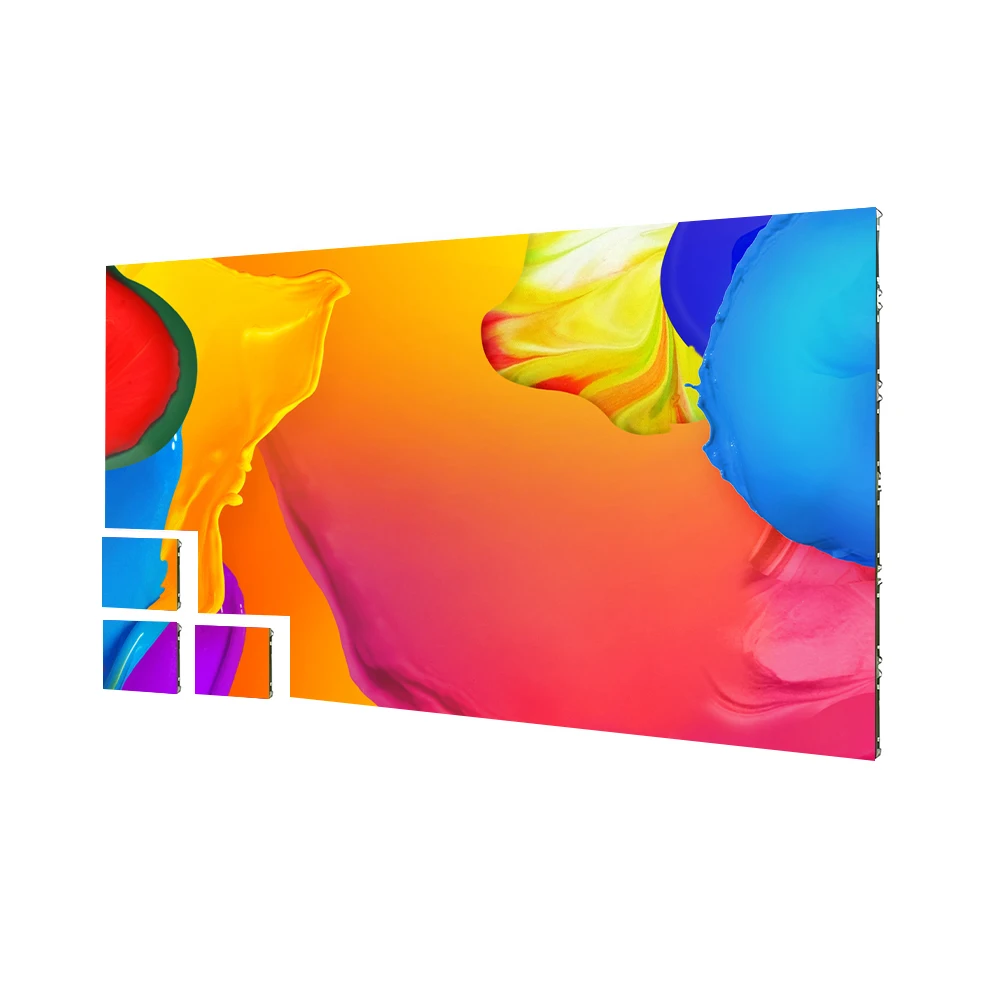
サイズ計画の柔軟性を実現するレンタルオプション
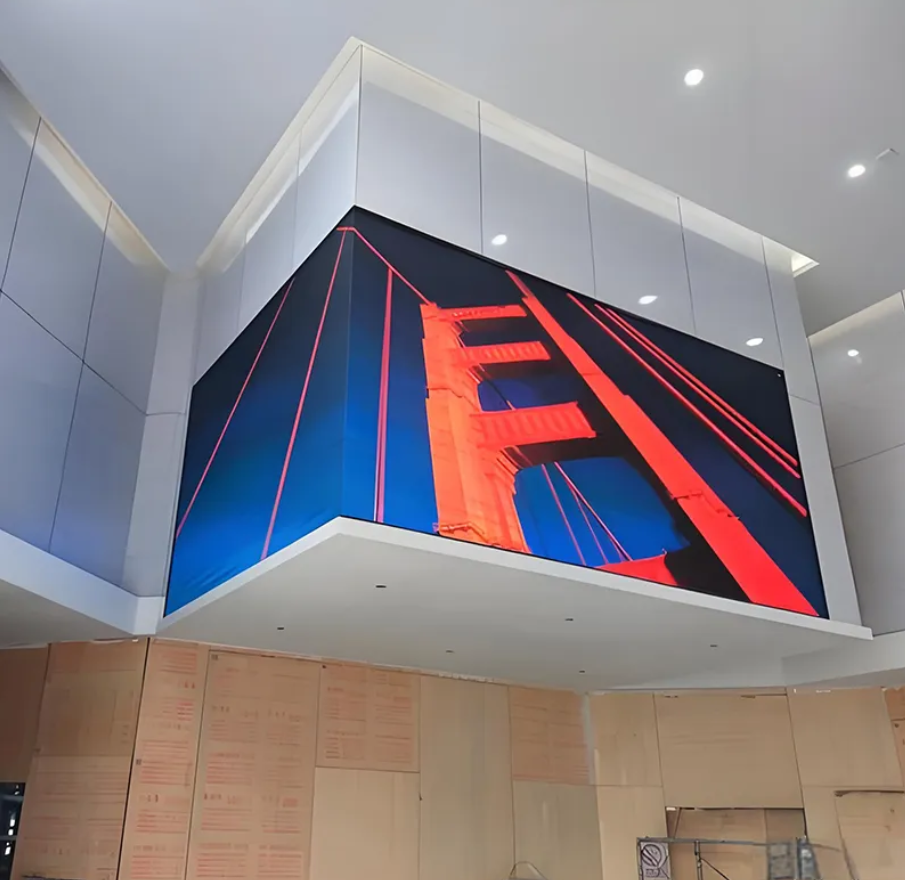
このモジュラー式ビジュアルウォールは、スクリーンサイズ、イベント開催場所、または表示フォーマットがスケジュールごとに変更される可能性があるプロジェクトに最適です。
レンタルオプションを確認製品ルートマトリクス
| プロジェクト状況 | 推奨される最初の選択肢 | 理由 |
|---|---|---|
| 単発のカンファレンスまたは新製品発表会 | レンタル用LEDディスプレイ | 短期間の使用では、保管および所有に伴う負担を正当化できません。 |
| ツアーイベントまたはロードショー | レンタル用LEDスクリーン | この構造は、柔軟な設置およびイベントレイアウトの変更をサポートします。 |
| 同一会場で実施する月次イベント | リピートレンタルプラン または固定価格 | 契約に先立ち、年間コストを比較する必要があります。 |
| 期間限定キャンペーンまたは季節限定ディスプレイ | スクリーンレンタルオプション | レンタルを利用することで、期間が限定されている場合でもビジュアルプランを柔軟に維持できます。 |
| 日常的なショールームまたはロビー用ディスプレイ | 固定式屋内設置 | 常時稼働可能な運用とすっきりとした統合が、さらに重要性を増しています。 |
最終価格決定前の見積もりデータチェックリスト
明確な見積もりには、幅と高さの情報だけでは不十分です。まず、使用スケジュールを確認する必要があります。単発イベント、月次プログラム、恒久設置では、それぞれ異なるキャビネット選定、サービスプラン、およびサポート機器が必要となります。
次に、設置現場の状況を詳細に記述する必要があります。屋内/屋外使用の有無、視認距離、壁面サイズ、ステージ高さ、吊下げ方式、電源確保状況、カメラ使用の有無などは、最終的なディスプレイ計画に影響を与えます。したがって、現場データの欠落は誤った推奨につながる可能性があります。
最後に、コンテンツのワークフローも重要です。ライブカメラ映像、プレゼンテーション用ノートPC、メディアプレーヤー、予約配信型広告ループなど、それぞれ異なるプロセッサや信号経路を必要とする場合があります。このため、価格比較を行う前に、制御方法も明記しておく必要があります。
コピー&送信用見積もり依頼テンプレート
| お送りいただくデータ | レンタル案件 | 固定設置案件 |
|---|---|---|
| 使用頻度 | 月ごとまたは年ごとのイベント数。 | 週次または日次での運用スケジュール。 |
| 画面サイズ | 各イベントの仮の幅および高さ。 | 壁面開口部サイズ、または完成時のディスプレイサイズ。 |
| 設置方法 | 吊下げ式、積み重ね式、トラス式、またはステージフレーム式。 | 壁面取付け式、埋込式、吊下げ式、または自立式。 |
| 視聴距離 | 観客の最寄りおよび最も遠い位置。 | 室内またはホール内の主な視認ゾーン。 |
| 表示内容の種類 | 動画、スライド、ライブ映像、カウントダウン、またはブランド表示。 | 予約済みメディア、ダッシュボード、プレゼンテーション、または広告ループ。 |
| カメラの使用状況 | ライブ配信、ステージカメラ、またはスマートフォンによる録画。 | 会議用カメラ、放送、または会議室での録画。 |
| サービスへのアクセス | 現地修理およびスペアパーツ対応プラン。 | 前面アクセス、背面アクセス、またはメンテナンス用通路。 |
CTA:ご開催予定のイベント頻度と開催場所をお知らせください。レンタルまたは固定設置のどちらが適しているか、当社よりご提案いたします。
画面サイズ、スケジュール、視聴距離、設置方法が明確であれば、より実用的な推奨案を迅速に作成できます。
プロジェクト詳細を送信関連製品の詳細情報と関連する製品経路
より明確な判断を行うための次のステップは、プロジェクトのシーンと適合する製品ルートを比較することです。以下のページは、一時的なイベント向けスクリーン、柔軟なステージ映像、および再利用可能なレンタル構造の計画時に役立ちます。
最終選択ロジック
要約すると、プロジェクトに柔軟性、短期間の使用、会場の変更、または画面サイズの変更が必要な場合はレンタルが適しています。一方、画面を安定した1か所で定期的に運用する場合は、固定設置が適しています。
したがって、判断はまず月間の使用頻度から始めます。その後、設置構造、キャビネットの保守方法、コンテンツのワークフロー、保管責任、および12か月間の総コストを比較します。
最終的な判断を行うために、見積もり依頼前に以下の3点を準備してください:
- 今後12~24か月間の予想使用日数(設置・撤収日を含む)を算出してください。
- 画面サイズ、現場の写真、視認距離、設置方法、およびコンテンツの種類を準備してください。
- プロジェクトが月間損益分岐点に近い場合、レンタルと固定設置の両方のプランについて見積もりを依頼してください。
最高の lEDディスプレイ画面 最適な選択肢とは、予算サイクル、使用頻度、現場の構造、保守ルート、および長期的な視覚的目的に合致する方です。
よくある質問
プロジェクトで、常設設置ではなくレンタルを月に何回行うべきですか?
一般的に、月1~3回の使用であれば、会場やスクリーンサイズが変更される場合でもレンタルが依然として有効です。ただし、月4回以上使用する場合は、固定設置との比較検討を開始すべきです。
また、イベントの期間も重要です。設置・撤収を含む3日間のイベントは、短時間の会議よりもコストが高くなる可能性があります。したがって、イベントの総開催日数を考慮する必要があります。
レンタル用スクリーンと固定設置用スクリーンでは、どの構造部品が異なりますか?
レンタル用スクリーンは通常、軽量キャビネット、迅速なロック機構、ハンドル、フライトケース、吊りバー、スタッキングフレームなどに重点を置いています。これらの部品は輸送および迅速な設置を支援します。
固定設置用スクリーンは、永続的なフレーム、平面整列性、配線の隠蔽、保守アクセス性、および換気性能に重点を置いています。したがって、キャビネットは作業環境に適合する必要があります。
キャビネットの重量は、レンタルまたは固定設置の選択に影響しますか?
はい。レンタルプロジェクトでは、キャビネットの重量が輸送、作業員の作業速度、吊り荷重、および設置時間に影響します。軽量なキャビネットは、反復開催されるイベントにおける作業負荷を軽減できます。
固定設置の場合、重量は壁フレーム、支持構造体、および設置方法に影響します。したがって、重量は取付設計と併せて確認する必要があります。
メンテナンスにおいて、前面アクセスは常に優れた選択肢でしょうか?
前面アクセスは、スクリーンが壁に近接して設置されている場合や、浅い設置空間内に設置される場合に非常に有効です。これにより、視認側から保守作業が行えます。
ただし、保守用通路が確保されている場合には、背面アクセスも十分に機能します。したがって、最適な保守方法は、壁の奥行き、現場のレイアウト、および運用スケジュールによって決まります。
長期的なコストを公正に比較するには、どのようにすればよいでしょうか?
公正な比較には、スクリーン本体価格、人件費、輸送費、制御機器、サポート対応時間、保管費用、予備部品、およびダウンタイムリスクを含める必要があります。単価のみで判断するのは不十分です。
さらに、両方の見積もりにおいては、同一の画面サイズ、視聴距離、コンテンツ種別、および環境条件を用いる必要があります。そうでない場合、比較結果が誤解を招く可能性があります。
レンタルと固定設置の比較を始めますか?
明確な選択は、イベントの開催頻度、設置場所、画面サイズ、視聴距離、保守サービスへのアクセス性、および長期的な予算に依存します。単に単価だけで判断するのではなく、まずプロジェクトの詳細情報をご送付ください。その後、実際の使用シーンに最も適した選択肢をご提案いたします。
CTA: ご希望のイベント開催頻度と開催場所をお知らせください。レンタルか固定設置か、最適なプランをご提案いたします。
プロジェクト詳細を送信