EN
EN

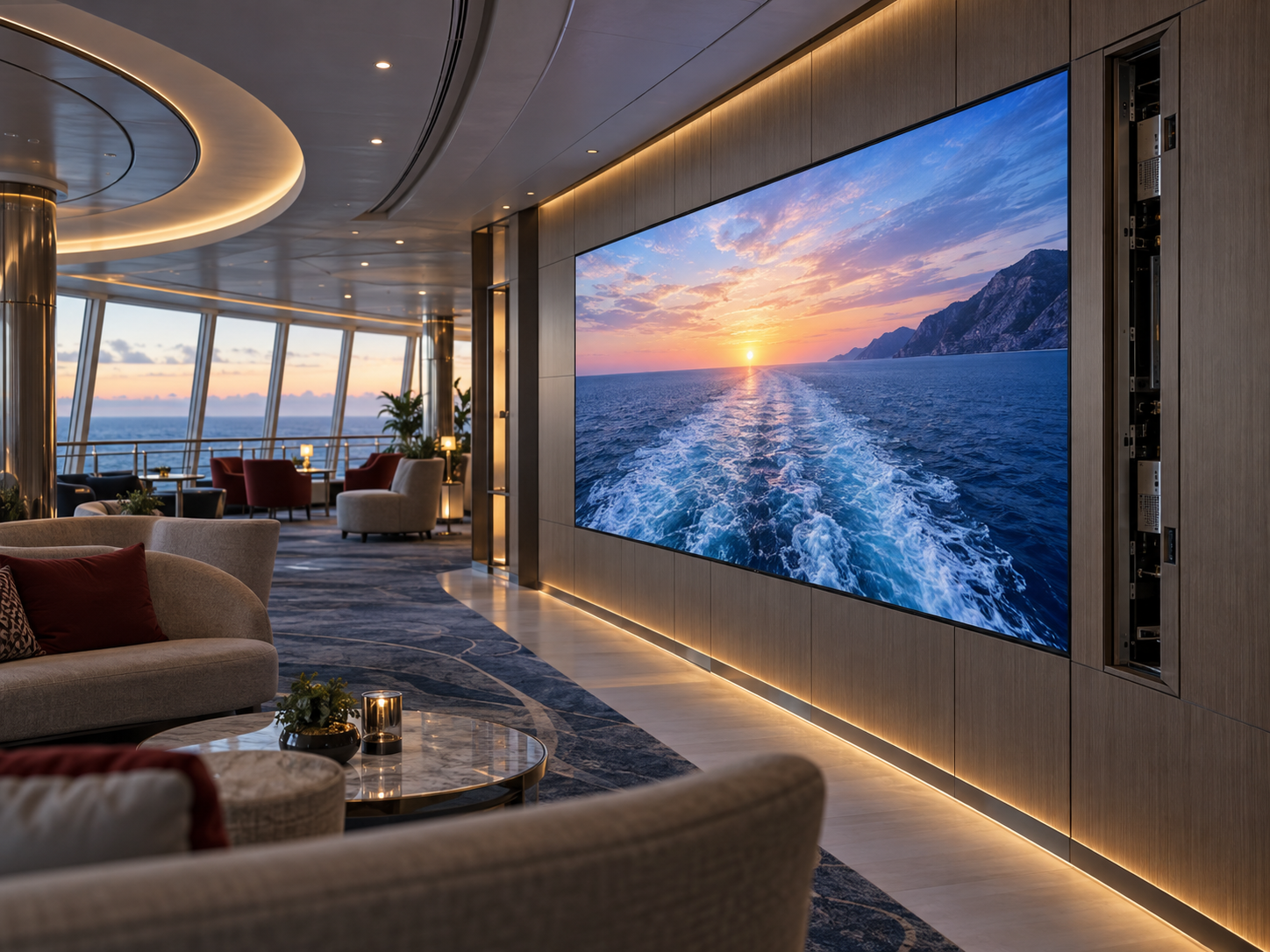
A cruise-ship LED installation can look simple on an interior drawing and become much harder once the screen meets the vessel. The display has to fit the architectural opening, remain properly integrated with a structure exposed to ongoing movement, work with the electrical conditions available onboard, and still leave a practical route for maintenance after the surrounding interior is finished.
Those decisions affect one another. Reducing installation depth can leave less room for cable routing or component removal. A mounting arrangement designed around restraint can change how technicians reach the screen later. Power interruptions or switching events can also become an operational issue if the display and its control source do not return in the expected sequence.
For that reason, a custom LED display for a cruise ship should be planned around the real vessel location rather than selected as a standard screen first and adapted afterward. The objective is not merely to make the display fit. It is to make the finished installation workable for engineering, operation and service.
The Vessel Area Matters More Than a Generic Screen Specification
A display in a cruise-ship lounge, reception area, restaurant, entertainment space or passenger corridor may all be considered indoor installations, but they do not necessarily create the same engineering problem. The visible wall is only the front layer. Behind it may be framing, decorative panels, cable routes and other building services that reduce the space available to the screen.
The useful starting point is therefore the finished condition: where the screen will sit, what remains accessible after construction, how frequently the display is expected to operate and who will be responsible when something needs attention. A cavity that appears generous on an early drawing may feel very different once the support structure and interior finish are included.
For an enclosed passenger-facing zone, an Indoor LED Display is a logical product direction to review. That category is only the beginning of the decision, however. A marine project still has to reconcile the display with the actual mounting condition, available depth and maintenance route.

If future access depends on removing decorative wall panels, if connectors cannot be reached once the surrounding joinery is installed, or if no team owns the interface between the screen and vessel structure, the problem has simply been hidden until later.
Vibration Makes the Mounting Interface Part of the Display Decision
A cruise ship is a moving platform. That changes the way mounting should be discussed. The useful question is not whether a cabinet can be described as “strong” in isolation, but how the display assembly is connected to the supporting structure and how that connection remains compatible with servicing.
Before production is locked, the integrator and display supplier should be looking at the same physical condition: what the screen attaches to, where support sits behind the display, how the screen is restrained and which parts need to move when service is required. No invented vibration tolerance is needed to make this decision useful. What matters is removing uncertainty from the actual interface.
This is also where architectural drawings can be misleading. A front elevation communicates the visual opening well but may say almost nothing about the working space behind it. Side sections, mounting details and site photos usually tell a more useful story because they reveal the relationship between the finished wall and the equipment inside it.
Imagine the surrounding interior is already finished and the vessel is in operation. If reaching one serviceable part requires disturbing structural restraint or opening a finished wall, the mounting and service concepts have not really been separated.
Responsibility needs the same clarity. The display supplier may be responsible for the screen-side interface, while the shipyard, structural contractor or AV integrator owns the surrounding support. That division is workable when it is explicit. It becomes risky when every party assumes another team has checked the gap between them.
Power Quality Should Be Discussed as an Operating Condition, Not a Late Electrical Detail
The LED system will operate inside the vessel's wider electrical environment. That does not mean the display supplier needs to design the ship's electrical system, but it does mean the screen should not be finalized without understanding the power standard that will be presented to it and any project-level coordination that affects operation.
Restart behaviour deserves particular attention. After an interruption or switching event, the screen, media source and control equipment may not necessarily return at the same time. A display that powers up normally can still create an operational problem if the control source is unavailable, the content system requires intervention or the onboard team expects a different start-up sequence.
Supply: what electrical standard will actually be available at the LED system?
Coordination: are there upstream isolation, protection or conditioning arrangements the system team needs to understand?
Return to operation: after a power event, what is the expected relationship between the LED display, control source and operator procedure?
These questions are far more valuable during design review than during final commissioning. They allow the display, electrical and control teams to agree on system behaviour while changes are still relatively easy.
Low-Profile Mounting Is Valuable Only When Maintenance Still Works
Interior design often pushes the screen closer to the finished wall. On paper that looks efficient: less projection, cleaner lines and less visual interruption. In practice, however, every reduction in mounting depth also reduces the space available for support structure, connectors, cable bends and component movement.
Cabinet depth by itself is therefore not the right comparison. The more useful question is whether the entire service envelope fits. If modules are expected to come out from the front, surrounding trim must not block their removal. If power or control components need another access direction, that route needs to exist after the interior is finished.
The same reasoning applies to cable entry. A screen may fit physically while the power and signal routes are forced into inaccessible paths behind it. This is why maintenance planning should consider the display as a system of LED screen panels, serviceable components, connections and support structure rather than as one flat rectangle on the wall.
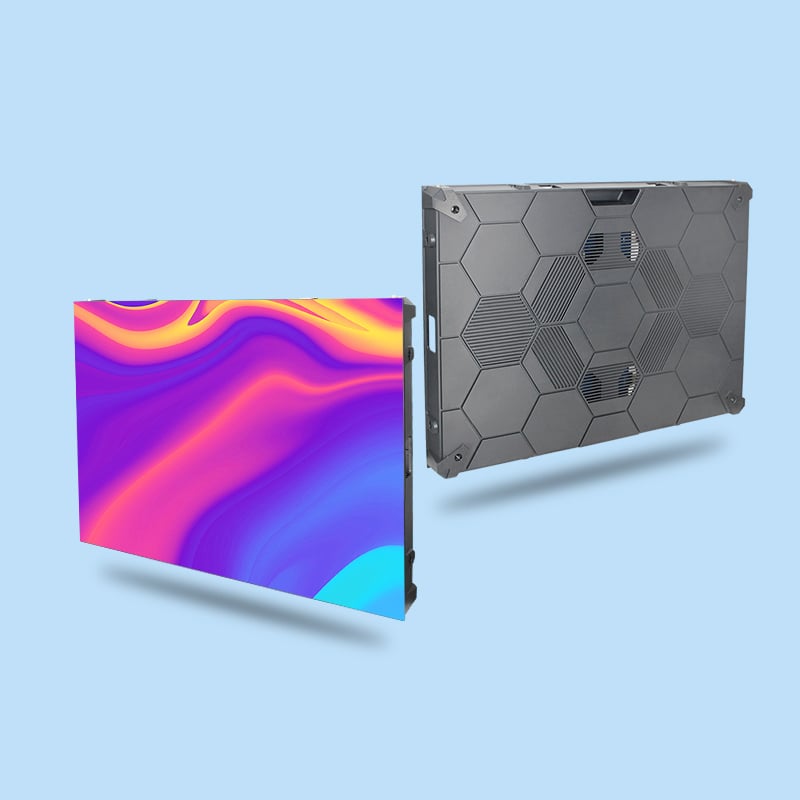
The aim is not to maximize empty space behind the screen. It is to preserve enough usable access for the maintenance approach that the project has actually chosen. A slim installation that later requires opening the finished interior is not genuinely space-efficient.
What the Supplier Needs to Understand Before Making a Useful Recommendation
A strong marine inquiry does not need to arrive as a long technical specification. It does need to describe the installation well enough that important decisions are not being made from assumptions. The most useful information usually comes from three different parts of the project.
The physical space
Start with the visible screen width and height, then show what exists around it. Site photographs, elevations and side sections can explain the proposed wall better than a long written description. The available depth should reflect the usable space after framing and finishes are considered, not simply the earliest architectural cavity dimension.
The operating environment
Identify the specific vessel area and whether the display is in an indoor or outdoor zone. Add the power standard and planned control source. If the operating team already has expectations for start-up, shutdown or recovery after an interruption, those expectations should be part of the conversation rather than discovered after the system arrives.
The project boundary
Quantity, installation country and project timeline help put the technical work in context, but ownership is just as important. The project should know who is responsible for the supporting structure, electrical interface, control integration and future maintenance. These boundaries determine where technical confirmation is needed between teams.
One more input is easy to miss: identify who owns the supporting structure, electrical interface, control integration and long-term maintenance. Many project risks appear between teams rather than inside one component.
Factory Review Should Turn Site Information Into Decisions
The value of factory support is not a thicker document package. It is converting the installation information into something the project team can approve with fewer unknowns.
Drawings should make the relationship between the screen, opening and available depth understandable. Technical confirmation should identify the proposed display arrangement and the interfaces that still depend on the integrator, shipyard or electrical team. The service-access concept should show how expected maintenance can happen once the installation is finished.
Spare-part planning follows the same logic. The important question is not simply whether spares exist, but whether the future maintenance team can identify the correct parts, reach the relevant components and refer back to useful project records when technical support is needed.
It should be obvious what has been confirmed, what is still dependent on another project team and what would change if the installation depth, support structure, electrical condition or maintenance responsibility changes. Open items are safer when they remain visible than when they are silently replaced by a standard assumption.
Decision Check: Is the Marine Installation Actually Ready for Approval?
By the time the screen configuration is approved, four questions should have practical answers. If one of them is still based on an assumption, it is usually better to resolve that point before production than to push the uncertainty into installation.
The visible opening is not enough. The supporting interface and responsibility for that interface should already be understood.
The test is the finished wall, not the open construction condition. Expected serviceable parts need a real removal and access route.
Power standard, control source and return-to-operation expectations should be known before commissioning.
Structure, electrical connection, control integration and maintenance should not sit in an undefined gap between contractors.
A useful approval rule: “the screen fits” is not enough. The marine display is ready when it fits physically, has a defined mounting interface, has an understood power and control context, and can still be serviced after handover.
FAQ
What should be confirmed before specifying a custom LED display for a cruise ship?
Confirm the vessel area, screen size, mounting condition, usable installation depth, service approach, power standard, control source and maintenance responsibility. Site photographs or drawings should support the review.
How can limited mounting depth affect service access?
Less depth can restrict cable routes, connectors and the movement needed to remove components. The project should assess the complete service envelope rather than comparing cabinet depth with the wall cavity alone.
Why should power conditions be reviewed early in a marine LED project?
The display needs to be coordinated with the power presented onboard and with the expected restart behaviour of the control system. Reviewing this before production gives the electrical and AV teams time to resolve differences in system expectations.
What project information should be sent to the supplier?
Send screen dimensions, site photographs or drawings, usable mounting depth, installation zone, quantity, power standard, control source, installation country and project timeline. Also identify responsibility for structure, electrical connection, control integration and maintenance.
Approve the Installation Conditions Before Approving the Screen
A cruise-ship LED project works best when vibration, power conditions, mounting depth and maintenance access are reviewed as connected constraints rather than separate specification lines. A decision that solves one problem can create another if the surrounding interfaces are ignored.
For a useful project review, prepare the vessel installation area, screen size, site photos or drawings, available depth, quantity, power standard, control source, installation country and timeline. These details give the technical team a clearer basis for discussing the proposed configuration before production.